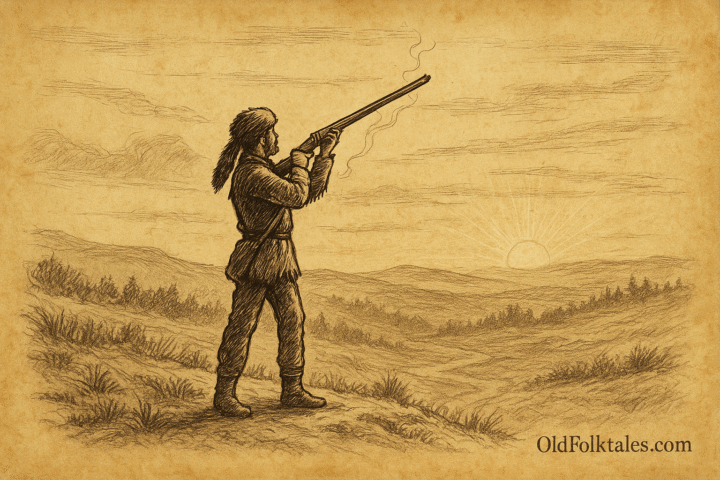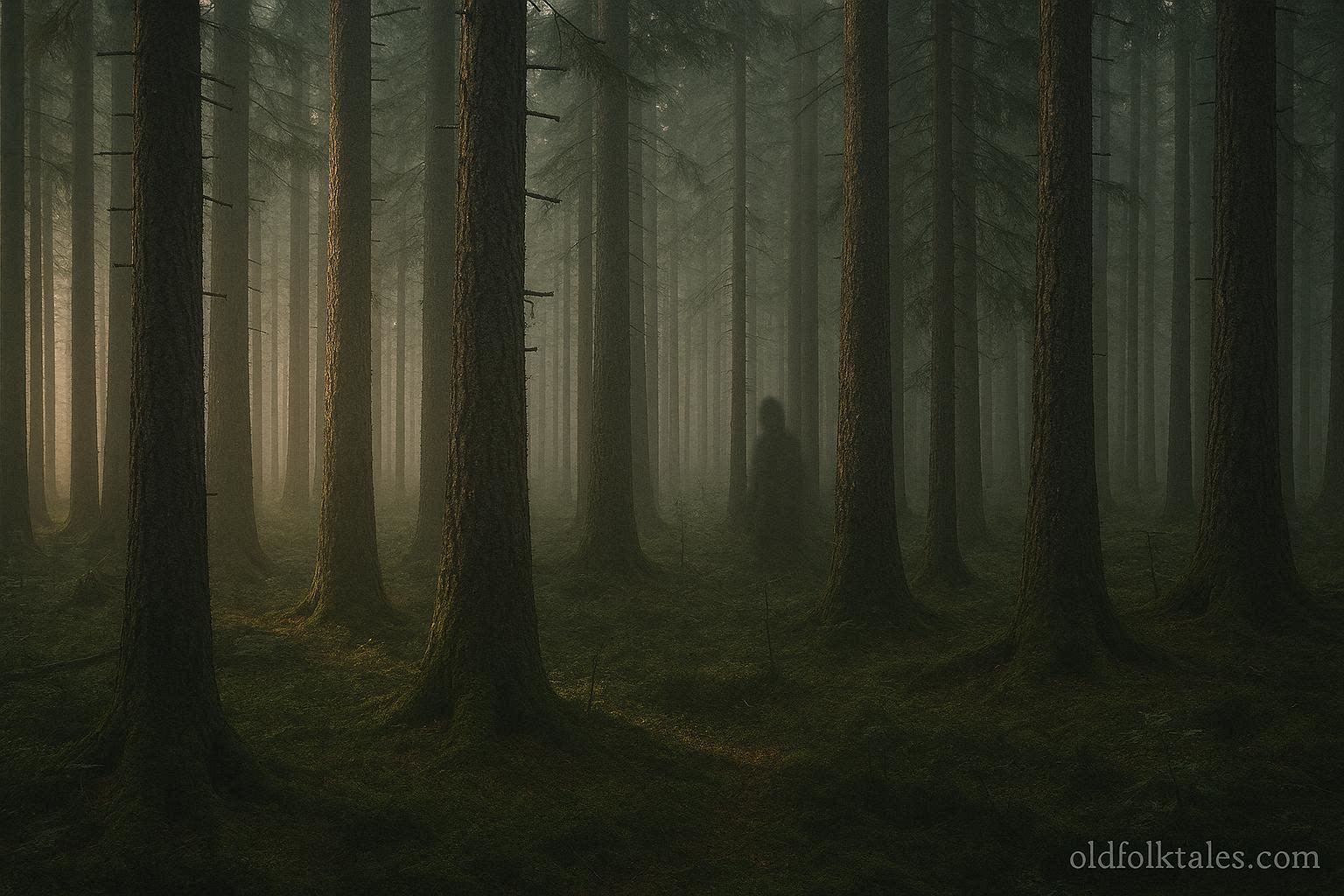
Deep within the pine woods, where tall trees stood close together and sunlight filtered through in narrow beams, the forest held a quiet that felt almost alive. The ground was soft with fallen needles, and every step carried the possibility of sound, yet the woods seemed to listen as much as they were observed.
It was in this place that stories began to spread about a man who could move through the forest without being seen.
His name was Sam.
People did not speak of him loudly. They spoke of him in low voices, often while sitting close together, as though the forest itself might be listening. They said he lived deeper in the woods than most dared to go, in places where paths disappeared and only experience could guide the way.
What made Sam different was not just that he lived in the forest.
It was how he moved within it.
Hunters who entered the woods would sometimes feel as though they were being watched. They would pause, listening carefully, but hear nothing unusual. No footsteps, no broken branches, no sign of movement. Yet the feeling remained, quiet but steady.
Step into shadowy legends of restless spirits and ghostly travelers in American Ghost Stories.
Some claimed they had seen him.
Not clearly, but briefly.
A shape between trees.
A movement that disappeared as quickly as it appeared.
Others said they had heard whispers.
Soft sounds carried by the wind, too deliberate to be random, yet too faint to understand. These whispers became the reason for his name. People began to call him Whispering Sam, not because he spoke often, but because his presence was known through what could barely be heard.
Sam was not feared in the way dangerous things were feared.
Instead, he was respected.
Those who spent time in the woods understood that survival required more than strength. It required awareness, patience, and the ability to listen. Sam seemed to possess all of these qualities in ways that others could not match.
One story told of a group of travelers who had entered the forest without proper knowledge.
They followed what they believed was a clear path, but as the trees grew denser, the path began to fade. Landmarks became difficult to recognize, and the direction they had come from was no longer clear. The deeper they went, the more uncertain they became.
As daylight began to fade, their concern grew.
The forest changed as the light disappeared. Sounds became sharper, shadows longer, and the sense of being lost more real. They called out, hoping someone might hear them, but their voices seemed to disappear into the trees.
Then, without warning, they heard something.
A faint sound.
Not a voice, but something like a whisper carried on the wind.
They could not understand it, but it seemed to come from a particular direction. Unsure of what else to do, they followed it.
Step by step, they moved toward the sound.
Each time they paused, it came again, guiding them forward. It did not rush, and it did not repeat itself loudly. It simply remained present, just enough to be followed.
After some time, the trees began to thin.
The forest opened slightly, and familiar ground appeared ahead. The travelers realized they had been led out of the deepest part of the woods and back toward safety.
When they turned to look behind them, there was nothing.
No sign of who or what had guided them.
But they understood.
They had been helped.
Stories like this continued to grow.
Hunters spoke of moments when they were about to make a mistake, only to feel something shift their attention at the right moment. Others described being led away from danger without ever seeing who had guided them.
Sam was never seen clearly.
He did not step into open spaces or reveal himself in ways that could be easily explained. His presence remained part of the forest itself, moving with it, blending into it.
Some believed he had chosen this life.
Others believed the forest had chosen him.
Elders spoke of the importance of respecting the woods.
They said that the forest was not just a place, but a living system that required understanding. Those who entered it without respect often found themselves lost or in danger. But those who listened, who paid attention, were more likely to find their way.
Sam became a symbol of that understanding.
He represented what it meant to live in balance with the environment, to move without disturbing, to observe without taking more than necessary. His silence was not emptiness, but awareness.
Over time, the story of Whispering Sam was passed from one generation to the next.
It was told not only as a mystery, but as a lesson.
That survival is not always about strength.
That sometimes, the greatest skill is knowing when to be still.
And that in places where noise and movement can bring danger, quiet observation can become the greatest protection.
Even today, in the deep pine woods where the trees stand tall and the wind moves softly through the branches, there are those who say the whispers can still be heard.
Not loudly.
Not clearly.
But enough to remind those who listen that they are not alone.
And that somewhere within the forest, unseen but present, the quiet figure of Sam continues to move, watching, guiding, and protecting in his own silent way.
Explore how American legends shaped the nation — from frontier heroes to Revolutionary War tales.
Moral Lesson
True strength lies in awareness, patience, and the ability to move wisely rather than forcefully.
Knowledge Check
- Why was Sam called Whispering Sam?
Because people heard faint whispers believed to be his presence. - What made Sam different from others in the forest?
He could move unseen and silently. - How did the travelers find their way out of the forest?
They followed faint whisper-like sounds guiding them. - Was Sam ever clearly seen?
No, he was only briefly or partially seen. - What did Sam represent to the people?
Respect for nature and deep awareness of the environment. - What does the story teach about survival?
That awareness and patience are more important than force.
Source
Adapted from materials preserved in the University of Alabama
Cultural Origin
Southern woodland folklore