At the foot of the misty Catskill Mountains in colonial New York, there once lived a good-natured man named Rip Van Winkle. Rip was beloved by everyone in his small Dutch village. He mended fences for his neighbors, helped children fly kites, and was always ready with a friendly word or a helping hand. Yet for all his kindness, Rip had one great flaw, he could not bear to work on his own farm.
His fields were overgrown, his fences broken, and his house falling into disrepair. His patient wife, Dame Van Winkle, scolded him endlessly for his laziness. Rip would simply sigh, take up his dog Wolf, and escape to the forest to avoid her sharp tongue.
The Journey into the Mountains
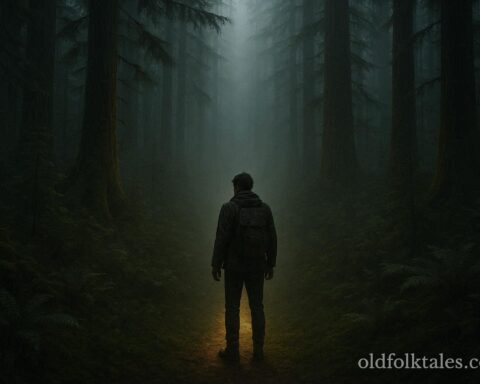
One autumn afternoon, Rip wandered deep into the Catskills, where the air was cool and still. The forest rose around him in towering shades of green and gold. He climbed higher and higher, admiring the beauty of the wilderness and listening to the murmuring streams.
As the evening shadows lengthened, Rip heard a distant voice calling his name. Turning, he saw a short, stout man dressed in old-fashioned Dutch clothes, carrying a heavy keg on his shoulder. Without a word, the stranger gestured for Rip to help. Together they climbed higher through the trees until they reached a small hollow surrounded by steep rocks.
There, Rip saw a strange company of little men playing ninepins. Their faces were solemn, their beards long and gray, and they wore clothing that looked centuries old. Each time the wooden balls rolled down the lane, they made a deep rumbling sound that echoed through the mountains, like distant thunder.
Rip, both curious and cautious, watched as they played. The men said nothing but nodded for him to serve them drinks from the keg. He poured out the foaming liquor, and when they motioned for him to try it himself, he took a sip. It was sweet and strong. Soon Rip’s head grew heavy, his eyes blurred, and he sank into a deep, dreamless sleep.
The Awakening
When Rip finally awoke, the sun was shining through the trees. His head ached, his joints were stiff, and the forest seemed strangely quiet. “Wolf!” he called, but his loyal dog was nowhere to be found. Reaching for his musket, Rip found it rusted and worn with age. His clothes were tattered, his beard long and gray.
Confused and uneasy, he stumbled down the mountain toward his village. But as he approached, everything seemed different. The houses had changed, the roads were busier, and strange faces looked at him with suspicion. Where the old inn once stood, the one with the picture of King George, now hung a sign of General Washington. The people were talking about elections and freedom, not about the King or taxes.
Rip felt a shiver of confusion. “Has the world turned upside down?” he muttered.
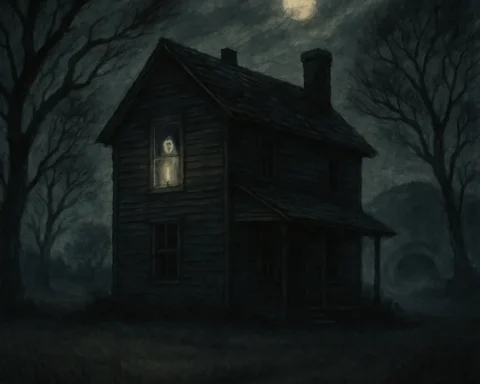
When he reached his home, it was abandoned, the roof sagging, the door broken. His heart sank. Wandering in disbelief, Rip finally found a group of villagers who stared at him as if seeing a ghost. “Who are you?” one man asked.
“I’m Rip Van Winkle,” he replied. “Where’s my wife? Where’s my friends?”
A woman stepped forward, his own daughter, now grown. She gasped and cried, “Father! I thought you were dead!”
From her, Rip learned that twenty years had passed. His wife had died some years before, his friends were gone, and the American colonies had become the United States of America. The war for independence had come and gone while he slept.
The New World
Rip Van Winkle became something of a legend in his village. The people marveled at his story, though some doubted it. But as he told it again and again under the great tree near the inn, now called the “Union Hotel”, everyone came to listen. He spoke of the little men, the enchanted drink, and the long, mysterious sleep that had carried him from the time of kings to the age of freedom.
The young people laughed, the old nodded wisely, and travelers from afar came to see the man who had slept through history. Rip lived out his days peacefully, free from work and worry, telling his story to any who would listen.
When thunder rolled in the distance, villagers would smile and whisper, “That’s the sound of the ninepins, the little men are playing again in the Catskills.”
Click to read all American Folktales — timeless oral stories passed through generations across the United States.
The Moral Lesson
Rip Van Winkle’s story reminds us that time never stands still. While he slept, the world changed, and so too must we. His long nap through revolution and progress teaches that those who ignore the passing of time may wake to find life and history have moved on without them.
Knowledge Check
1. Who was Rip Van Winkle?
Rip Van Winkle was a kind but lazy Dutch villager from the Catskill Mountains who slept for twenty years after drinking with mysterious mountain spirits.
2. What caused Rip Van Winkle to fall asleep?
He drank an enchanted liquor offered by the strange men playing ninepins in the mountains.
3. How long did Rip Van Winkle sleep?
He slept for twenty years, missing the entire American Revolution.
4. What major change had occurred when Rip awoke?
The colonies had become the United States, and King George’s image had been replaced by General Washington’s.
5. What is the main theme of the story?
The story explores time, change, and the fading of the old world as America entered a new era of independence.
6. What lesson does Rip Van Winkle’s tale teach?
It teaches that time waits for no one — while we rest or resist change, the world continues to move forward.
Source: Early American folktale from The Sketch Book of Geoffrey Crayon by Washington Irving (1819–1820).
Cultural Origin: Colonial Dutch-American folklore, Catskill Mountains, New York, United States.