In the Deep South of America, where the warm air hums with cicadas and the rivers carry stories as old as the land itself, the practice of Hoodoo thrived among African-American communities. Hoodoo, a blend of African spirituality, Native herbal lore, and Christian prayer, was not merely a set of charms or spells, but a way of life, a means of survival, and a whisper of hope passed down through generations.
Among the most sacred of its mysteries were two powerful talismans: the black cat bone and the lucky hand. Each held a deep-rooted meaning, woven from faith, ancestry, and the unbreakable spirit of a people who turned their knowledge of the natural and supernatural into tools for endurance and empowerment.
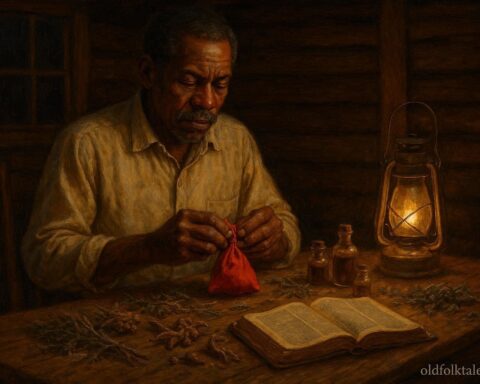
The lucky hand came from a dried orchid root shaped like a human hand. Conjure workers, known as root doctors or Hoodoo men and women, treated it with great reverence. It was believed that within its grasp lay the essence of divine favour, a link between man, nature, and God. The root was placed carefully inside a small red flannel bag, often with a pinch of powdered cinnamon or a silver coin for added strength. The charm was then carried close to the body, especially in the pocket or around the neck, to attract luck in gambling, love, or work.
Those who carried the lucky hand root often spoke of uncanny blessings, debts repaid, unexpected winnings, or long-awaited proposals finally accepted. But such gifts were not to be taken lightly. A charm gained power only when paired with faith and moral integrity. If used selfishly or for harm, it was said to lose its spirit and bring misfortune instead.
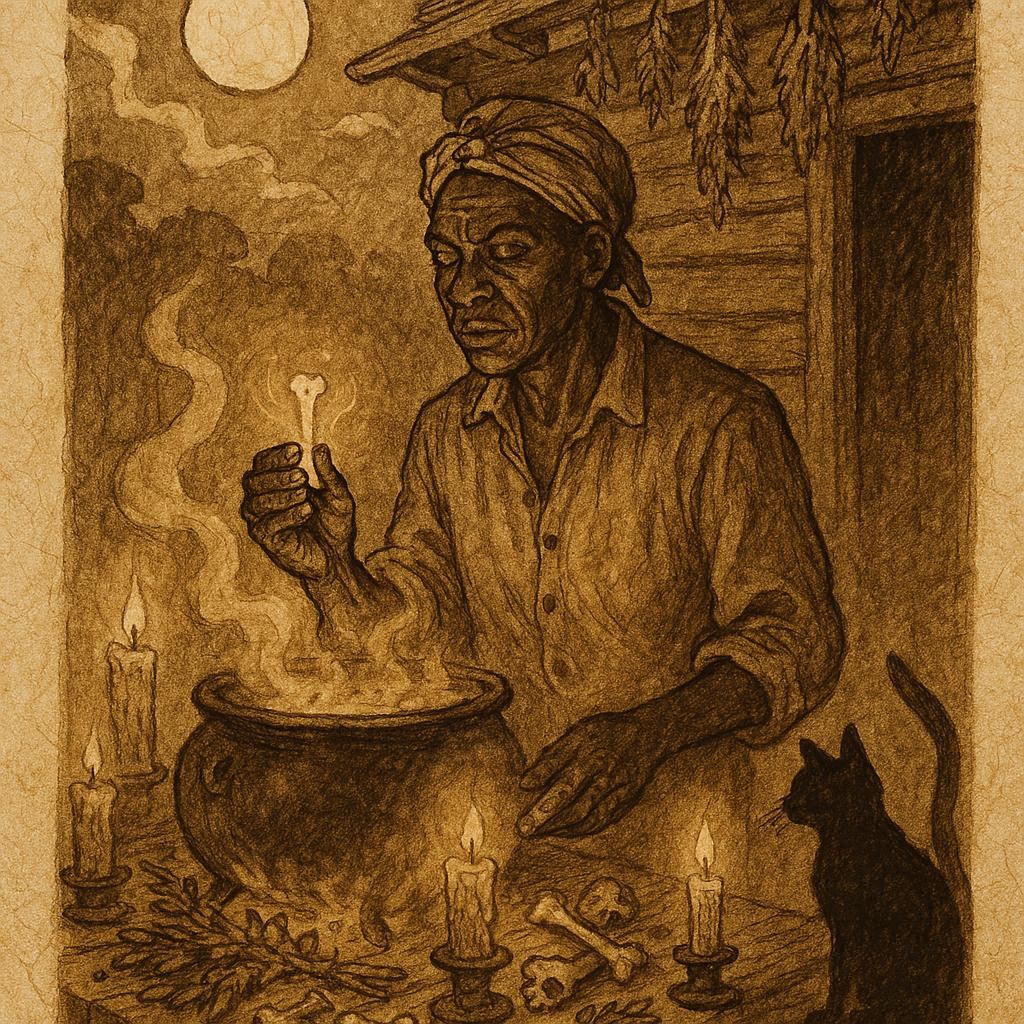
Even more mysterious was the black cat bone, a charm surrounded by secrecy and reverence. Unlike the lucky hand, it was not easily obtained. The ritual required the black cat, an animal long associated with mystery and magic, to be boiled in a pot at midnight under the light of the new moon. As the cat’s spirit was released, the bones were washed and laid out one by one, each said to hold a fragment of its supernatural essence.
To find “the live bone,” the one that held true power, the rootworker performed a special test. They would pass each bone before a mirror or drop it into water, watching for the one that shone with light or floated against the current, a sign that the spirit within still stirred. That bone was the chosen one, the sacred piece that could grant invisibility, turn bad luck aside, or grant victory in games of chance.
It was never used carelessly. The black cat bone demanded purity of intention and respect for the spiritual forces that governed its power. Conjure doctors often prayed as they worked, crossing themselves and calling on the Holy Trinity for protection. Despite the Christian words, the heart of the practice remained deeply African, an inheritance of wisdom brought across oceans, preserved through bondage, and reborn in the soil of Mississippi, Louisiana, and beyond.
Such rituals were more than superstition; they were acts of remembrance. For enslaved Africans and their descendants, Hoodoo offered a way to reclaim agency in a world that sought to strip it away. A charm was not simply magic, it was a form of prayer, a way to speak to the ancestors when no one else would listen.
Even in the twentieth century, when industrial life crept into the South and old practices faded from public view, the black cat bone and the lucky hand remained symbols of resilience. Some carried them for protection on long journeys, others buried them in their fields for fertile harvests. And though many whispered of their powers in secret, the spirit of rootwork endured, not as darkness, but as faith made tangible, woven into the rhythm of everyday life.
In the heart of this tradition lies a truth: the world is alive with unseen power, and every leaf, root, and bone holds meaning. To those who understand and respect that connection, life’s invisible threads reveal a deeper harmony, one where healing, protection, and destiny are guided by both earthly and divine hands.
Click to read all American Traditions & Beliefs — the living folklore of daily life, customs, and superstitions.
Moral Lesson
The story of the Black Cat Bone and the Lucky Hand teaches that true power lies not in objects or rituals alone, but in faith, respect, and righteous intent. Spiritual strength is born from understanding nature, honouring ancestors, and using wisdom for good rather than greed.
Knowledge Check
1. What is the main focus of the Hoodoo folktale?
It centres on the sacred use of the black cat bone and lucky hand root in African-American Hoodoo for protection, luck, and healing.
2. What does the lucky hand root symbolise in Hoodoo tradition?
It represents divine favour and good fortune, often used to attract success in love, work, and gambling.
3. Why was the black cat bone considered powerful?
Because it was believed to hold the cat’s spirit energy, offering protection, invisibility, or luck to its keeper.
4. How does Christianity influence Hoodoo practices?
Many Hoodoo rituals include Christian prayers and the sign of the cross, blending African spirituality with biblical faith.
5. What cultural significance does this folktale hold?
It preserves African-American ancestral wisdom, blending survival, spirituality, and cultural identity into sacred folk medicine.
6. What moral lesson does the story convey?
True power comes from faith, good intentions, and respect for the natural and spiritual worlds.
Source: Adapted from Hoodoo Herb and Root Magic by Catherine Yronwode (2002) and Smithsonian Folklife – Ginseng, Hoodoo, and the Magic of Upholding African-American Folk-Magic Traditions.
Cultural Origin: African-American folklore, Mississippi and Louisiana, United States.