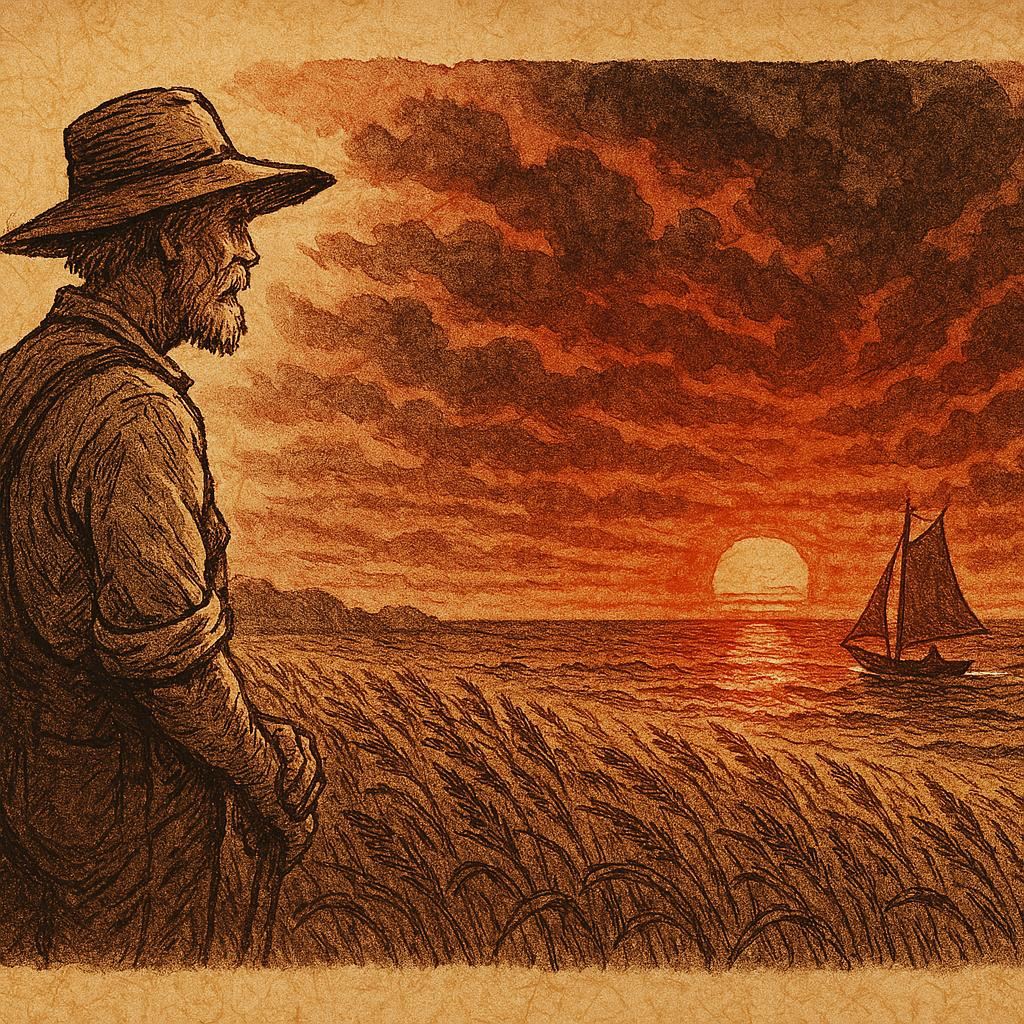
In the early days of New England’s colonial life, when farms nestled close to the sea and the horizon was both a friend and a warning, people lived by the rhythms of nature. Every breeze, cloud, and colour in the sky carried meaning. The settlers depended on the land and the ocean for survival, and they believed that if one learned to read the heavens well, one might understand the will of the world itself.
Among the sayings passed down through those generations, none was more trusted than the old rhyme:
“Red sky at morning, sailors take warning;
Red sky at night, sailors’ delight.”
Click to read all American Folktales — timeless oral stories passed through generations across the United States.
This was more than mere superstition. It was a rule born of experience, drawn from years of watching how the sunset’s glow and dawn’s hue foretold the coming weather. For those who farmed or sailed, these signs were as essential as bread and water.
One such man, an old farmer of Cape Cod, was known for his quiet wisdom and his reverence for the sea. His cottage stood on a small hill overlooking the Atlantic, where the winds carried the scent of salt and the cries of gulls. Each morning, he would rise before dawn, scan the horizon, and make his plans according to the sky’s colours.
He had a son, young Thomas, spirited and bold, whose heart belonged more to the sea than to the plough. The boy often mocked his father’s weather sayings, calling them “old man’s talk.” But his father would simply smile and say, “The sky remembers more than we do, lad. Pay heed to it, and it will keep you safe.”
It was said that long ago, the farmer made a promise to the sea, a quiet bargain of respect. He would not challenge it when the heavens warned him away. If the evening sky blazed red, he would sow his fields the next morning, for it meant calm weather was coming. But if the morning dawn burned crimson, he would stay close to home, knowing storms brewed in the east.
The village often laughed at his careful ways, but the farmer lived long and never lost a crop nor a kin to the ocean’s wrath.
Then, one fateful morning, the dawn rose red as fire. The eastern sky glowed like blood against the pale sea, and the air felt heavy and still. The old man stood at his door, shading his eyes with a trembling hand. “Bad weather’s coming,” he murmured. “The sky warns us.”
But young Thomas laughed. “It’s only the sunrise, Father! The sea is calm, I’ll bring back a fine catch before supper.”
The farmer pleaded with him. “The sky’s red face means the sea is stirring. Stay ashore today.”
Yet the son, full of youthful pride, took his small boat and set sail despite the warning. The old man watched him until his figure faded into the haze, the red light glinting on the water like burning embers.
All that day, the farmer worked the fields in uneasy silence. The birds flew low, and the wind began to shift. By afternoon, clouds rolled in thick and dark from the east, and the air turned sharp with salt and storm. Soon, a gale swept the coast, the kind that bends trees and tears sails from masts.
The farmer and his neighbours waited through the night, listening to the sea’s roar. When dawn came again, grey and hollow, the boy’s boat did not return. The ocean had kept what it was given.
In time, the story of the red sky and the farmer’s promise spread through the villages along the coast. No one doubted the rhyme again. Parents taught their children to respect the colours of the dawn and dusk, saying that each sunrise carried the breath of the sea and each sunset whispered the day’s peace.
And though the old farmer grew grey and quiet, he was never bitter. He would stand by the shore at evening, when the sky turned gold and red, and say softly, “The sea remembers, and so must we.”
Click to read all American Traditions & Beliefs — the living folklore of daily life, customs, and superstitions.
Moral Lesson
The tale reminds us that wisdom is born from listening to the signs of nature. Those who honour the old teachings and pay heed to the world around them walk in safety, while pride and impatience often bring sorrow.
Knowledge Check
1. What is the main saying at the heart of this folktale?
“Red sky at morning, sailors take warning; red sky at night, sailors’ delight.”
2. What did the red sky at morning symbolize for the New England farmers and sailors?
It signified an approaching storm and warned people to stay home or off the sea.
3. What promise did the old farmer make regarding the sea?
He vowed to respect the sky’s warnings, to stay home when the dawn turned red and to work when the sunset glowed clear.
4. What mistake led to the tragedy in the story?
The farmer’s son ignored the red morning sky and sailed out, leading to his death in the storm.
5. What cultural region does this folktale originate from?
It comes from New England, reflecting colonial-era maritime and farming traditions.
6. What is the moral lesson of the story?
Nature speaks through signs; wisdom comes from learning to understand and respect them.
Source: Adapted from The Old Farmer’s Almanac – Weather Lore and Proverb Calendar.
Cultural Origin: New England, United States (Settler Weather Lore Folklore).