In the days when nature spoke with living voices, when the rivers carried songs and the clouds answered prayers, the Cherokee people lived in deep harmony with the earth. The rhythm of the world was alive around them, in the hum of cicadas, the whisper of pines, and most especially, in the croaking of frogs that filled the night air.
Every evening, as the sun slipped behind the mountains and shadows cooled the valleys, the frogs gathered near ponds and streams to sing. Their chorus rose like a heartbeat of the land, calling to the rain spirits who drifted above the clouds. These songs were sacred, not just sounds, but offerings of gratitude, reminders that all living things were bound by respect.
Click to read all American Folktales — timeless oral stories passed through generations across the United States.
The people had long believed that as long as the frogs sang, the rains would come when needed. The frogs’ songs, humble and persistent, carried promises of life: they summoned the clouds, fed the rivers, and made the fields fertile.
But one summer, the balance began to falter. A powerful Cherokee chief, proud of his strength and tired of the constant croaking near his lodge, grew irritated. The nights seemed too loud, the voices of the frogs too insistent. “Enough of this noise!” he declared before his gathered people. “I am chief of this land. Even the smallest creatures should obey when I command. Let them be silent!”
His words echoed through the valleys, and though the people were uneasy, no one dared to question him. That night, the frogs, frightened by his anger, fell silent. The ponds grew still, and the air held a heavy hush.
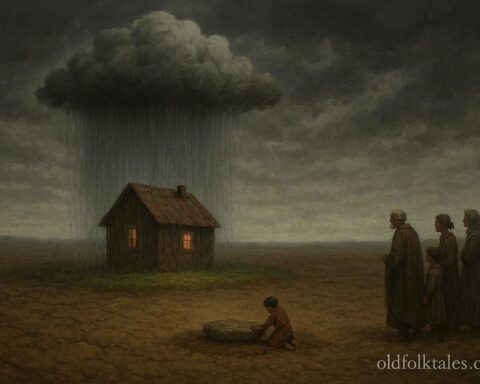
At first, the people enjoyed the quiet. The nights were calm, the winds unmoving. But soon, something strange began to happen. The next day dawned hot and dry, the blue sky cloudless. The second day brought even harsher sun, and by the third, the streams began to shrink. The leaves on the corn wilted, and cracks opened in the fields.
Still, no rain came.
The elders gathered around the fire, whispering in worry. “The frogs have stopped singing,” they said. “Without their song, the rain spirits do not know they are welcome.”
The drought worsened. Rivers shrank into muddy threads, animals wandered in search of water, and the once-green valleys turned brown and brittle. The people began to understand the weight of what had been lost, not just water, but the harmony between human pride and nature’s spirit.
At last, the villagers went to the ponds, their voices full of sorrow. “Frogs,” they called, “forgive us. Please, sing again so the rains may return.”
From the cracked mud, the frogs answered softly, “We cannot sing without kindness. The song of rain is born from respect.”
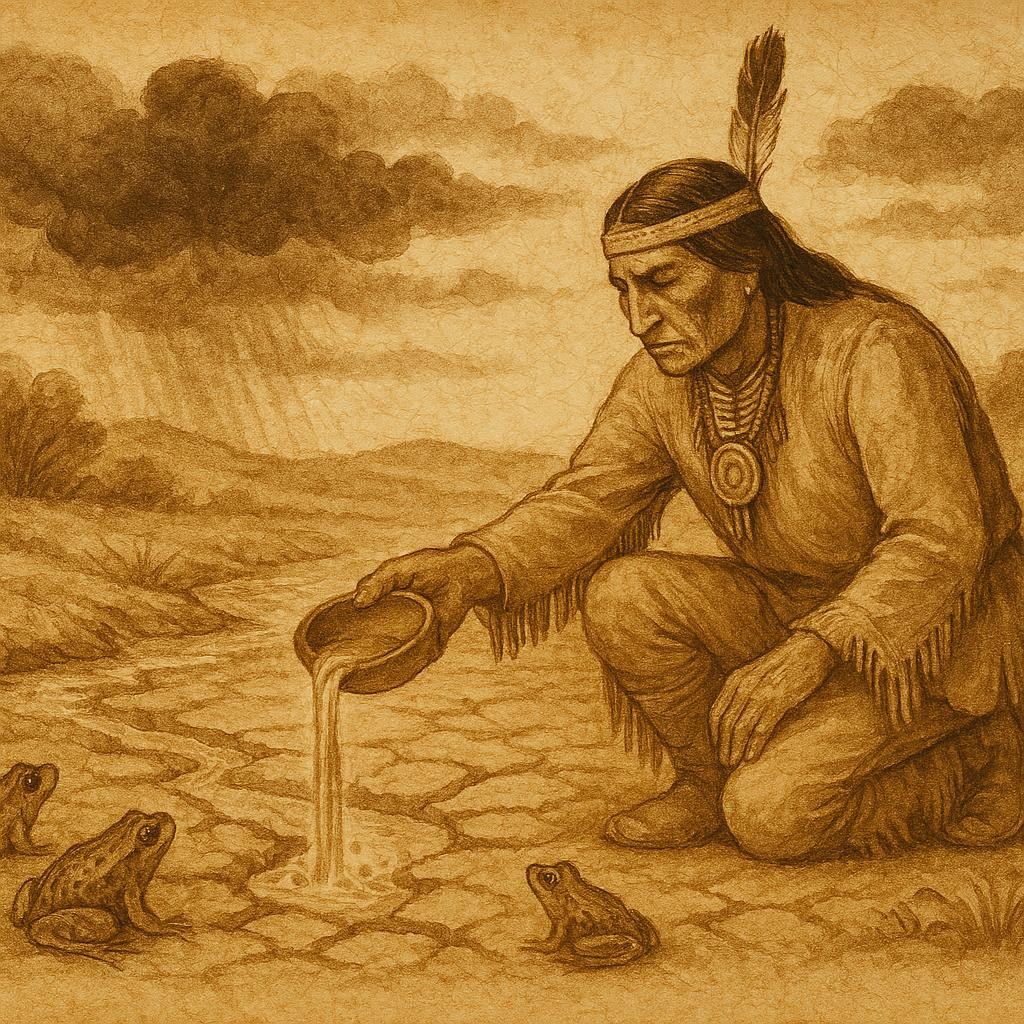
The people carried this message to the chief. At first, he was silent. The heat had dimmed his pride, and he saw now how the world had mirrored his own stubbornness. He walked to the edge of the riverbank, now dry and dust-filled, and knelt in the hot earth. Taking his water gourd, he poured the last of it onto the ground and spoke humbly:
“Forgive me, small singers of the night. I mocked what I did not understand. Let your voices rise again. I will listen.”
As the last drops sank into the earth, a deep rumble came from the sky. A cool wind brushed his face. From the horizon, dark clouds gathered, heavy and full. Then came the first peal of thunder.
That night, as the first rain in many moons began to fall, the frogs lifted their voices once more. Their songs filled the valleys, joyous, endless, and alive. The people danced beneath the storm, their hearts full of relief and gratitude.
Since that day, the Cherokee people have said that when frogs croak after a drought, the rain will soon follow. Their songs are still heard as messages to the sky, reminders of humility and the sacred duty to honour even the smallest voices in nature.
Click to read all American Traditions & Beliefs — the living folklore of daily life, customs, and superstitions.
Moral Lesson
The story teaches that respect and gratitude toward all living things sustain the harmony of the world. Even the smallest voices carry great power when treated with kindness.
Knowledge Check
1. What caused the frogs to stop singing in the Cherokee folktale?
A proud chief mocked their song and ordered them to be silent, breaking the balance of nature.
2. What happened when the frogs obeyed and became silent?
The rains stopped, crops withered, and a long drought covered the land.
3. How did the chief restore harmony and bring back the rain?
He humbled himself, poured water onto the dry earth, and asked the frogs for forgiveness.
4. What do the frogs’ songs symbolize in Cherokee folklore?
They represent respect, gratitude, and the vital connection between humans and nature’s balance.
5. According to the tale, what do Cherokee elders say when frogs sing after a drought?
They say it means the rain is near, as the frogs still sing for the good-hearted.
6. What cultural lesson does this Cherokee folktale teach?
It teaches humility and the importance of listening to nature’s smaller, wiser voices.
Source: Adapted from Carole G. Vogel, Weather Legends: Native American Lore and the Science of Weather (Scholastic, 2001).
Cultural Origin: Cherokee Nation (Appalachian Region, Southeastern United States).