Late winter announced itself not with warmth, but with a pause. Snow still covered the ground in thick, uneven sheets. Streams ran beneath ice rather than over it. Breath hung visibly in the air. Yet for families living across New England and the Great Lakes, this moment carried meaning deeper than cold. It was the season known as the turning of the sugar maples.
Nothing about the change was sudden. The forest looked the same to an untrained eye. But those who depended on the land felt the shift. The sun lingered longer at the edge of the sky. Shadows moved differently across tree trunks. Nights tightened their grip with sharp frost, while afternoons softened just enough to loosen bark and stir life within.
Sugar maples responded to this balance alone. They did not bloom or bud to announce readiness. Their signal moved silently inside the wood. Sap began to rise when freezing nights pulled it upward and gentler days allowed it to flow. This rhythm could not be forced. It demanded waiting.
Encounter the strange and the unseen — from Bigfoot to regional monsters hiding in America’s forests.
Children were taught to watch before they were taught to act. Elders spoke little during this period, preferring observation to instruction. The ground told its own story. Snow melted first around the base of certain trees. Bark felt less brittle to the touch. Woodpeckers returned to familiar trunks. These were signs more reliable than dates written on paper.
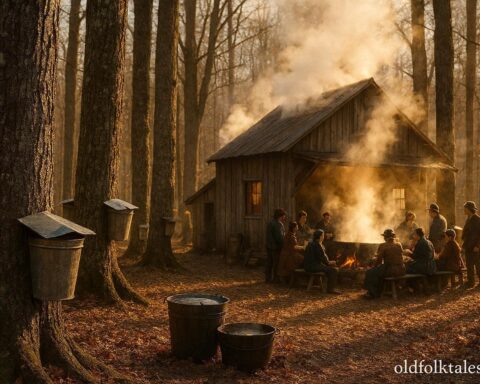
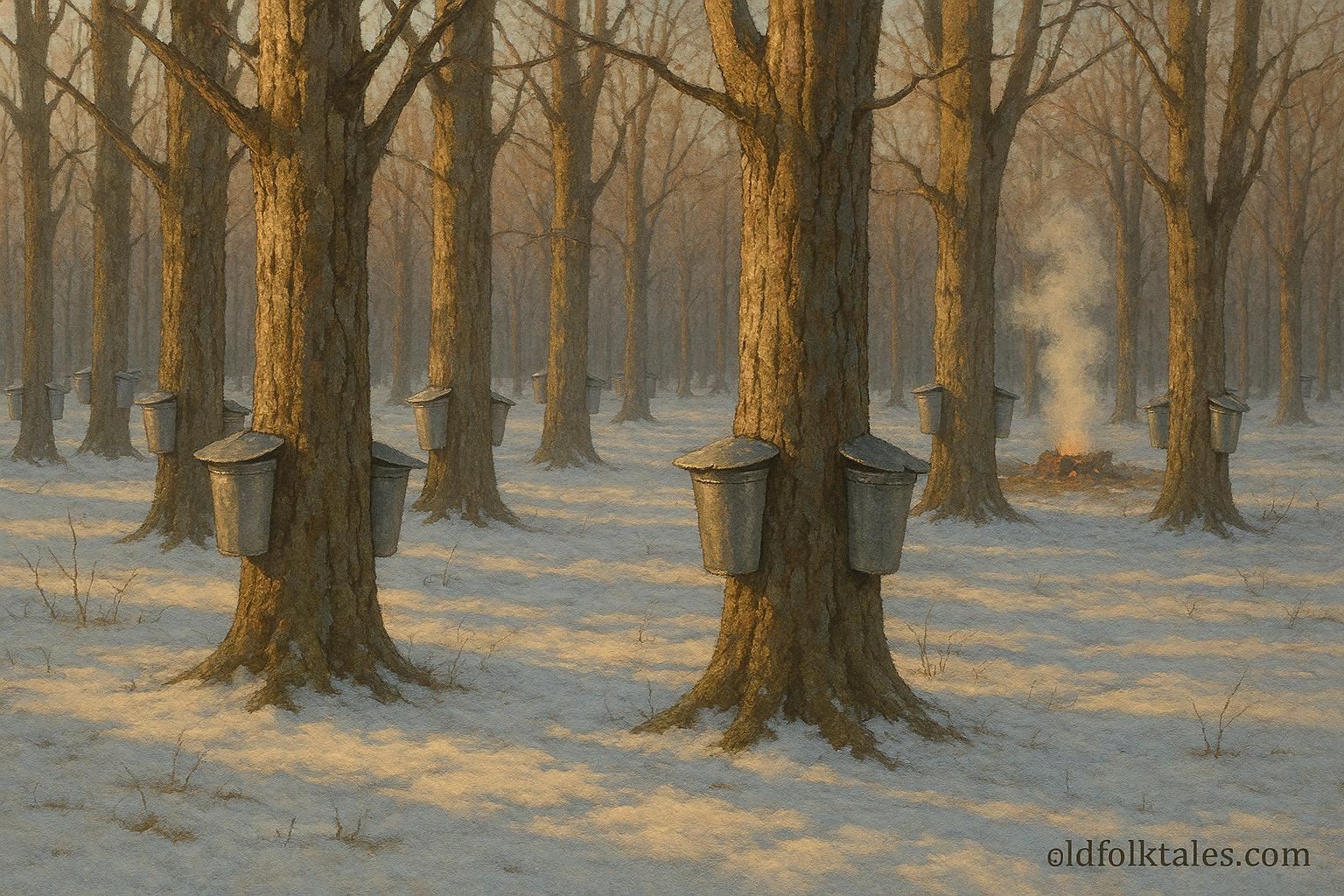
When the time arrived, preparation was calm and deliberate. Tools were kept simple. A hand drill. A wooden or metal spile. Buckets washed and ready. The work began at first light, not out of urgency, but respect. Each maple was approached carefully. A poor choice of tree could ruin the season.
Drilling required skill learned over years. Too deep, and the tree suffered. Too shallow, and the sap refused to flow. The hole was angled just enough to guide liquid outward. When the spile was tapped into place, families listened. A soft drip meant success. Silence meant patience was still required.
The first drops were always tasted. Clear and faintly sweet, they carried the cold of winter itself. Children were warned not to drink too much. Sap was not syrup yet. It belonged to the fire now.
Buckets filled slowly. Some days produced only inches. Others overflowed overnight. Weather ruled everything. A single warm night could end the flow entirely. A sudden freeze could pause it for days. No amount of effort changed this truth.
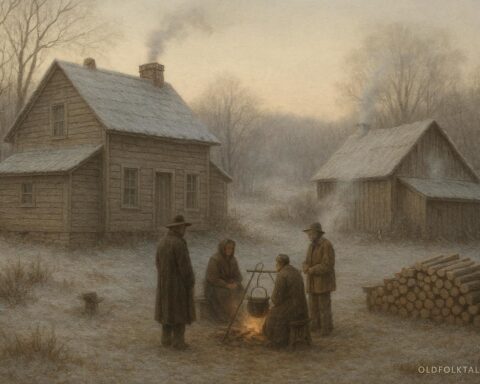
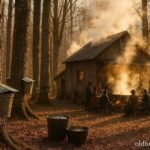
Sap was carried home by sled or cart. Care was taken to avoid spilling. The liquid was precious, even before it became sweet. Boiling began immediately. Large kettles were set over outdoor fires. Flames were fed constantly. Steam rose in thick white clouds that clung to clothes and hair.
The boiling process tested endurance. Gallons reduced to quarts. Quarts reduced to jars. Skimming foam required constant attention. Fire demanded discipline. Too hot, and the syrup burned. Too cool, and the process stalled.
This work brought people together. Neighbors arrived without invitation. Someone brought bread. Another brought stories. Songs filled the long hours. Children took turns feeding the fire and watching the bubbles change from restless to thick and slow.
Stories told during boiling were not always about syrup. They spoke of winters survived. Of poor harvests followed by good ones. Of ancestors who first learned the timing of the trees through trial and loss. Maple sugaring was never just about sweetness. It was about survival.
When syrup reached its final stage, the change was unmistakable. The color deepened. The smell filled the air. A single drop cooled on snow revealed its richness. This moment was greeted with quiet satisfaction rather than celebration. The work was not yet done.
Jars were sealed and stored carefully. Each represented hours of patience. Families knew exactly how long their supply would last. Syrup was not wasted. It flavored food sparingly. It marked special meals. It reminded people of the land’s generosity and limits.
When the season ended, it ended completely. Warm nights silenced the trees. Buckets were emptied and cleaned. Spiles were removed. Holes were left to heal naturally. Cutting a sugar maple without need was considered careless. The trees had given freely and deserved rest.
Children were taught to thank the trees aloud. Some families placed a hand against the bark before leaving the grove for the last time. The forest returned to stillness.
As centuries passed, industrial production changed the scale of maple sugaring, but not its heart. Steel pipelines replaced buckets in some places. Larger evaporators shortened boiling time. Yet many families continued the old ways on a smaller scale.
They tapped fewer trees. They boiled outside even when modern equipment was available. The tradition mattered more than efficiency. It marked the boundary between winter endurance and spring renewal.
Even now, people wait for the same signs. Freezing nights. Soft days. The turning of the sugar maples remains an agreement between humans and trees. It teaches restraint in a world that often values speed.
Sweetness earned through patience tastes different. It carries memory. It carries season. It carries the quiet understanding that the land offers its gifts only when respected.
Click to read all American Traditions & Beliefs — the living folklore of daily life, customs, and superstitions.
Moral Lesson
Lasting rewards come from patience, respect, and careful attention to natural rhythms.
Knowledge Check
1. What weather conditions allow sugar maple sap to flow?
Freezing nights followed by mild daytime temperatures.
2. Why is drilling depth important when tapping a maple tree?
Improper depth can harm the tree or prevent sap flow.
3. Why was sap boiled immediately after collection?
Fresh sap spoils quickly if left untreated.
4. How did maple sugaring strengthen community bonds?
Neighbors shared labor, food, stories, and time.
5. Why was maple syrup used sparingly in early households?
It required significant effort and time to produce.
6. Why does the tradition continue despite modern syrup availability?
The practice preserves cultural knowledge and connection to the land.
Source
Adapted from University of Vermont maple culture and folklore archives
Cultural Origin
New England and Great Lakes communities