Winter announced itself in the Southern Appalachian hills without drama but with certainty. The air sharpened. Morning frost lingered longer on the ground. Breath showed even after the sun climbed. Families watched the signs closely, because timing mattered. This was the season when work decided comfort and mistakes decided hunger. Among all the winter preparations, none carried more weight than hog killing day.
The hog had been part of the household long before this moment. It rooted behind the barn through spring rains. It grew heavy through summer heat. Children fed it scraps and learned its habits. By autumn, everyone knew which animal was meant for winter stores. Care was taken, not affection, but responsibility. The hog represented months of planning and the promise of food when fields lay silent.
No calendar marked the exact day. Instead, elders watched the weather. When nights stayed cold and flies disappeared, the decision was made. Word spread quickly, often without words at all. Neighbors simply knew. On the chosen morning, lanterns appeared along paths before dawn. Boots crunched on frozen ground. Men arrived carrying knives and rope. Women brought aprons and clean cloths. Children followed, wide eyed and quiet.
Discover chilling ghost tales and haunted places that echo through America’s towns and countryside.
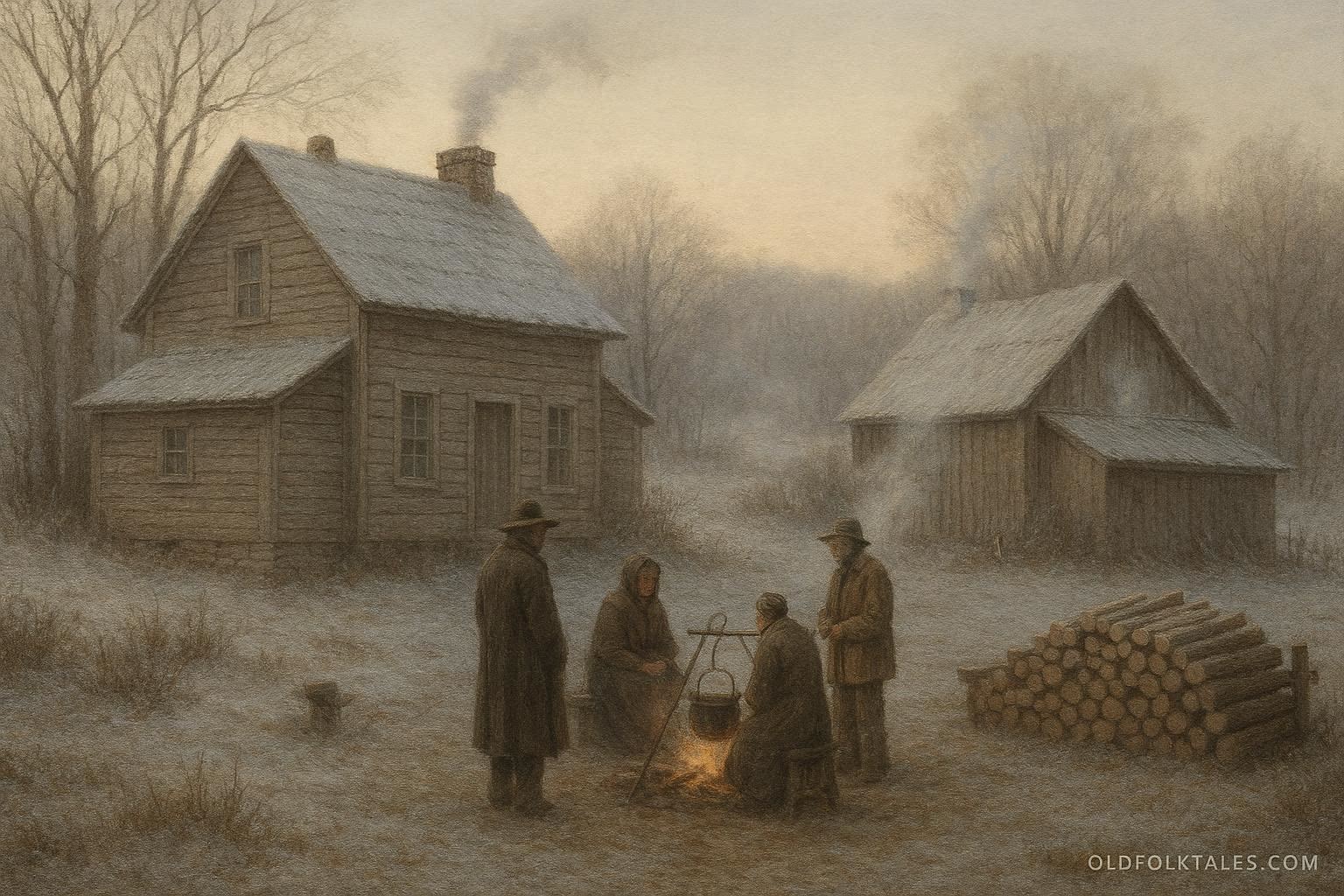
The yard became a place of purpose. Fires were lit under iron kettles filled with water. Wood was stacked carefully to maintain steady heat. Tables were scrubbed clean. Tools were laid out and checked. There was no rushing. Carelessness could spoil meat or cause injury. Silence held more respect than fear.
When the hog was brought forward, everyone focused. The task was done swiftly and cleanly. There was no cheering and no hesitation. The animal was handled with seriousness. Its life had been taken for survival, not sport. That understanding guided every movement that followed.
Scalding began immediately. Hot water was poured as several hands worked together to loosen hair from the hide. Steam rose thick into the cold air. Scraping knives moved rhythmically. This was skilled labor learned through years of watching and doing. Older men guided younger ones without speeches. A nod or a word corrected mistakes.
Once cleaned, the hog was hung. Butchering required knowledge passed through families rather than books. Each cut followed memory. Hams were separated carefully because they would become the backbone of winter meals. Shoulders and sides were measured by eye. Fat was trimmed and saved. Even the smallest pieces had purpose.
Inside the house, another world of work unfolded. Women and older girls prepared sausage meat. Large bowls held ground pork mixed with salt and spices. Each family guarded its seasoning closely. Some favored pepper. Others used sage. Children turned the grinder handle until arms tired, learning that strength served the group.
Casings were washed and filled by hand. Fingers moved quickly, twisting links with practiced ease. Laughter returned here. Stories flowed more freely indoors. Yet even this warmth carried urgency. Meat waited for no one.
Outside, smokehouses were opened for the season. Fires were built low and steady. Green hickory or applewood was chosen carefully. Hams were hung so smoke could reach all sides. This process would take weeks and demanded daily attention. Too much heat ruined meat. Too little smoke invited spoilage. The smokehouse became a place of quiet vigilance.
Fat was rendered in large kettles. Slowly, it melted into clear lard. Cracklings formed and were scooped out and fried. These were shared immediately, one of the few tastes enjoyed before winter fully set in. Lard was poured into crocks and sealed. It would flavor bread, grease pans, and light lamps. Nothing was wasted.
As daylight faded, exhaustion settled in. Tools were washed. Tables scrubbed. The ground told the story of the day in trampled frost and scattered straw. Yet no one left immediately. A shared meal followed, often made from fresh cuts not meant for storage. Cornbread filled plates. Greens simmered. Meat steamed.
That evening mattered as much as the work. Neighbors stayed to eat and talk. Children listened as elders told stories of past winters. Laughter softened tired muscles. The sense of safety returned. Smokehouses were full. Crocks were sealed. Winter felt manageable again.
Hog killing day was never only about food. It taught cooperation in a world where isolation meant danger. No family could manage alone. Help given today would be returned later. When sickness came or storms struck, the memory of shared labor carried obligation.
Children learned without lectures. They saw how preparation prevented fear. They learned respect for animals and for work. Winter stopped being an idea and became a responsibility.
As years passed, refrigeration and store bought meat changed habits. Many families stopped raising hogs. Yet memory remained strong. Elders spoke of those days with clarity. They remembered the cold air, the smoke, the weight of knives, and the feeling of readiness when it was done.
Some communities kept the tradition alive, scaled smaller, more symbolic. Others let it fade. But its lessons stayed rooted. Preparation mattered. Community mattered. Survival was earned through shared effort.
Hog killing day stood as proof that winter did not forgive carelessness. It rewarded planning and punished delay. In learning this, generations built resilience without naming it.
Even now, when snow falls quietly on the hills, some remember the smell of smoke and the sound of scraping knives. They remember a time when food security depended on hands working together.
The season passed because people prepared for it. And that knowledge, more than meat or smokehouses, was what sustained them.
Step into America’s cultural roots — from folk healing and weather lore to seasonal celebrations.
Moral Lesson
Preparation and cooperation ensure survival during times of hardship.
Knowledge Check
1. Why was hog killing done in early winter?
Cold weather helped preserve meat safely.
2. Why did neighbors gather for hog killing day?
The work required many hands and reinforced community bonds.
3. What role did children play during hog killing day?
They assisted with small tasks and learned essential skills.
4. Why was nothing from the hog wasted?
Every part contributed to survival through winter.
5. What was the purpose of the smokehouse?
To cure and preserve meat for long term storage.
6. Why do some communities still remember this tradition today?
It represents preparedness, cooperation, and self reliance.
Source
Adapted from University of Kentucky rural life folklore archives
Cultural Origin
Southern Appalachian communities