New England in the late nineteenth century was a place caught between worlds. Railroads and newspapers carried modern ideas into rural towns, yet older beliefs still shaped how communities understood suffering and death. Tuberculosis, then commonly called consumption, moved slowly through families, stealing breath and strength over months or years. Doctors could offer little more than rest and hope. As loved ones faded one by one, explanations rooted in folklore began to feel as reasonable as medicine. In this uncertain space, the story of Mercy Brown took hold.
Exeter, Rhode Island, was a small farming community where family ties ran deep and privacy was limited. When illness entered a household, everyone knew. The Brown family was no exception. Over several years, tuberculosis claimed the lives of Mercy’s mother and sister. Her brother Edwin fell ill soon after, growing weaker by the day. Each cough felt like a countdown. Neighbors whispered that something unnatural might be at work, because the disease seemed to linger within the family rather than pass on.
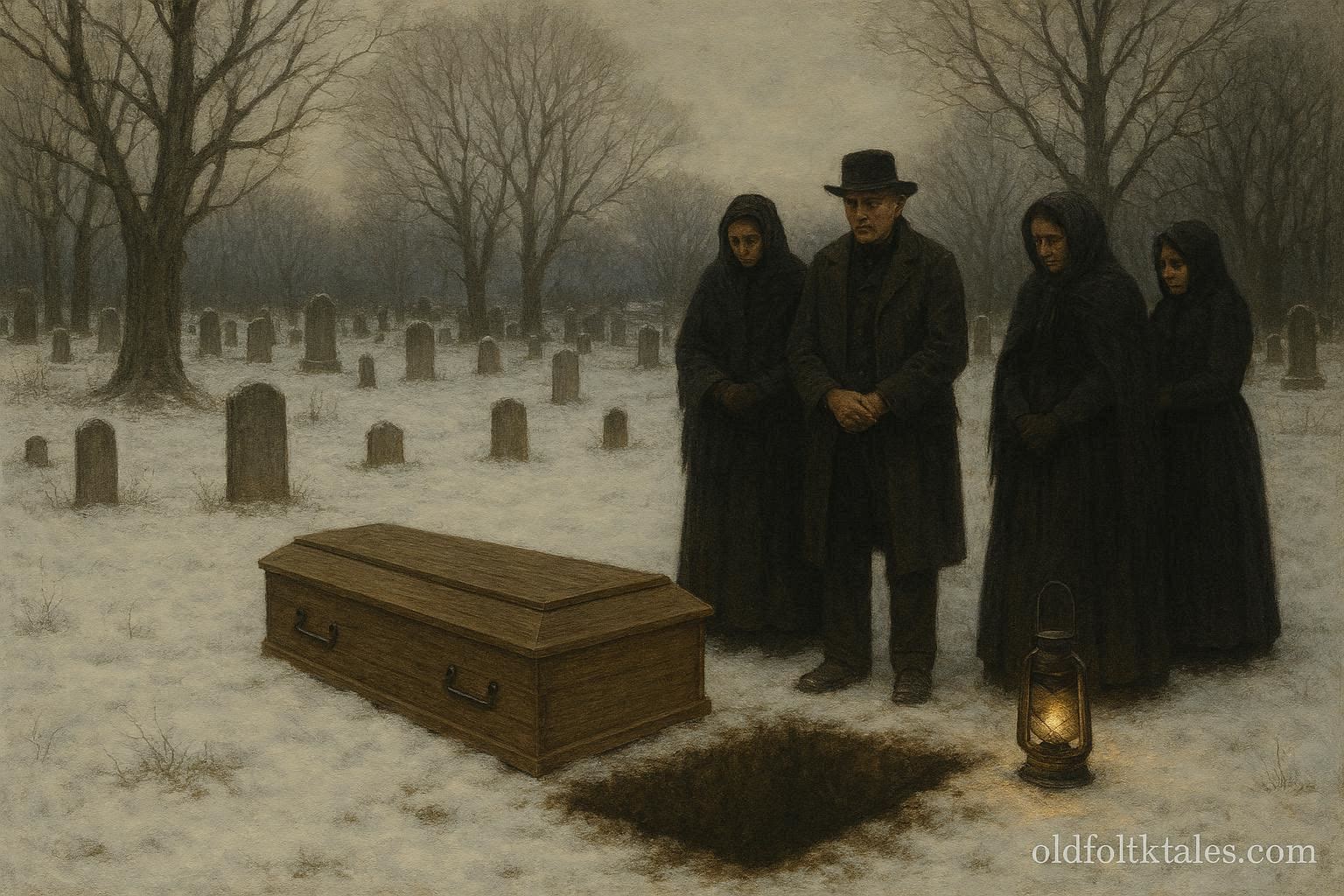
Mercy Brown herself had died earlier, during the cold winter months. Her death came quickly compared to the others, and she was buried in a family plot as was customary. At the time, no one suspected anything unusual. But as Edwin’s condition worsened, fear pushed logic aside. Local folklore suggested that when multiple family members wasted away, one of the dead might be drawing life from the living. This belief, inherited from European traditions, had adapted to New England soil.
Encounter the strange and the unseen — from Bigfoot to regional monsters hiding in America’s forests.
The idea of the undead was not theatrical or dramatic as later fiction would make it. Instead, it was practical and desperate. A revenant, according to local belief, was not a monster by choice. It was a body that failed to rest properly and unknowingly harmed the living. If such a body could be identified and neutralized, the illness might stop. In communities with few medical options, this belief offered a form of action when helplessness felt unbearable.
Community leaders and neighbors eventually convinced Mercy’s father that an exhumation was necessary. It was not done in secret or malice. The act was framed as protection, an attempt to save Edwin’s life. When Mercy’s grave was opened, observers noted that her body showed signs they interpreted as unnatural preservation. Her heart contained liquid blood. Today, science explains this easily. Cold winter temperatures slowed decomposition. At the time, however, it confirmed their worst fears.
Following local tradition, Mercy’s heart was removed and burned. The ashes were mixed with water and given to Edwin to drink, a folk remedy meant to sever the connection between the dead and the living. The ritual was solemn, not celebratory. Those present believed they were doing what was necessary, however disturbing it might seem. They hoped the illness would finally release its grip.
It did not. Edwin Brown died soon afterward, proving that the ritual failed to stop the disease. Yet the story did not fade. Newspapers reported on the event, fascinated by the persistence of folklore in an age of growing medical knowledge. Physicians criticized the practice, while folklorists preserved it as evidence of cultural transition. Mercy Brown became known nationally as one of America’s last “vampire” cases, though the word carried a different meaning than it does today.
The legend endured because it sat at the intersection of fear, love, and misunderstanding. Families were not acting out of cruelty but out of desperation. Tuberculosis was invisible, slow, and cruel. Without microscopes or antibiotics, people relied on patterns they could see. When illness followed bloodlines, folklore supplied explanations that felt logical within their worldview. Mercy Brown’s story illustrates how communities respond when science cannot yet provide answers.
Over time, the narrative shifted. Writers and historians framed Mercy as a tragic figure rather than a threat. She became a symbol of how fear can distort compassion. Her story appeared in medical journals, folklore collections, and local history texts. Unlike fictional vampires, Mercy never stalked the night. She remained a young woman whose memory was reshaped by the needs of the living.
Today, her grave is visited not out of fear but reflection. It reminds visitors of a period when death was intimate and poorly understood. The story encourages humility about progress and empathy for those who lived without it. Mercy Brown’s legacy is not one of horror, but of human vulnerability in the face of disease.
The belief in vampirism faded as medical science advanced. Germ theory replaced folklore explanations, and tuberculosis became treatable. Yet the story remains important because it captures a moment of transition. It shows how deeply cultural beliefs influence behavior, especially during crisis. Mercy Brown did not become a legend because people believed in monsters. She became one because people believed in hope, even when hope took terrifying forms.
Explore the heart of America’s storytelling — from tall tales and tricksters to fireside family legends.
Moral Lesson
Fear thrives where knowledge is absent, and compassion must be guided by understanding to prevent harm born of desperation.
Knowledge Check
- What illness affected the Brown family?
Answer: Tuberculosis, also known as consumption - Why was Mercy Brown’s body exhumed?
Answer: Local folklore suggested a deceased family member was causing continued illness - What condition of Mercy’s body alarmed the community?
Answer: Her heart contained liquid blood due to slowed decomposition - What ritual was performed to stop the illness?
Answer: Her heart was burned and the ashes given to the sick family member - Did the ritual succeed?
Answer: No, Edwin Brown died soon afterward - Why is the story significant today?
Answer: It illustrates how fear and limited medical knowledge shape cultural responses to disease
Source
Adapted from historical epidemiological research and local history archives documenting New England tuberculosis folklore
Cultural Origin
Exeter and Rhode Island communities