During the 1970s the city of Bridgeport in Connecticut was a busy coastal community known for its neighborhoods filled with closely built houses, narrow streets, and families who had lived there for generations. Many homes in the area were built decades earlier, some dating back to the early twentieth century. These older houses carried long histories, and residents often shared stories about unusual noises or unexplained events that seemed to come from the walls and floors of aging buildings.
Among the stories that circulated through the city, one particular tale gained attention and eventually became known as the Bridgeport Poltergeist legend. The story centers on a family who lived in a modest home in a quiet neighborhood. At first the house appeared ordinary. It had a small front porch, wooden stairs leading to the upper floor, and a narrow hallway that connected the living room to the kitchen.
The family moved into the home hoping to enjoy a peaceful life. For several weeks nothing seemed unusual. The rooms were arranged with simple furniture, family photographs hung on the walls, and the evenings were typically quiet as the household settled into a comfortable routine.
Explore the heart of America’s storytelling — from tall tales and tricksters to fireside family legends.
The strange events began slowly and almost unnoticed. One evening a faint knocking sound echoed through the hallway while the family was sitting in the living room. At first they believed the noise came from outside. Old houses sometimes produced creaks and tapping sounds when the temperature changed, so no one thought much about it.
Over the following days the knocking returned. Sometimes it sounded like someone tapping gently on a wall. Other times it resembled footsteps moving across the floor above. Each time the family investigated the house they found nothing unusual. Doors remained closed and no one else was present.
Soon the sounds grew louder and more frequent. The knocking sometimes came from the kitchen cabinets or from the walls near the staircase. Family members began to notice that the noises seemed to respond when someone spoke aloud. When one person asked if anyone was there, three sharp knocks echoed from the hallway.
The family attempted to ignore the strange sounds, but more unsettling events followed. Small objects began to appear in unexpected places. A spoon left on the kitchen table might be found on the counter the next morning. Books that had been stacked neatly in the living room were discovered lying open on the floor.
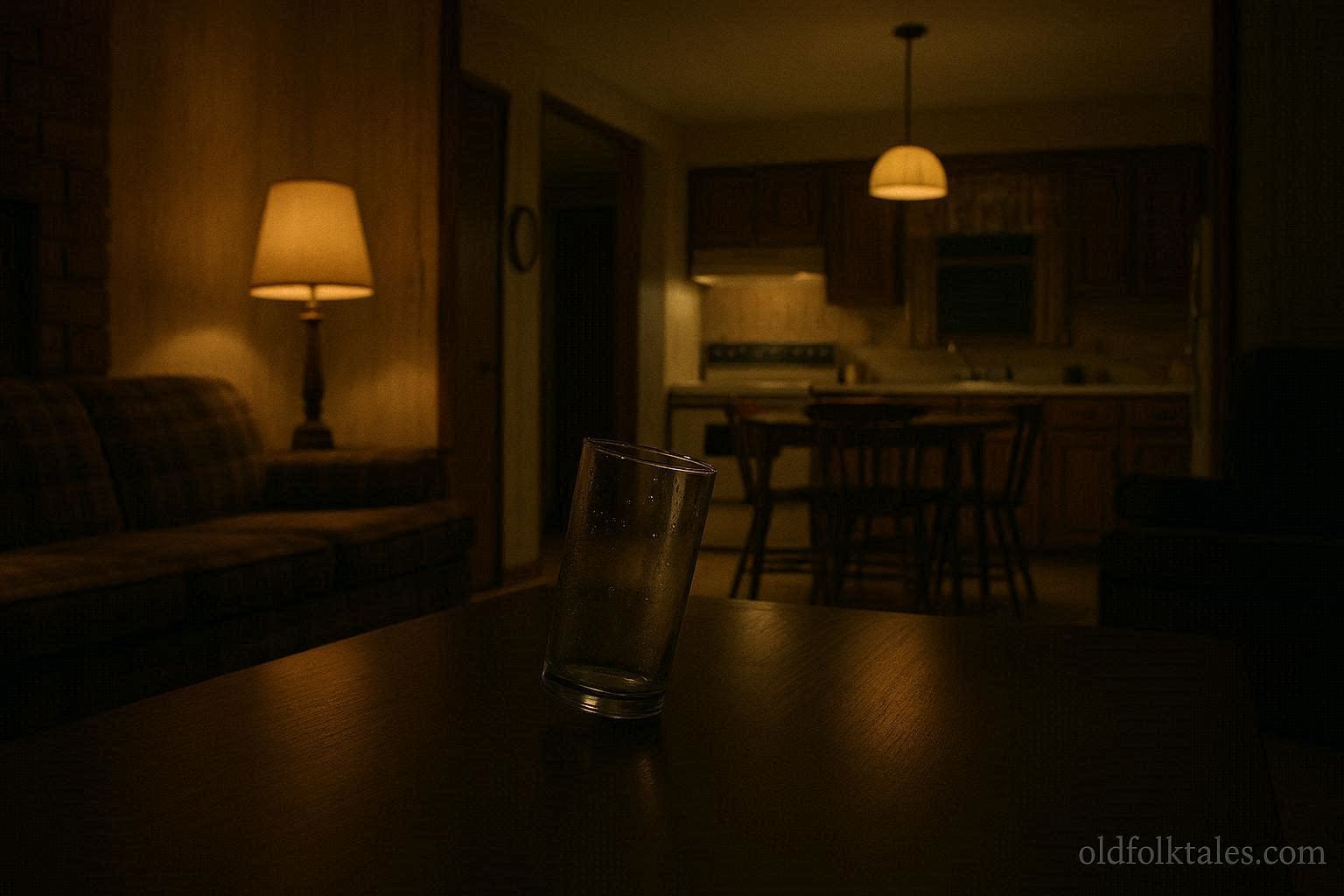
At first the family suspected that someone inside the house had moved the objects without remembering. However the events continued even when everyone was present in the same room. One afternoon a glass sitting on the kitchen counter slid slowly across the surface and stopped near the edge. Several members of the household witnessed the movement and stood in stunned silence.
Stories about the unusual events soon spread among neighbors. Curious residents visited the house hoping to hear the mysterious knocking or witness the strange activity themselves. Some visitors reported hearing faint tapping sounds coming from inside the walls. Others claimed they saw small objects shift position when no one touched them.
One of the most frequently repeated accounts describes a moment when a group of visitors gathered in the living room to discuss the disturbances. As they spoke quietly about the strange happenings, a series of loud knocks echoed from the staircase. The sound traveled from the bottom step to the top as though someone invisible was walking upward.
The atmosphere inside the home gradually changed as the activity continued. Family members became anxious and found it difficult to sleep at night. Some reported hearing footsteps in the hallway after midnight. Others said they heard the gentle sound of knocking coming from the bedroom walls.
Despite the unsettling experiences, the disturbances rarely caused physical harm. The objects that moved were usually small items such as utensils, books, or cups. The knocking sounds, though sometimes loud, never seemed to break the walls or furniture. Because of this pattern, some researchers later described the events as typical of what many people call poltergeist activity.
The word poltergeist comes from a German expression that roughly means noisy spirit. In folklore and paranormal traditions the term refers to unexplained disturbances such as knocking sounds, moving objects, or strange vibrations inside a home. Stories about poltergeists have appeared in many cultures and are often associated with houses where unusual energy or emotional tension may exist.
As news of the Bridgeport disturbances spread, people began sharing their own interpretations of what might be happening. Some believed the house was haunted by a restless spirit connected to its past. Others thought the activity could be caused by natural factors such as vibrations from passing vehicles or structural shifts in the building.
A few visitors suggested that the events might represent a form of psychological influence within the household. According to some theories about poltergeist phenomena, strong emotional energy within a family environment could somehow trigger unexplained disturbances. Whether such explanations were accurate remained uncertain, but they added another layer of mystery to the story.
Local historians later noted that many homes in older New England towns were built with wooden frames that expanded and contracted with changes in weather. This natural movement could produce tapping or knocking sounds inside walls. However this explanation did not fully account for the reported movement of objects witnessed by several people.
As months passed the disturbances gradually became less frequent. The knocking sounds appeared only occasionally and the movement of objects seemed to stop entirely. Eventually the family returned to a normal routine and the house became quiet once again.
Even though the strange events faded, the story continued to circulate through the Bridgeport community. Neighbors who had visited the home shared their experiences with friends and relatives. Over time the tale evolved into a well known local legend often referred to as the Bridgeport Poltergeist.
Today the story remains part of New England paranormal folklore. It reflects the fascination people have with unexplained events that occur in familiar domestic spaces. Unlike ghost stories that involve distant cemeteries or abandoned buildings, poltergeist legends take place inside ordinary homes where families expect to feel safe.
The Bridgeport legend also highlights how communities respond to mysterious events. Neighbors gathered to observe the disturbances, visitors offered their own theories, and the story gradually became part of the local cultural memory. In this way the legend reflects both curiosity and imagination.
Folklore researchers note that stories like this often grow stronger as they are repeated over time. Each retelling preserves the central mystery while adding new details about the knocking sounds or moving objects. These variations help keep the legend alive for future generations.
Whether the events were caused by natural factors, misunderstood observations, or something more mysterious, the Bridgeport Poltergeist story continues to intrigue listeners. It serves as a reminder that even ordinary homes can become the setting for unusual and unforgettable experiences.
Click to explore all American Ghost Stories — haunting legends of spirits, lost souls, and mysterious places across the U.S.
Moral Lesson
Curiosity about unexplained events can bring communities together, but it also reminds us to approach mysterious stories with patience, careful observation, and an open yet thoughtful mind.
Knowledge Check
- In which city did the Bridgeport Poltergeist legend take place?
Bridgeport in the state of Connecticut. - What was the first strange event noticed by the family?
They began hearing mysterious knocking sounds in the house. - What unusual behavior did some household objects display?
Small objects such as glasses and utensils appeared to move or change position. - What does the term poltergeist generally describe?
Unexplained disturbances such as knocking sounds or moving objects inside a home. - How did neighbors react to the strange events?
Many visited the house to witness the sounds or investigate the disturbances. - What eventually happened to the mysterious activity?
The disturbances gradually became less frequent and eventually stopped.
Source
Adapted from materials preserved in the Connecticut Historical Society Archives
Cultural Origin
New England paranormal folklore