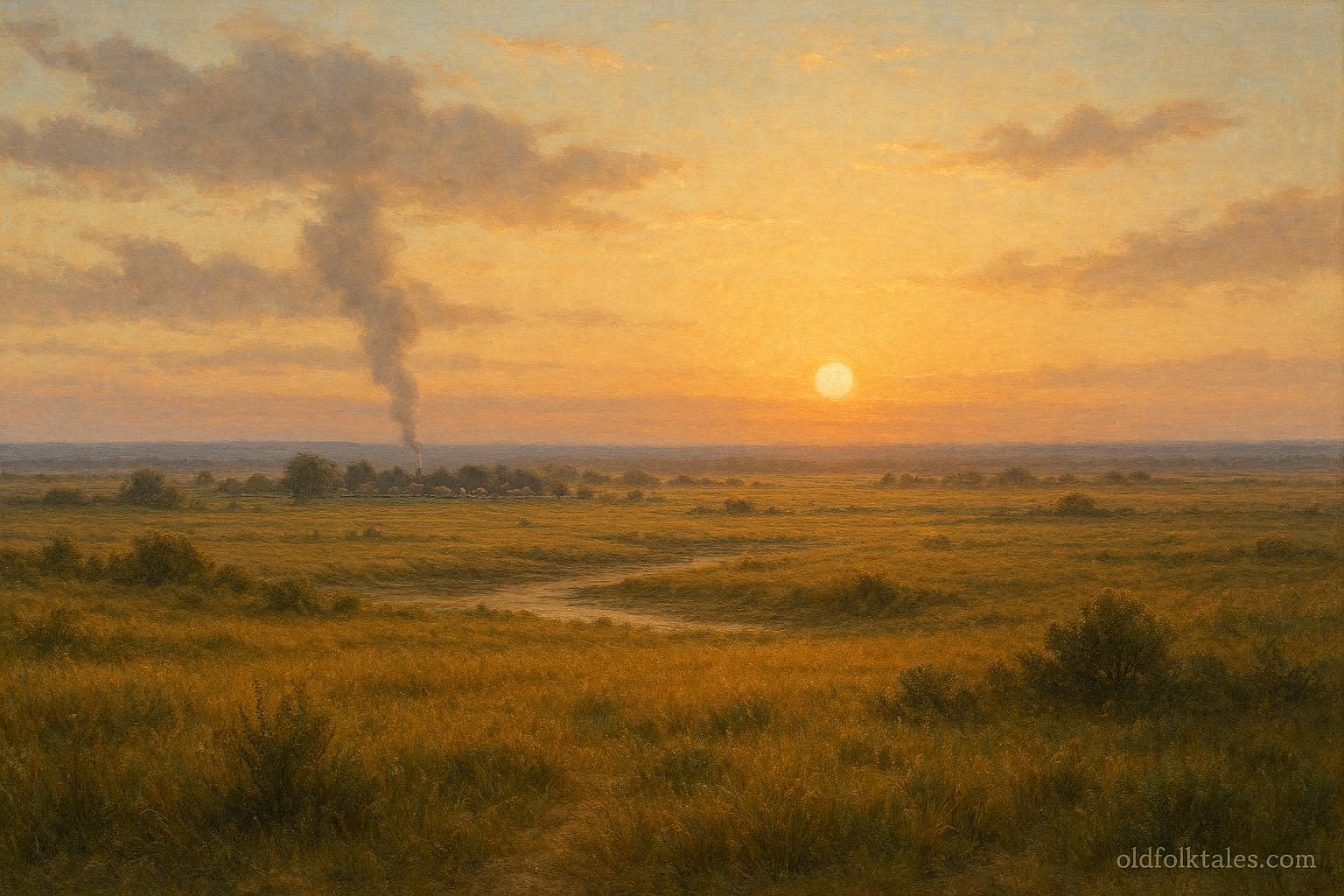
High above the rolling plains and jagged mesas, a thin wisp of smoke rose into the sky, stretching upward in the morning sunlight. It was subtle enough to appear like a natural fire, yet those who watched closely could recognize its rhythm and pattern. For generations, Indigenous communities across the Plains and Southwestern regions relied on these smoke columns as a form of early warning, a method of communication that could travel farther than voice or messenger ever could. The sight of smoke on the horizon carried meaning, prepared villages for potential threats, and preserved the lives of countless families.
The legends describe the skill involved in creating these signals. Smoke could be thick or thin, released in pulses or continuous streams, each variation conveying specific messages. Elders explained that the art of signaling required knowledge of wind, terrain, and timing. A single misstep could render the message unintelligible or even create confusion. Communities entrusted this practice to those trained in observation, coordination, and patience, often selecting individuals who demonstrated careful judgment and reliability.
Oral histories tell of children watching from the ground as elders constructed the smoke columns. Small bundles of green leaves, damp grasses, or special herbs were lit carefully, then layered to produce the desired thickness and duration of smoke. These signals were intended to travel over miles of land, seen from distant lookout points or across valleys where scouts waited attentively. The process demanded focus; a messenger’s message was only as effective as the person creating the smoke.
Encounter the strange and the unseen — from Bigfoot to regional monsters hiding in America’s forests.
One story recounts a scout stationed on a high ridge who noticed the early wisp of smoke rising from a distant village. By analyzing its pattern, the scout understood that enemy movement had been detected hours before it could be felt on the ground. Acting swiftly, the scout alerted nearby communities, enabling them to secure resources, move vulnerable members to safety, and prepare strategically. The smoke columns were not weapons themselves, but they functioned as invisible guardians across vast landscapes.
Smoke signaling was more than tactical, it was also a teaching tool. Elders instructed young members in the subtle differences between smoke colors, density, and timing. Each variation had meaning: some indicated distant reconnaissance, others warned of immediate danger, and some relayed updates on enemy positions. Children learned to watch the sky and the horizon, to recognize patterns instinctively, and to interpret messages with both eyes and mind. This knowledge was passed down carefully, ensuring the survival of communication techniques long before modern technology.
In addition to battle warnings, smoke columns often served as reminders of community coordination and unity. Preparing a smoke signal required collaboration: those who gathered fuel, those who lit the bundles, and those who interpreted the message all played vital roles. Oral histories emphasize that even a single miscommunication could compromise safety, highlighting the importance of trust and attentiveness. Through this practice, young members internalized the value of cooperation, precision, and responsibility.
Legends also recount the strategic genius involved. In some cases, communities used smoke to mislead enemies, creating patterns suggesting troop movements in one direction while actual preparations occurred elsewhere. This dual purpose of protection and deception demonstrates the complexity of Indigenous wartime intelligence. The smoke signals were both practical and symbolic, linking vigilance, creativity, and survival.
Not every smoke column indicated immediate danger. Some signaled that scouts had observed suspicious activity or that certain areas needed closer attention. Others communicated requests for resources or reinforcements. Oral traditions stress that the community had to interpret each signal carefully, understanding context and history. This interpretive skill was as critical as the technical ability to create the smoke in the first place.
Even after warfare changed and the nature of threats evolved, the stories of smoke signaling endured. Elders continued to teach children the principles behind the practice, emphasizing observation, attention to detail, and respect for communication methods. The smoke columns became more than tactical devices, they were symbols of collective memory, resourcefulness, and vigilance.
Through centuries, the practice of smoke signaling reinforced a broader lesson: survival depends not only on courage but on preparation, knowledge, and shared responsibility. Communities that remembered the meaning of each wisp of smoke, and that trained future generations to do the same, ensured continuity, resilience, and safety. The legend of the smoke columns is, above all, a story of connection between people, land, and the wisdom of those who came before.
Click now to read all American Legends — heroic tales where truth and imagination meet, defining the American spirit.
Moral Lesson
Communication, preparation, and collaboration are essential for survival. Listening carefully to signs in the environment and respecting shared knowledge strengthens communities.
Knowledge Check
- What materials were typically used to create smoke columns?
Green leaves, damp grasses, and special herbs. - How were different smoke patterns interpreted?
Variations in thickness, color, and timing conveyed specific messages such as enemy movement or scouting reports. - Who was responsible for creating and interpreting smoke signals?
Trained individuals and scouts, with collaboration from the community. - Why was miscommunication considered dangerous?
It could compromise safety and prevent communities from preparing in time. - Did smoke columns only signal immediate danger?
No, they could indicate reconnaissance, requests for resources, or areas needing attention. - What broader lesson do the smoke column legends teach?
That survival depends on vigilance, preparation, and collective responsibility.
Source
Adapted from library of Congress Indigenous communication studies
Cultural Origin
Plains and Southwestern Indigenous communities