Among the towering oaks and winding lanes of St. Francisville, Louisiana, the Myrtles Plantation stands as a testament to Southern history. Its grand white columns and blooming gardens draw countless visitors each year, eager to witness a slice of antebellum life. Yet behind its beauty, the plantation holds a story that has captured imaginations for generations: the tale of a haunted mirror that seems to bear evidence of lingering spirits.
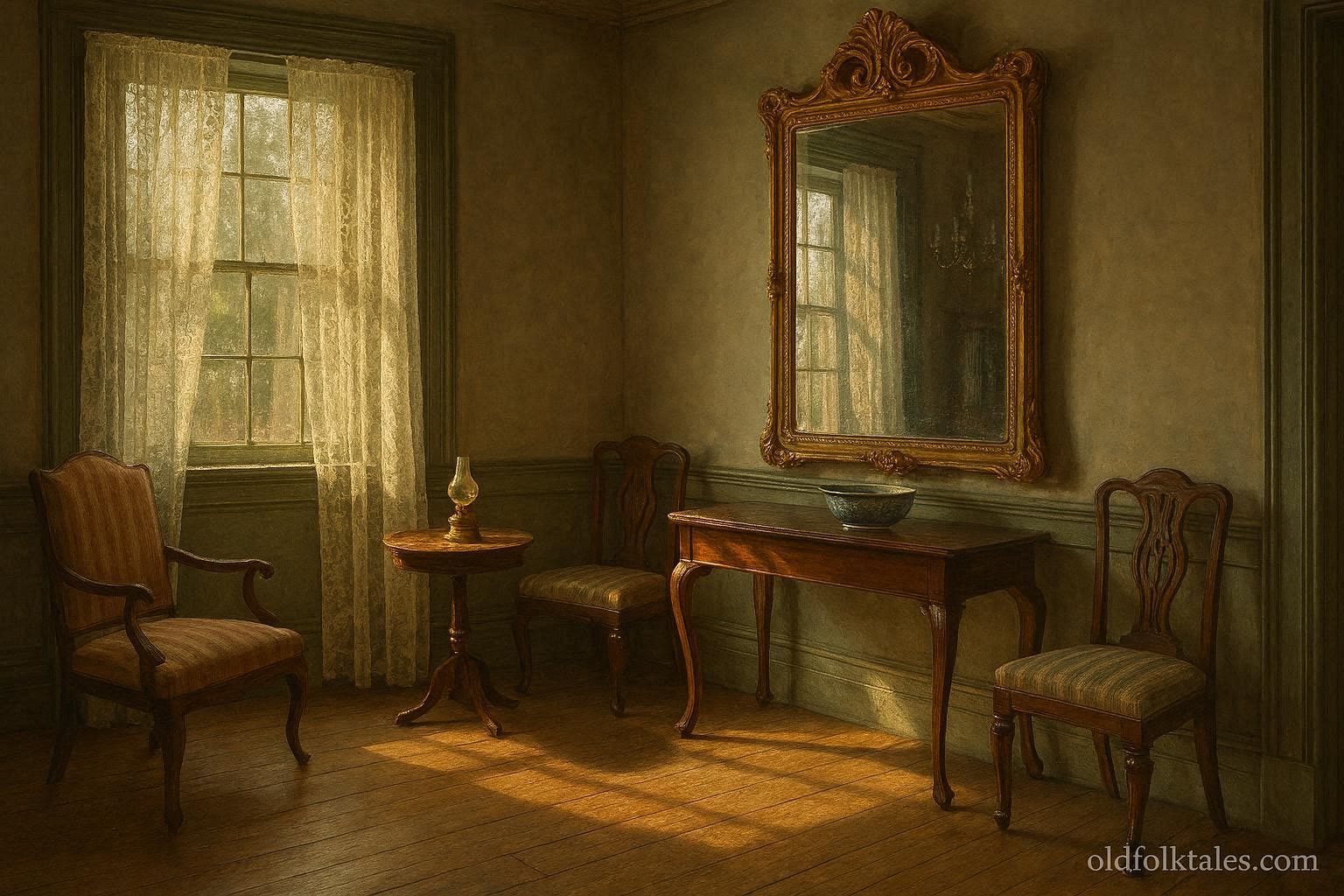
The mirror, framed in dark mahogany and polished with care, is said to reveal more than a reflection. Guests repeatedly report seeing handprints appear across its glass, even after the surface has been cleaned. Some describe the marks as faint and fleeting, fading within moments, while others insist they appear sharply and persist for minutes before disappearing. It is often accompanied by other subtle signs of the uncanny: a chill in the air, distant whispers, or the faint sensation of movement from the corner of the room.
One family visiting the plantation provides a vivid example. They paused to admire the mirror late in the afternoon, noting the warm glow of sunlight glinting off its surface. Moments later, they saw tiny handprints forming along the edge of the glass. When they tried to wipe them away, new prints appeared, as if an unseen presence were observing and responding. Terrified yet fascinated, they quickly stepped away, leaving the room in silence.
Step into shadowy legends of restless spirits and ghostly travelers in American Ghost Stories.
Stories about the mirror are intertwined with the broader history of the plantation. The Myrtles Plantation, built in the late 18th century, experienced its share of tragedy, including sudden deaths, illnesses, and family misfortune. Folklore often links the handprints to these past events, suggesting that the mirror acts as a portal or recording of emotional energy left behind. Many local storytellers believe that the spirits of those who died on the property, particularly those who experienced injustice or sorrow, linger near the mirror.
Some versions of the legend focus on Chloe, a formerly enslaved woman said to have worked in the house. According to oral histories, Chloe was skilled with herbs and often helped care for the household. Tragedy reportedly struck when she was punished unfairly, and her spirit is said to remain tethered to the home. Visitors frequently interpret the mysterious handprints as Chloe’s way of making her presence known, whether as a warning, a protective gesture, or a lingering reminder of history.
While skeptics offer rational explanations, such as dust, condensation, cleaning residues, or natural imperfections in the glass, the consistency of reports by independent visitors fuels the story’s enduring power. Even those unfamiliar with the legend often experience the phenomenon firsthand, lending credence to the plantation’s reputation for haunted occurrences.
The mirror also carries symbolic weight. Beyond its physical surface, it represents the human desire to connect with the past and to make sense of tragedy. It invites reflection not only in the literal sense but also in the moral and emotional dimensions of history. Visitors encounter a tangible reminder that every space has memory, and that echoes of human experience joy, grief, injustice can persist long after the individuals themselves are gone.
The fascination with the haunted mirror has led to extensive storytelling. Tours of the plantation often highlight it, emphasizing both the documented history and the folklore surrounding the handprints. Guests report heightened awareness in the room, sensing a charged atmosphere, hearing subtle sounds, or noticing the shifting light in ways that feel unusual. Over time, the mirror has become one of the most famous elements of the Myrtles Plantation’s collection, attracting paranormal enthusiasts and historians alike.
Historians and archivists remind visitors that folklore often blends fact with interpretation. While specific accounts of Chloe and the mirror cannot be fully verified, the narratives serve as a cultural lens, reflecting the region’s complex history, its struggles with social inequities, and its deep connection to ancestral memory. In this way, the legend transcends the supernatural, offering lessons about empathy, respect for history, and the recognition of lives once lived.
Visitors continue to experience the mirror in different ways. Some report seeing vague figures in reflections, others hear unexplained noises or feel subtle changes in temperature. The handprints remain the central element, capturing imagination with their mystery and inviting each observer to consider the stories behind them. The enduring appeal of the legend lies in its combination of historical context, regional identity, and the human fascination with the unseen.
Whether the handprints are the work of spirits, natural phenomena, or human imagination, the mirror remains a focal point for curiosity and reflection. It stands as a symbol of the stories that objects can hold and the way places carry memories through time. The Myrtles Plantation mirror reminds each visitor that the past is never truly gone, and that history, grief, and legacy often linger in unexpected ways.
Click now to read all American Legends — heroic tales where truth and imagination meet, defining the American spirit.
Moral Lesson
The haunted mirror teaches that history carries memory and that respect for the past is essential. Observing and reflecting on those who came before allows people to learn, empathize, and honor experiences that might otherwise be forgotten.
Knowledge Check
- Where is the haunted mirror located?
At the Myrtles Plantation in St. Francisville, Louisiana. - What unusual phenomenon is associated with the mirror?
Handprints that appear mysteriously on its surface. - Who is commonly linked to the legend of the mirror?
Chloe, a formerly enslaved woman said to have lived on the plantation. - Are the mysterious handprints ever officially explained?
No, they remain unexplained, though skeptics suggest natural causes. - What does the mirror symbolize in the legend?
It symbolizes memory, history, and lingering spirits. - Why do visitors find the legend compelling?
It connects them to the plantation’s history and evokes curiosity about the past.
Source
Adapted from Louisiana State University Special Collections
Cultural Origin
St. Francisville, Louisiana