The winter encampment at Valley Forge during the American Revolutionary War is remembered as one of the most difficult periods faced by the Continental Army. In the winter of 1777 and 1778, thousands of soldiers under the command of George Washington gathered at this strategic location northwest of Philadelphia. Their purpose was to regroup and train after a series of difficult campaigns. Yet what awaited them at Valley Forge was not simply military preparation. It was a harsh struggle for survival.
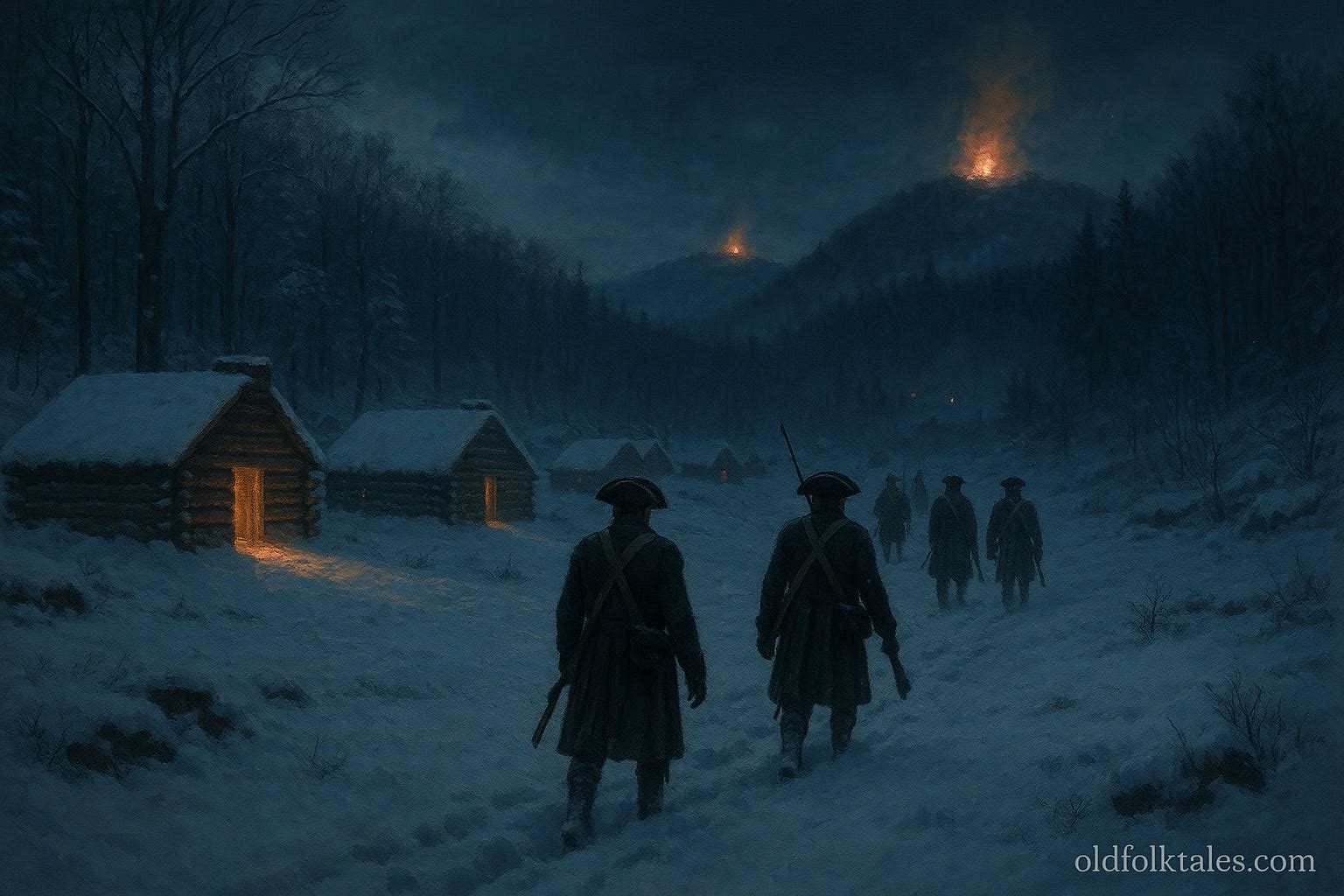
Snow and freezing winds swept across the hills and forests surrounding the camp. Soldiers lacked proper clothing, food was scarce, and many men suffered from illness and exhaustion. They built rough wooden huts to protect themselves from the cold, but even these shelters offered limited warmth during the long winter nights. Despite these hardships, the army remained determined to continue the fight for independence.
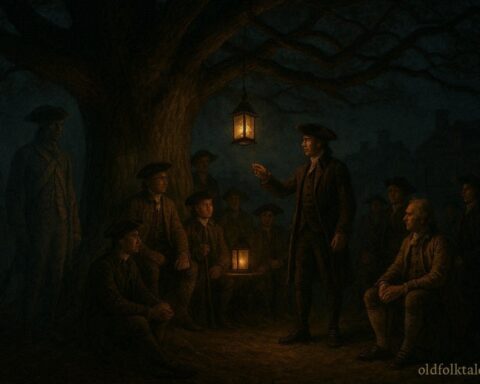
Amid the suffering and uncertainty of that winter, a strange story began to circulate among the soldiers. Patrols sent out into the surrounding hills occasionally reported seeing distant fires burning in the darkness. At first these fires appeared to be ordinary campfires placed on hilltops. However, when soldiers attempted to approach them, the flames sometimes vanished or could not be found.
These mysterious lights eventually became known in local legend as the Phantom Signal Fires of Valley Forge.
Explore ancient Native American creation myths and the symbolic tales that shaped America’s belief systems.
The forests surrounding the encampment were thick and uneven, filled with rocky ground and narrow trails. During the winter months, heavy snow often made travel difficult and disorienting. Patrols assigned to watch the countryside sometimes became lost while moving through the hills at night. In such conditions, a simple signal fire could serve as a beacon to guide soldiers safely back toward camp.
Several accounts from soldiers describe nights when a distant glow appeared unexpectedly on a ridge. The light flickered like a fire burning in the wind. Believing the flames might belong to fellow soldiers, patrol members moved toward the glow. In some cases, the light led them toward a path that eventually brought them safely back to the encampment.
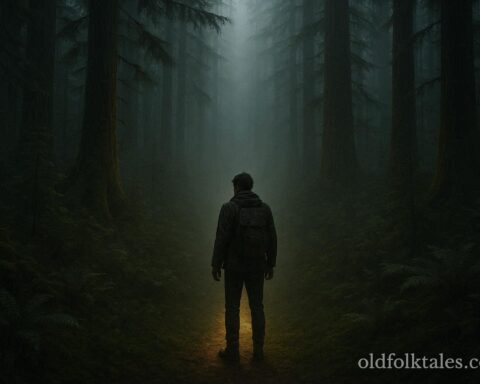
One story often repeated in Valley Forge folklore describes a patrol that had become lost during a snowstorm. The men had wandered for hours in freezing darkness. Their lanterns were dim and their sense of direction had faded as snow covered the familiar paths. Just as they began to fear that they might freeze before finding shelter, one soldier noticed a faint orange glow on a nearby hill.
The patrol followed the light carefully through the trees. The glow seemed steady and bright enough to suggest a burning signal fire. As they climbed the slope toward the light, they expected to find a group of fellow soldiers tending the flames.
Instead, when they reached the ridge, the fire had disappeared.
At first the soldiers believed the fire might have burned out quickly in the wind. Yet when they looked down from the ridge, they saw the distant lights of their own encampment visible through the trees. Without the mysterious glow leading them to higher ground, they might never have regained their bearings.
Stories like this spread quickly through the camp. Soldiers began to wonder who might be lighting these fires. Some believed they were set by scouts stationed in the hills to guide lost patrols. Others suspected that sympathetic local farmers might have placed signal fires to help the struggling army.
However, no scouts ever admitted to lighting such fires, and no villagers claimed responsibility.
This mystery caused some soldiers to believe that something supernatural might be involved. The idea of phantom lights was not unfamiliar in early American folklore. Many communities told stories about unexplained lights appearing in forests, swamps, or fields. Such lights were sometimes believed to be spirits guiding travelers or warning them of danger.
Within the harsh environment of Valley Forge, the possibility of supernatural guidance carried powerful meaning. Soldiers facing hunger, illness, and freezing temperatures often relied on faith and hope to endure the difficult months. The belief that unseen forces might be helping them survive brought comfort to many of the men.
One particularly memorable account described a sentry who spotted a small fire burning on a distant hill during a quiet night watch. The soldier watched the flames carefully, expecting to see movement around them. Yet no figures appeared near the fire.
The sentry later reported that the fire flickered brightly for several minutes before slowly fading into darkness. When officers sent a patrol to investigate the area at dawn, no sign of ashes or burned wood could be found.
These unexplained events became part of the camp’s storytelling tradition. Around evening fires inside their wooden huts, soldiers shared tales about the mysterious lights that appeared on cold winter nights. Some believed the lights were the spirits of earlier settlers guiding the struggling army. Others believed they were signs that their cause was protected by divine guidance.
Historians studying Valley Forge have found no official military records confirming the existence of these phantom fires. However, personal letters and recollections from soldiers reveal that unusual lights were sometimes reported during the encampment.
It is possible that natural causes contributed to the sightings. Reflections of distant campfires, unusual atmospheric conditions, or even lanterns carried by travelers might have created the illusion of glowing fires on distant hills. In the darkness and exhaustion of winter patrols, such lights could easily appear mysterious.
Yet regardless of their true origin, the legend of the Phantom Signal Fires became part of the enduring folklore surrounding Valley Forge. The story captures the emotional reality of soldiers who endured tremendous hardship while maintaining hope for the future.
The winter at Valley Forge eventually came to an end as spring approached in 1778. During their months at the encampment, the Continental Army also received crucial training from the Prussian military officer Friedrich Wilhelm von Steuben. His disciplined drills helped transform the struggling army into a more organized and effective fighting force.
When the soldiers finally marched away from Valley Forge, they were stronger and better prepared for the battles ahead. The Revolutionary War continued for several more years, but the endurance shown during that winter became a symbol of determination and resilience.
The legend of the Phantom Signal Fires remains one of the many stories connected to Valley Forge. Whether caused by natural phenomena or shaped by imagination and hope, the mysterious lights represent the belief that guidance can appear even in the darkest moments.
For the soldiers who walked through the snowy forests during that difficult winter, the distant glow of a fire on a hill might have meant the difference between danger and safety. Over time, those simple lights became something more powerful in memory. They became symbols of endurance, faith, and the quiet belief that help sometimes arrives when it is needed most.
Click now to read all American Legends — heroic tales where truth and imagination meet, defining the American spirit.
Moral Lesson
Even in the most difficult circumstances, hope and guidance can appear in unexpected ways. Perseverance and faith often help people find their path through hardship.
Knowledge Check
- Where did the winter encampment of the Continental Army take place?
It took place at Valley Forge in Pennsylvania. - Who commanded the Continental Army during the Valley Forge winter?
George Washington commanded the army. - What strange phenomenon did some soldiers report seeing at night?
They reported mysterious fires glowing on distant hills. - How did the lights sometimes help soldiers?
Lost patrols sometimes followed the lights and found their way back to camp. - What are some possible explanations historians suggest for the lights?
They may have been reflections of fires, lanterns, or natural atmospheric effects. - What does the legend symbolize in Revolutionary War folklore?
It symbolizes hope, survival, and guidance during hardship.
Source
Adapted from materials preserved in the Valley Forge National Historical Park Archives
Cultural Origin
Pennsylvania Revolutionary War encampment traditions