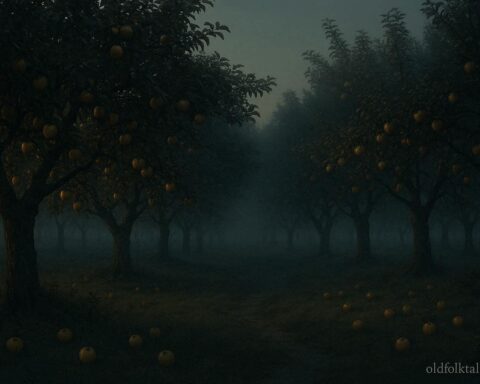
In the rural landscapes of Pennsylvania, where open fields stretched far and tree lines marked the edges of quiet roads, there was a time of day that people treated with particular caution. It was not the brightness of noon, nor the full darkness of night, but the moment in between.
Sundown.
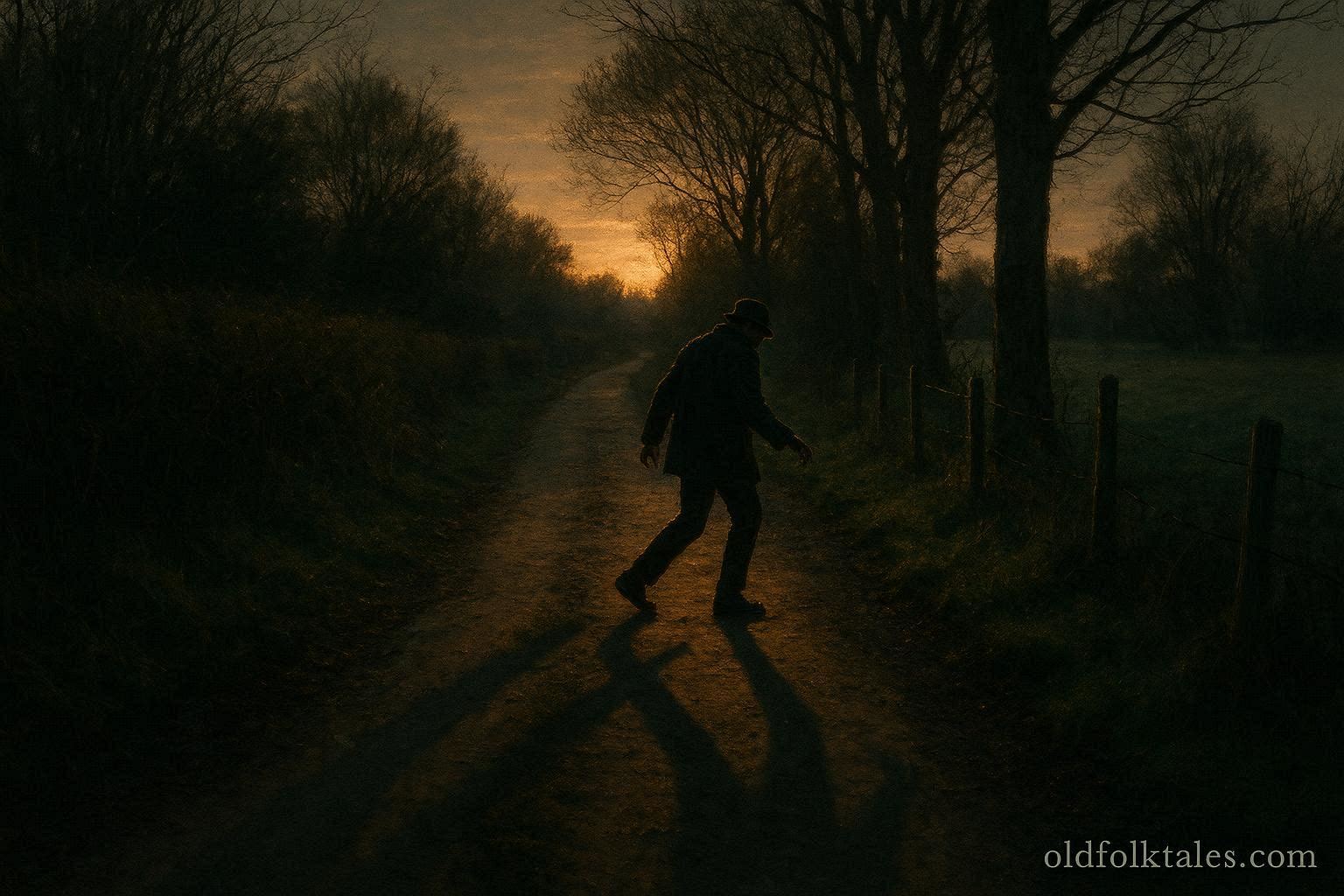
As the sun lowered toward the horizon, the land began to change. Light softened, colors faded, and shadows grew longer, stretching across the ground in uneven shapes. What had been clear and familiar during the day became uncertain, altered by the shifting light.
It was during this time that elders would offer a simple warning.
Watch where you step.
Avoid the shadows.
To an outsider, this might have seemed like nothing more than a habit of caution. But within the community, it carried deeper meaning. Shadows at dusk were not seen as ordinary. They were believed to hold something unseen, something that could affect those who passed through them without care.
Children were taught early to be mindful of their steps as evening approached. As they played in open spaces or walked along narrow paths, they were reminded not to cross certain patches of darkness cast by trees, fences, or buildings.
These were not all shadows.
Only certain ones.
Those that seemed deeper than the rest.
Those that did not move quite the same way as the light changed.
Explore ancient Native American creation myths and the symbolic tales that shaped America’s belief systems
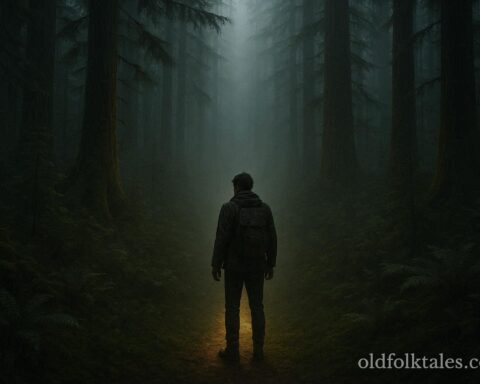
There were stories that explained why this caution existed. One told of a farmer who, after a long day’s work, walked home as the sun was setting. Tired and focused only on reaching his door, he paid little attention to the ground beneath him.
He stepped through a shadow that stretched unnaturally across the path.
It seemed no different at first.
But by the next morning, he felt a heaviness he could not explain. His strength was gone, his movements slow, as though something had followed him from that moment. Though he recovered in time, the story remained, passed on as a warning.
Another tale spoke of a child who ignored repeated instructions to avoid the shadows at dusk. Drawn by curiosity, the child stepped deliberately into one of the darkest patches beneath a large tree. That night, their sleep was restless, filled with unease. They spoke of dreams that felt too close, too real, as if something had lingered near them.
After that, they no longer questioned the warning.
The belief was not always described in the same way. Some said the shadows carried sickness, something that could enter the body without being seen. Others believed they held traces of the day’s passing, gathering what had been left behind and concentrating it in those darker spaces.
There were also those who spoke more quietly, suggesting that dusk was a time when boundaries shifted. A moment when the visible and the unseen were not as clearly separated as they were during the day. In such a time, shadows could become more than absence of light.
They could become places where something else lingered.
Whether the explanation focused on illness, energy, or presence, the practice remained the same.
Be aware.
Step carefully.
Do not cross what you do not understand.
This awareness shaped the rhythm of daily life. As the sun began to set, people adjusted their movements. Tasks were completed earlier. Paths were chosen with more care. The simple act of walking home became something done with attention rather than habit.
It was not fear alone that guided this behavior.
It was respect.
Respect for the time of day.
Respect for what could not be fully explained.
Over time, as communities grew and understanding of the natural world expanded, some began to view the belief differently. They spoke of how changing light could affect perception, how shadows at dusk might appear deeper or more distorted, creating unease.
Others noted that cooler evening air and fatigue at the end of the day could make the body more vulnerable, giving the impression that something external had caused discomfort.
Yet even with these explanations, the practice did not disappear.
In many places, it remained.
Not always spoken of in the same terms, but still present in small actions.
A step avoided.
A path adjusted.
A quiet awareness as the light fades.
The Shadow Avoidance at Sundown became more than a belief about shadows. It became a lesson in attention, a reminder that not all moments are the same, and that certain times call for greater awareness.
It also reflected a deeper understanding of transition.
Dusk was not simply the end of day.
It was a crossing point.
A moment where light gives way to darkness, where clarity shifts into uncertainty. In such moments, caution becomes a form of protection.
Even now, in places where the land still holds its quiet rhythm, the idea remains. As the sun sets and shadows stretch across the ground, there are those who still watch their steps, not out of fear alone, but out of habit shaped by generations.
They move with care, choosing where to walk, avoiding what seems too still, too deep, too different.
And in that simple act, the old belief continues.
A reminder that sometimes, what we avoid is just as important as what we choose to face.
Step into America’s cultural roots — from folk healing and weather lore to seasonal celebrations.
Moral Lesson
Awareness and caution, especially during uncertain moments, can protect us from unseen or unexpected harm.
Knowledge Check
- Why did people avoid shadows at sundown?
They believed certain shadows could carry sickness or bad luck. - Were all shadows considered dangerous?
No, only those that appeared unusually deep or different. - What happened to those who ignored the warning?
Stories described them experiencing illness or unease afterward. - What time of day was this belief most important?
At dusk, when light and darkness were shifting. - How did the belief affect daily behavior?
People became more careful about where they walked in the evening. - What lesson does the story teach?
To remain aware and cautious during uncertain or changing situations.
Source
Adapted from materials preserved by Pennsylvania State University
Cultural Origin
Pennsylvania rural folklore