Autumn arrives gently in the Shenandoah Valley. The hills do not announce the season with drama. Leaves turn quietly. Morning fog settles low and lifts slowly. Old fences reappear from summer growth. Among these changes, there are places where time seems to hesitate, where the land remembers what it was asked to do long ago.
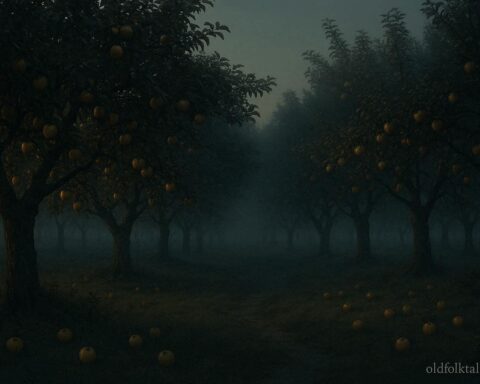
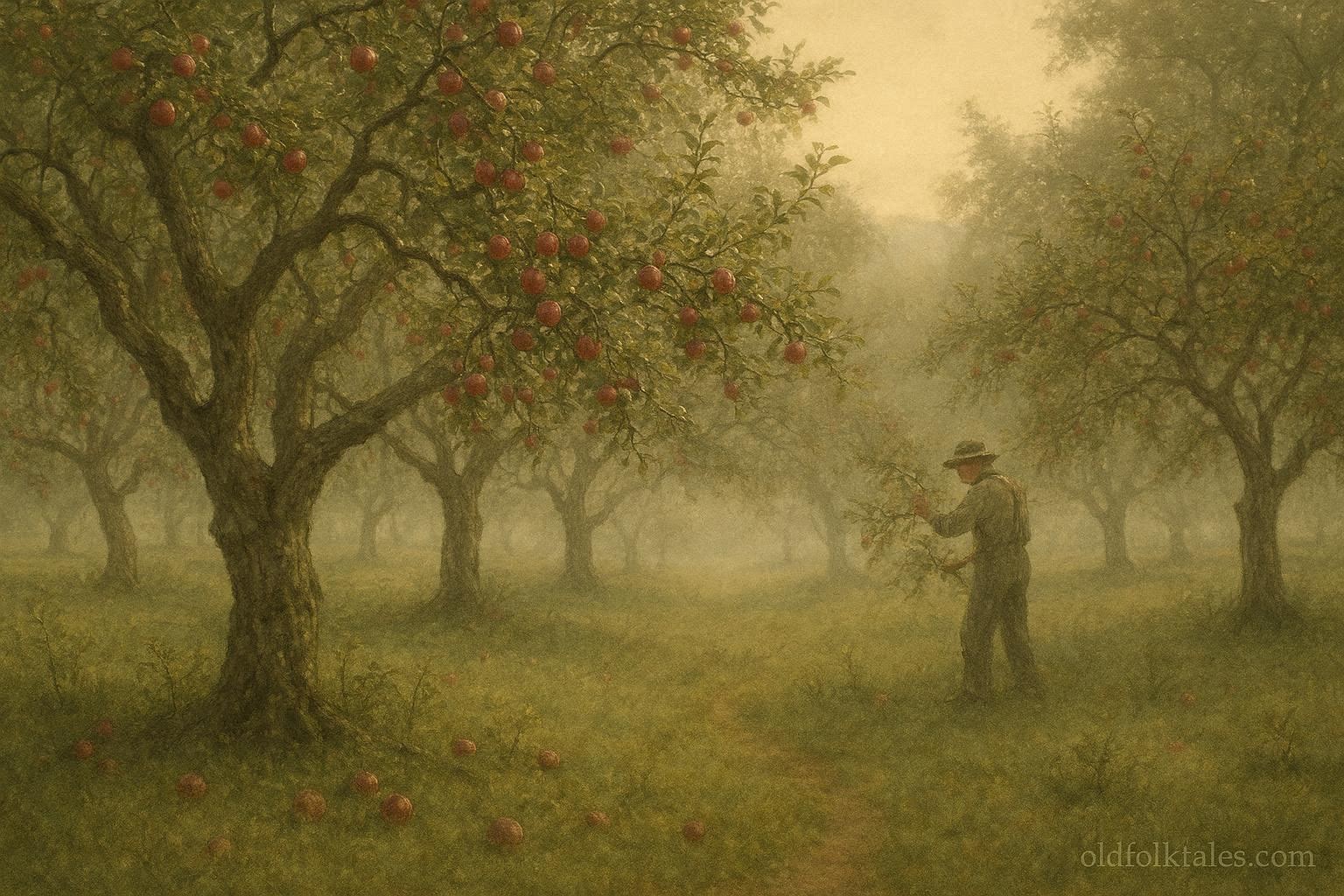
One such place is an abandoned orchard tucked against a sloping ridge. The farmhouse that once oversaw it collapsed decades ago. Its stones sank into the soil. Its fields reverted to grass. Yet the apple trees remain. Gnarled. Uneven. Older than the people who now walk past them.
And every autumn, they bear fruit.
Locals have noticed this for generations. The orchard no longer receives pruning or pest control. No irrigation reaches its roots. By every measure of modern agriculture, the trees should have failed. Instead, apples appear reliably each year, hanging heavy and intact, even when nearby neglected trees produce nothing.
The explanation offered most often is simple.
The orchard keeper never left.
Encounter the strange and the unseen — from Bigfoot to regional monsters hiding in America’s forests.
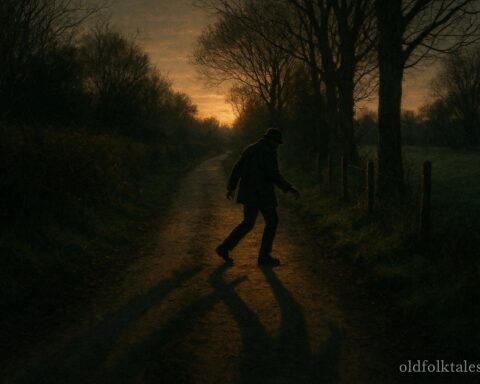
Those who encounter him describe an elderly figure moving slowly between the rows. He wears work clothes out of time, sleeves rolled, hat pulled low. He carries no tools, yet his hands pause at branches, at trunks, at the ground itself. He does not look up when approached. He does not speak.
He tends.
The earliest stories place him there before abandonment, when the orchard supported a family and nearby neighbors. He knew each tree by its yield and temperament. Some required patience. Others demanded firmness. His care was steady rather than ambitious. He believed land responded to consistency.
When the family moved away, the orchard keeper stayed behind. Some say he had nowhere else to go. Others say he simply could not imagine the land untended. Over time, people stopped seeing him during the day. Then they stopped seeing him at all.
Except in autumn.
Hikers passing through the valley report seeing him most often in early morning or near dusk. He moves with familiarity, stepping around roots that are nearly invisible. His presence brings no fear. Those who notice him feel instead a calm obligation, a sense that the orchard is not abandoned, merely quiet.
One witness described picking up a fallen apple only to feel compelled to set it gently back beneath the tree. Another recalled stepping into the orchard during a dry year and smelling fresh earth despite weeks without rain.
Farmers from nearby land sometimes speak of the orchard keeper when discussing stewardship. They say the trees respond to being remembered. That neglect is not only physical, but relational. When land is truly abandoned, it collapses inward. When it is remembered, it waits.
The orchard keeper appears to no one seeking proof. He is not drawn to cameras or curiosity. He emerges only when the work of the season requires him.
There are no dramatic signs. No glowing lights. No sudden chills. His haunting is practical. Apples ripen. Branches hold. Trees survive beyond their expected span.
Some believe the orchard keeper represents a broader Appalachian relationship with land. Farming in the region was never purely transactional. It was reciprocal. Care given today was repaid seasons later. The orchard keeper embodies that ethic taken beyond death.
Modern land surveys note the orchard as an anomaly. Trees well beyond typical productivity continue to fruit. Soil samples show no unusual intervention. The explanation offered in reports is microclimate. Local variation. Chance.
Yet each autumn, apples appear in even years when frost strikes early. Even when blight spreads nearby. Even when storms fell younger trees.
The orchard keeper walks his rows.
Those who leave offerings sometimes find them undisturbed. Others disappear by morning. Apples taken from the orchard spoil quickly if removed without care. Apples shared respectfully last longer than expected.
The keeper does not protect the orchard from harvest. He does not guard ownership. He ensures continuity.
The Shenandoah Valley has changed. Roads cut deeper. Farms consolidated. Small orchards vanished. Yet this one persists, sheltered not by fences, but by memory made active.
At the end of harvest season, the orchard grows still. Sightings cease. Fruit drops. Leaves thin. The keeper withdraws.
But when autumn returns, so does he.
Care, once practiced long enough, becomes part of the land itself.
Discover chilling ghost tales and haunted places that echo through America’s towns and countryside.
Moral Lesson
Stewardship is not ownership. True care continues even when recognition, reward, and presence fade away.
Knowledge Check
1. Where does the Orchard Keeper appear?
In an abandoned apple orchard in the Shenandoah Valley.
2. When is the apparition most often seen?
During autumn, especially near dawn or dusk.
3. What unusual phenomenon surrounds the orchard?
The trees continue to bear healthy fruit despite long neglect.
4. How does the Orchard Keeper behave toward visitors?
He does not speak or acknowledge them and continues his work.
5. What value does the haunting emphasize?
Long term stewardship and respect for land.
6. Why is the haunting considered calm rather than frightening?
Because it reflects care and continuity rather than unresolved trauma.
Source
Adapted from University of Virginia rural life folklore archives and Appalachian agricultural memory studies.
Cultural Origin
Appalachian farming communities of the Shenandoah Valley.