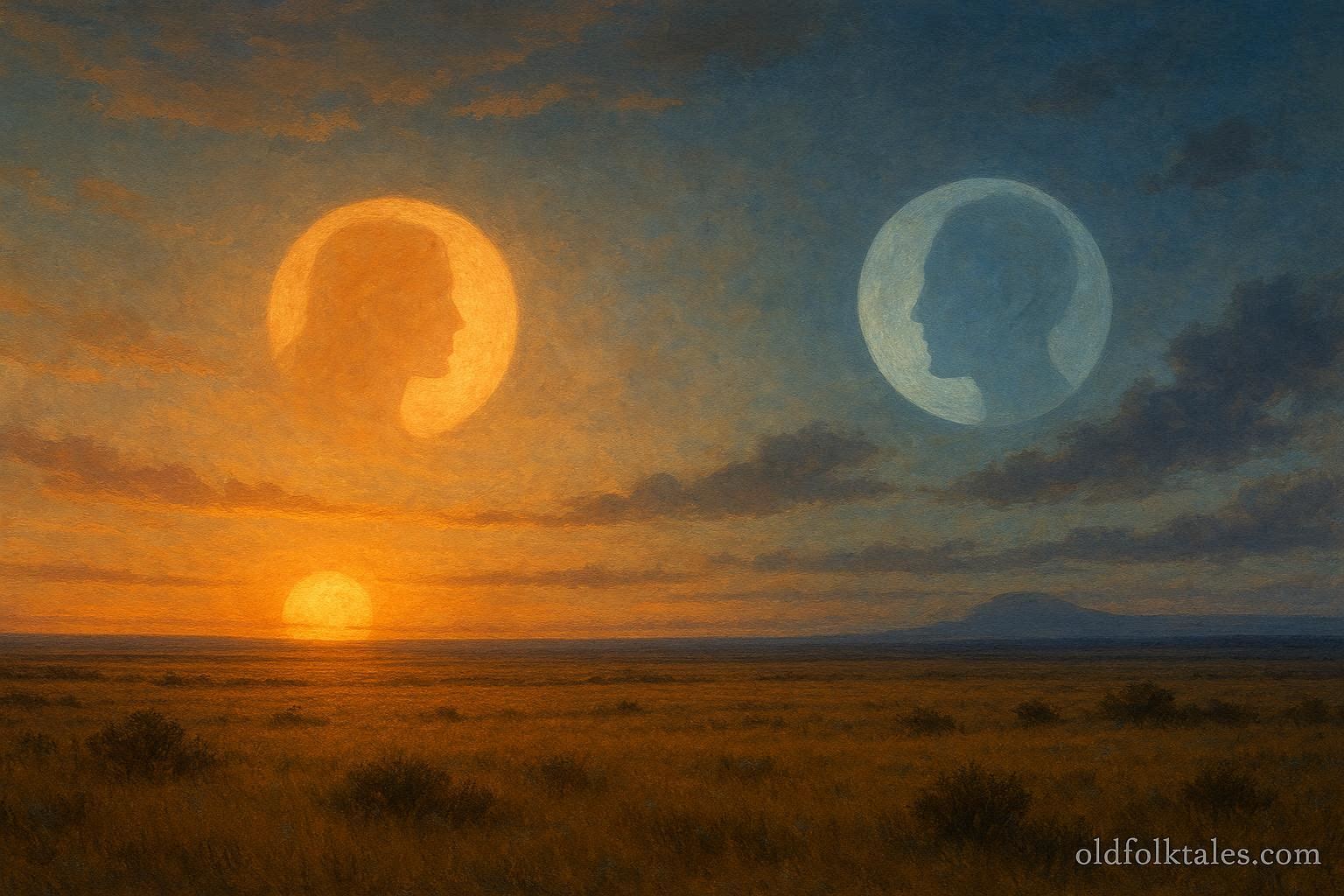
Long before the sky held a steady rhythm, before the world knew the difference between day and night, there was only a shifting light that never settled. In the lands of the Plains, where the horizon stretches wide beneath an open sky, people told of a time when the world existed without balance. Light and darkness came and went without pattern, and life moved in uncertainty.
It was in this early time that the story of the siblings began.
They were born into a world that had not yet found its order. The land was already formed, rivers moved across the earth, and the winds traveled freely, but the sky above remained unsettled. Sometimes it glowed too brightly for too long. Other times, darkness lingered without end. The people who lived during this time struggled to understand when to rest and when to work, when to travel and when to remain still.
Among them were two siblings who saw what others could not.
They understood that the world needed balance.
The elder sibling was calm and steady, watching the patterns of the sky with careful attention. The younger was energetic and bright, moving quickly and speaking with confidence. Though different in nature, they shared a deep connection and a common purpose.
Discover chilling ghost tales and haunted places that echo through America’s towns and countryside.
They began to study the sky.
They watched how the light spread across the land, how shadows formed and disappeared, how the darkness settled and lifted. Over time, they realized that the world did not lack light or darkness, but order.
And so, they decided to change it.
The decision was not simple.
To bring order to the sky, something had to take its place within it.
The siblings understood that this change would require sacrifice.
One would have to rise into the sky and remain there.
Then the other would follow.
Together, they would create a cycle that would continue without interruption.
The elder sibling spoke first, offering to take the role that required steadiness and endurance. The younger agreed, knowing that their own role would require movement and change.
At the edge of the world, where the land meets the sky, they prepared.
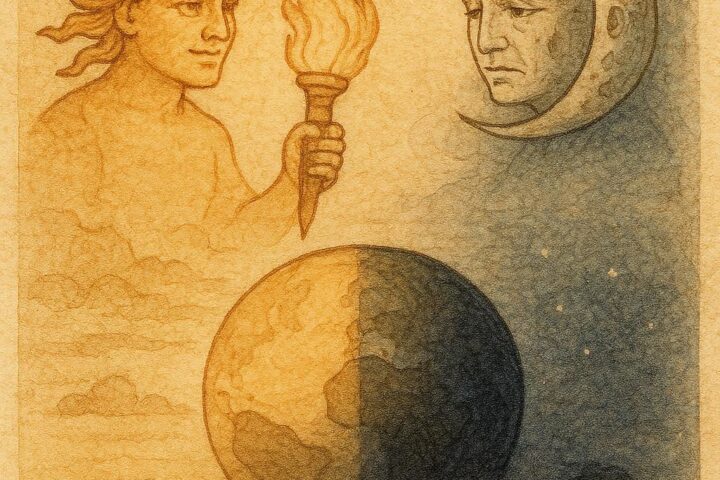
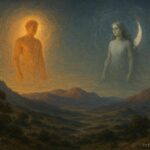
The elder sibling stepped forward, rising slowly into the sky. As they ascended, their form began to change. Their presence grew brighter, stronger, until it filled the sky with a steady, powerful light.
This was the beginning of the sun.
The land below was illuminated clearly for the first time. Colors became visible. Shadows formed in predictable ways. The people looked upward and understood, for the first time, the meaning of day.
But the sun alone was not enough.
The world needed rest as much as it needed light.
When the time came, the elder sibling began to descend, moving slowly toward the horizon. As the light faded, the sky darkened, and the land was covered in shadow once more.
Then the younger sibling stepped forward.
Rising into the sky, their light was softer, cooler, but no less important. They took their place where the elder had been, but instead of bringing brightness that revealed everything, they brought a gentle glow that allowed the world to rest.
This was the beginning of the moon.
The cycle continued.
Day followed night.
Light followed darkness.
The movement of the siblings created a rhythm that the world had never known before.
With this rhythm, life began to change.
People learned when to wake and when to sleep. They understood when to hunt, when to gather, and when to return home. The land itself seemed to respond, with plants growing in time with the light and animals moving according to the cycle.
The siblings, now part of the sky, continued their roles without pause.
The sun moved steadily across the sky, marking the passage of time with its consistent path. The moon followed, changing its shape as it moved, sometimes full and bright, other times only a small presence in the darkness.
Though they were separated, their connection remained.
They did not meet in the sky, but their movements were linked, each following the other in an endless pattern. Together, they maintained the balance that the world needed.
Stories say that their differences shaped their roles.
The elder sibling, constant and strong, became the guiding force of the day. The younger, adaptable and changing, became the companion of the night. Their balance reflected the balance of the world itself.
In some tellings, the people remember that the siblings once walked among them. They recall their voices, their presence, and the moment they chose to leave the earth behind. The sky, in this way, is not empty, but filled with the memory of those who brought order to the world.
The Plains, stretching beneath the open sky, continue to reflect this story. The movement of the sun across the horizon and the appearance of the moon at night serve as reminders of the siblings’ decision and their lasting role.
Every sunrise marks the return of one.
Every nightfall welcomes the other.
And in this cycle, the world continues as it was shaped long ago.
The story remains not only as an explanation of the sky, but as a reflection of balance. Light and darkness are not in conflict, but in partnership. Each has its place, each its time, and together they create the order that allows life to exist.
Even now, when the sun rises over the plains and the moon follows in its time, the story of the siblings lives on.
Not as something distant.
But as something seen every day.
Moral Lesson
Balance between opposites is essential for harmony and the proper order of life.
Knowledge Check
- What was the world like before the siblings acted?
It had no clear order between day and night - What did the siblings decide to do?
Bring balance by creating a cycle of light and darkness - Who became the sun?
The elder sibling - Who became the moon?
The younger sibling - What did their transformation create?
A cycle of day and night - What is the main idea of the story?
That balance and cooperation create order in the world
Source
Adapted from materials preserved by Harvard University
Cultural Origin
Plains tribes