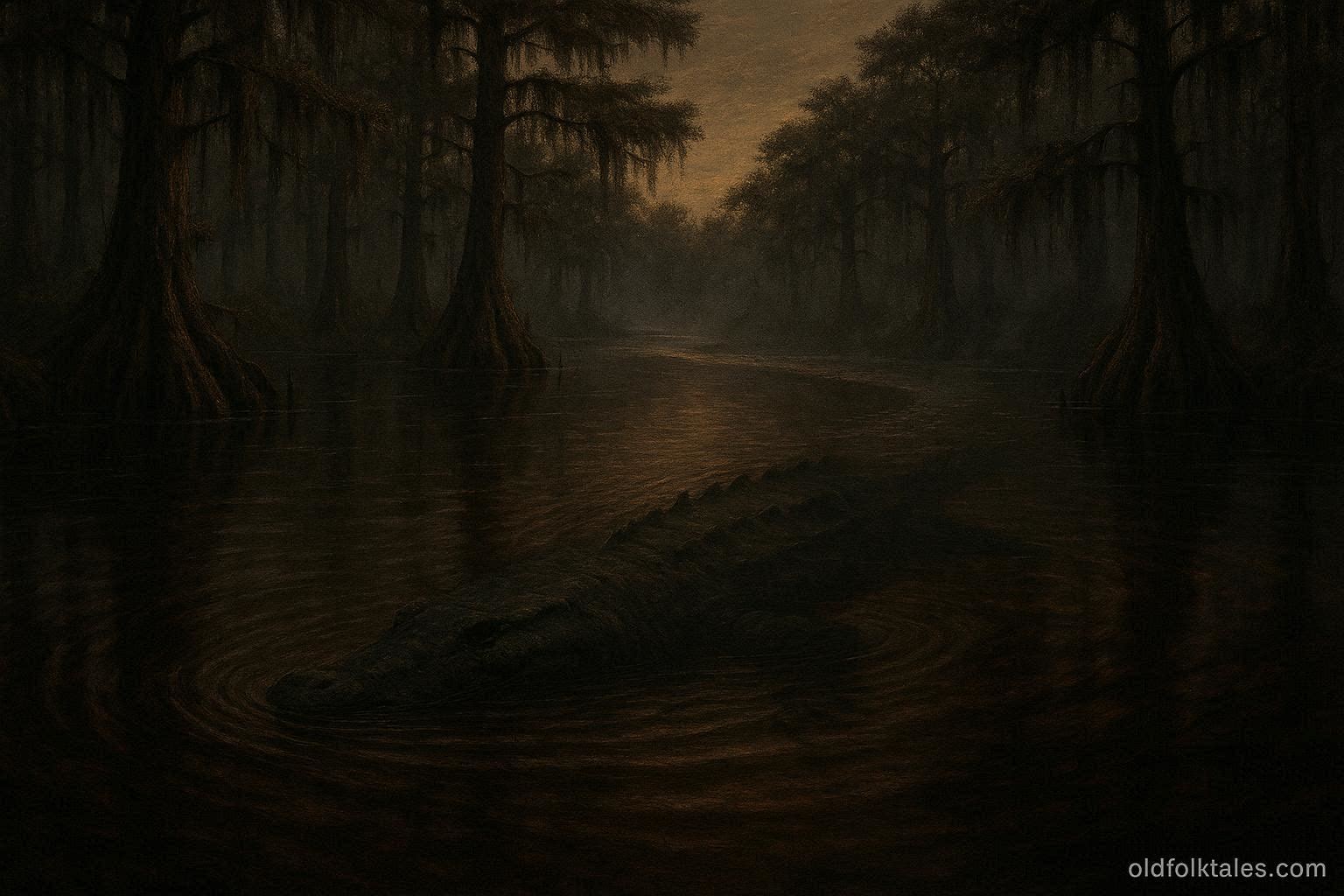
Long before modern maps traced the curves of the Altamaha River, the water was already known as something living. It moved with intention, rising and retreating according to rhythms that were not fully understood. The river did not simply divide land. It connected generations, carried memory, and demanded respect. Those who lived along its banks believed that whatever survived in its depths did so with purpose.
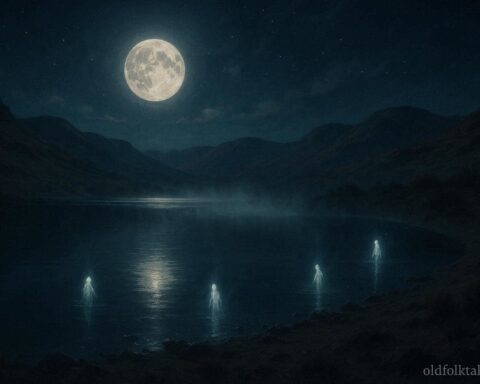
The Altamaha River winds slowly through southeastern Georgia, darkened by tannins from surrounding forests and cypress swamps. Its surface often appears calm, almost glasslike, yet beneath it lies a shifting world of currents, deep channels, and submerged bends that resist simple measurement. Early communities understood that this river was older than settlement and stronger than any tool brought to tame it.
Among the most enduring legends tied to these waters is the being known as Altamaha-ha.
The creature is described as enormous, far larger than any known fish of the river. Witnesses speak of a long, armored body resembling that of a giant sturgeon, thick and ridged, capable of breaking the surface without fully emerging. Its head is said to resemble a crocodile’s, broad and heavy, with eyes that sit high enough to watch from just beneath the waterline. Some accounts describe a horn or ridge along its head, while others speak only of its immense size and unsettling stillness.
Explore the heart of America’s storytelling — from tall tales and tricksters to fireside family legends.
Altamaha-ha is not believed to roam the river aimlessly. Instead, it is said to remain within specific stretches, particularly where the river bends sharply or where tributaries meet. These areas are often marked by sudden depth changes, submerged tree roots, or swirling currents that make navigation unpredictable. Locals learned early which waters to avoid, not because the creature was aggressive, but because its presence altered the behavior of the river itself.
Sightings often occur at dawn or dusk, when light is low and the river seems to hold its breath. Fishermen tell of nets pulled taut by something far heavier than any catch they expected, only to be released suddenly, as if whatever held them chose to let go. Others describe seeing the water rise without wind, forming a slow moving swell that travels against the current before disappearing just as quietly.
One of the most unsettling aspects of the Altamaha-ha legend is its silence. Unlike other river creatures said to roar or thrash, this being is almost never heard. Its approach is marked instead by changes in the water. Birds lift from the riverbank at once. Fish scatter. The surface smooths unnaturally, as if tension has replaced motion. Those who witness this describe an instinctive pull to leave, a feeling that they are being observed by something far older than themselves.
Elders passed down warnings rather than fear. They taught that the river has guardians, and Altamaha-ha was one of them. It was not meant to be hunted, named lightly, or challenged. Its role was to protect balance. When floods reshaped the land or when careless actions disturbed burial grounds along the riverbanks, sightings were said to increase. In this way, the creature was understood not as a monster, but as a reminder.
Stories tell of travelers who ignored these teachings. One such account describes a group attempting to dredge a shallow bend of the river to ease boat passage. The work progressed smoothly until one evening when equipment was found overturned and partially crushed, though no storm had passed. The water near the site remained disturbed for days afterward, swirling despite calm weather. The project was abandoned, and sightings ceased soon after.
Others speak of Altamaha-ha appearing during times of ecological imbalance. Fish kills, erosion, or sudden changes in water clarity were sometimes preceded by reports of a massive shape moving slowly beneath the surface. In these stories, the creature does not attack, but its presence coincides with consequences. The message is not hidden. The river responds when disrespected.
Despite its size, Altamaha-ha is rarely described as fully emerging from the water. It exists between visibility and concealment, allowing just enough of itself to be known. Some believe this restraint is intentional, reinforcing the idea that humans are not meant to fully understand or control what lives beneath the river.
As generations passed, the legend adapted without losing its core meaning. Modern witnesses describe encounters that echo older accounts. Kayakers speak of sudden currents that push against them, forcing retreat. Night fishermen describe reflective eyes just beneath the surface, unmoving and unblinking. These experiences are often shared quietly, without embellishment, because exaggeration feels unnecessary.
What remains consistent across time is the feeling left behind. Those who encounter signs of Altamaha-ha describe a deep sense of humility. The river feels larger afterward, its silence heavier. Even skeptics admit that the Altamaha does not behave like an ordinary river. Its depth conceals too much, and its history carries weight.
The legend endures because it is woven into daily life along the river. It surfaces in cautionary advice, in unspoken rules about where to fish or anchor, and in the respect shown to certain stretches of water. Altamaha-ha is not summoned by belief alone. It exists in the space where reverence meets experience.
In this way, the creature remains exactly where it belongs. Not proven, not dismissed, but remembered. Watching from beneath the dark water, patient and enduring, as the river continues to shape the land and those who live beside it.
Click to read all American Cryptids & Monsters — creatures of mystery and fear said to inhabit America’s wild landscapes.
Moral Lesson
The legend of Altamaha-ha teaches that power does not need to be loud to command respect. Nature responds to how it is treated, and guardians emerge when balance is threatened. Wisdom lies in restraint, humility, and listening to the land rather than attempting to dominate it.
Knowledge Check
- Where is Altamaha-ha believed to live?
Answer: In the deep and bend heavy sections of the Altamaha River in Georgia. - How is Altamaha-ha commonly described?
Answer: As a massive creature with a sturgeon like body and a crocodile like head. - When do sightings most often occur?
Answer: At dawn or dusk when light is low. - Is Altamaha-ha considered aggressive toward humans?
Answer: No, it is seen as a guardian rather than a hunter. - What usually signals the creature’s presence?
Answer: Changes in water behavior such as unnatural stillness or opposing currents. - What lesson do elders associate with Altamaha-ha sightings?
Answer: That the river must be respected and ecological balance maintained.
Source
Adapted from accounts and local lore about the Altamaha-ha creature documented in Georgia river folklore studies.
Cultural Origin
Altamaha River basin communities, Georgia