Golden leaves drifted slowly from orchard branches as the scent of ripened apples thickened the cool air. Wagons rolled along dirt paths, piled high with bushels gathered from trees heavy with fruit. In farming communities across the Northeastern and Midwestern United States, this scene marked one of the most anticipated moments of the year. Apple cider pressing festivals were not simply agricultural tasks. They were communal ceremonies of gratitude, preparation, and continuity.
Apples held a unique place in early American rural life. Orchard planting began almost as soon as settlements were established. Unlike delicate crops, apple trees endured harsh winters and produced abundantly once mature. The fruit could be eaten fresh, dried for storage, baked into preserves, or pressed into cider. Before refrigeration, cider was especially valuable because it preserved the harvest in liquid form and could last through colder months. Both sweet cider and fermented varieties became staples of rural households.
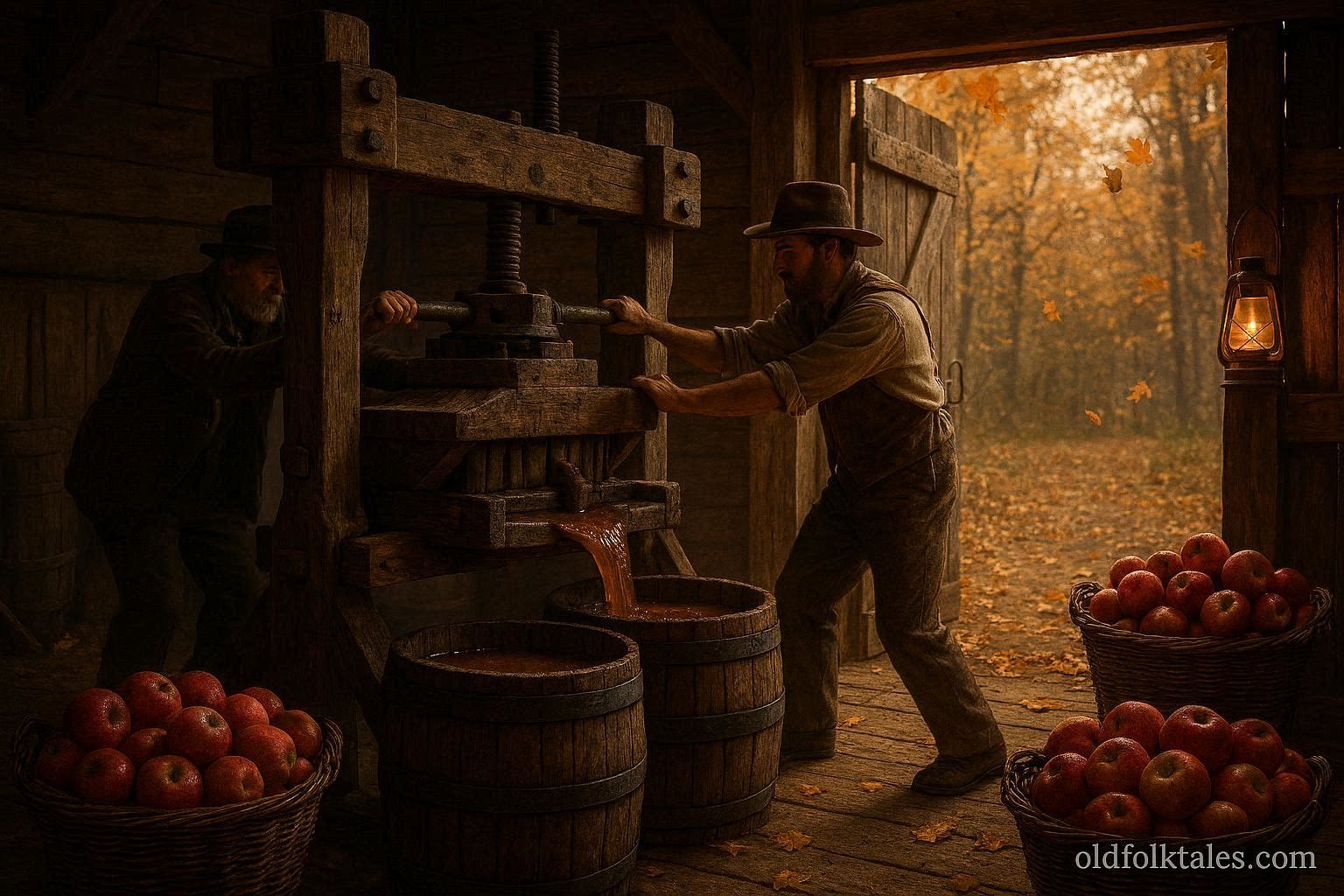
Pressing apples into cider required more than one pair of hands. The traditional wooden press stood at the center of the gathering, often inside a barn or beneath a canopy of trees. The apples were first sorted and washed. Then they were ground into coarse pulp called pomace. Layers of pomace were stacked between cloth sheets and placed beneath a heavy wooden screw or beam. With slow, steady pressure applied by hand cranks or lever arms, juice streamed from the layers into waiting buckets and barrels.
Explore the heart of America’s storytelling — from tall tales and tricksters to fireside family legends.
The sound of creaking timber and dripping cider became the music of harvest season. The labor was physical and steady, yet the atmosphere was joyful. Work flowed into conversation. Laughter echoed through barns. Children carried small pails while elders supervised the press. No single household could efficiently manage a large harvest alone. Cooperation ensured both efficiency and fairness. Each family left with barrels proportionate to the apples they contributed.
These gatherings also reinforced seasonal awareness. Autumn was a moment of transition. Fields that had been vibrant green through summer began to fade. Temperatures dropped steadily. Farmers knew that winter preparation determined survival. Cider pressing marked a turning point between abundance and preservation. The sweetness of fresh juice symbolized gratitude, while the stored barrels represented foresight.
Evening transformed labor into celebration. Once pressing concluded, lanterns were hung from rafters and tree limbs. Tables were arranged with shared dishes: apple pies, roasted squash, smoked meats, brown bread, and preserves sealed in glass jars. Fiddle players tuned instruments, and the barn floor became a dance space. These dances were more than entertainment. They strengthened bonds, encouraged courtship, and renewed neighborly trust before winter isolation set in.
Historical archives preserve oral histories describing such harvest gatherings throughout New England, Pennsylvania, Ohio, Michigan, and upstate New York. These records reveal how cider pressing festivals blended necessity with festivity, illustrating the deep interconnection between work and culture in rural America.
Symbolically, the apple itself carried layered meaning. It represented fertility of the land, patience in cultivation, and reward after months of care. Apple trees require years to mature, and their productivity depends on pruning, weather, and soil conditions. Thus, cider pressing celebrated not only a season’s yield but years of steady tending. The press transformed individual fruits into a shared resource, mirroring how individual efforts strengthened community survival.
The ritual also highlighted respect for natural cycles. Apples ripen within a narrow window. If harvested too early, they lack sweetness. If left too long, frost can damage them. Timing mattered. Farmers observed sky patterns, rainfall, and temperature shifts. Cider pressing was scheduled carefully within this window of peak ripeness. The event therefore embodied attentiveness to environmental rhythms.
In some communities, pressing days lasted several days in succession. Neighboring farms rotated use of the press. Stories recount friendly competitions over whose apples produced the sweetest cider. Children learned by watching, absorbing techniques that would later become their responsibility. Knowledge transfer occurred naturally through participation rather than formal instruction.
Industrialization eventually reduced the necessity of communal pressing. Mechanized mills and commercial bottling altered production methods. Yet the tradition did not disappear. Many rural towns preserved cider festivals as heritage events. Historical farms and living history museums now demonstrate traditional pressing techniques to modern audiences. Visitors turn heavy screws, taste fresh juice, and witness how earlier generations worked in harmony with the land.
Contemporary cider festivals often include craft markets, hayrides, and music performances. While modern adaptations emphasize recreation, the symbolic core remains intact. Apples still signify harvest abundance. Pressing still represents transformation through effort. Gathering still strengthens social bonds.
The moral dimension embedded in these festivals is subtle yet enduring. The act of pressing apples together teaches that abundance multiplies when shared. Labor becomes lighter when distributed among many hands. Preparation for difficult seasons is wiser when done collectively. Rural communities understood that isolation weakens resilience, but cooperation sustains it.
Autumn itself becomes a teacher in this story. It reminds communities to celebrate while preparing. To acknowledge change without resisting it. To store what is necessary while expressing gratitude for what is present. Apple cider pressing festivals therefore represent more than seasonal entertainment. They embody agricultural wisdom shaped by climate, geography, and human interdependence.
Each glass of fresh cider carries echoes of barns filled with laughter, the steady turning of wooden screws, and the glow of lantern light against falling leaves. The sweetness tastes of fruit, but also of memory. It tells of generations who understood that survival and celebration were not opposites, but companions.
Through these traditions, rural America preserved a rhythm of life grounded in cooperation, gratitude, and seasonal awareness. Even as society modernizes, the enduring image of apples gathered, crushed, and pressed into shared sustenance continues to symbolize the strength of communal harvest.
Click to read all American Traditions & Beliefs — the living folklore of daily life, customs, and superstitions.
Moral Lesson
Apple cider pressing festivals remind us that abundance is strengthened through cooperation. Preparation for difficult seasons requires foresight, unity, and gratitude. When communities work together, labor transforms into celebration and survival becomes shared responsibility.
Knowledge Check
- Why were cider pressing gatherings important in rural America?
They helped preserve apples for winter while strengthening community bonds. - What season is traditionally associated with cider pressing festivals?
Autumn harvest season. - Why was cooperation necessary during cider pressing?
The labor-intensive process required many hands to operate the press and manage large harvests. - What does the apple symbolize in this tradition?
Fertility, patience, abundance, and reward for steady care. - How did cider pressing prepare communities for winter?
It preserved harvest resources in liquid form for storage during colder months. - Why do some communities still host cider festivals today?
To preserve agricultural heritage and maintain seasonal cultural traditions.
Source
Adapted from archival materials of the American Folklife Center, Library of Congress
Cultural Origin
Northeastern and Midwestern farming communities of the United States