Cliffs of Moss Beach rise sharply above the Pacific Ocean, carved by wind and water into a rugged edge that feels both beautiful and unforgiving. During daylight, the coastline appears serene. Waves roll steadily below, seabirds circle overhead, and the horizon stretches wide and open. Yet locals say the land holds a different character once evening settles in. As the fog drifts inland and the sound of the ocean deepens, the cliffs begin to feel watched. It is in this shifting light that the Blue Lady is said to appear.
Moss Beach in the early twentieth century was quieter than it is today, shaped by small communities and hidden social worlds. One such world existed just beyond public view. A private coastal club stood near the cliffs, frequented by San Francisco elites seeking discretion. Though spoken of carefully, its reputation was well known among locals. Wealth and secrecy flowed freely there, but so did judgment, especially toward women whose presence challenged the era’s strict moral codes.
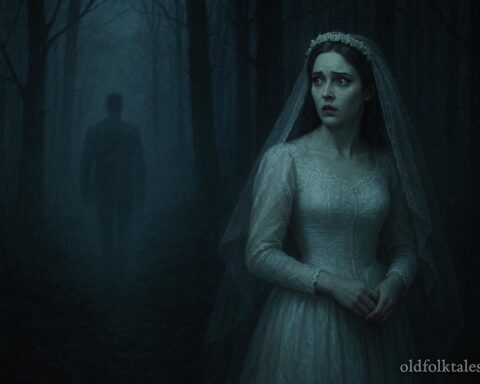
According to oral tradition, the woman who became known as the Blue Lady attended a gathering at the club one evening. She wore a blue dress, elegant but understated, and was said to carry herself with quiet confidence. Something went wrong that night. Accounts differ, but most agree that humiliation and rejection followed her presence. In a time when reputation carried devastating weight, the consequences were immediate and unforgiving.
Explore ancient Native American creation myths and the symbolic tales that shaped America’s belief systems.
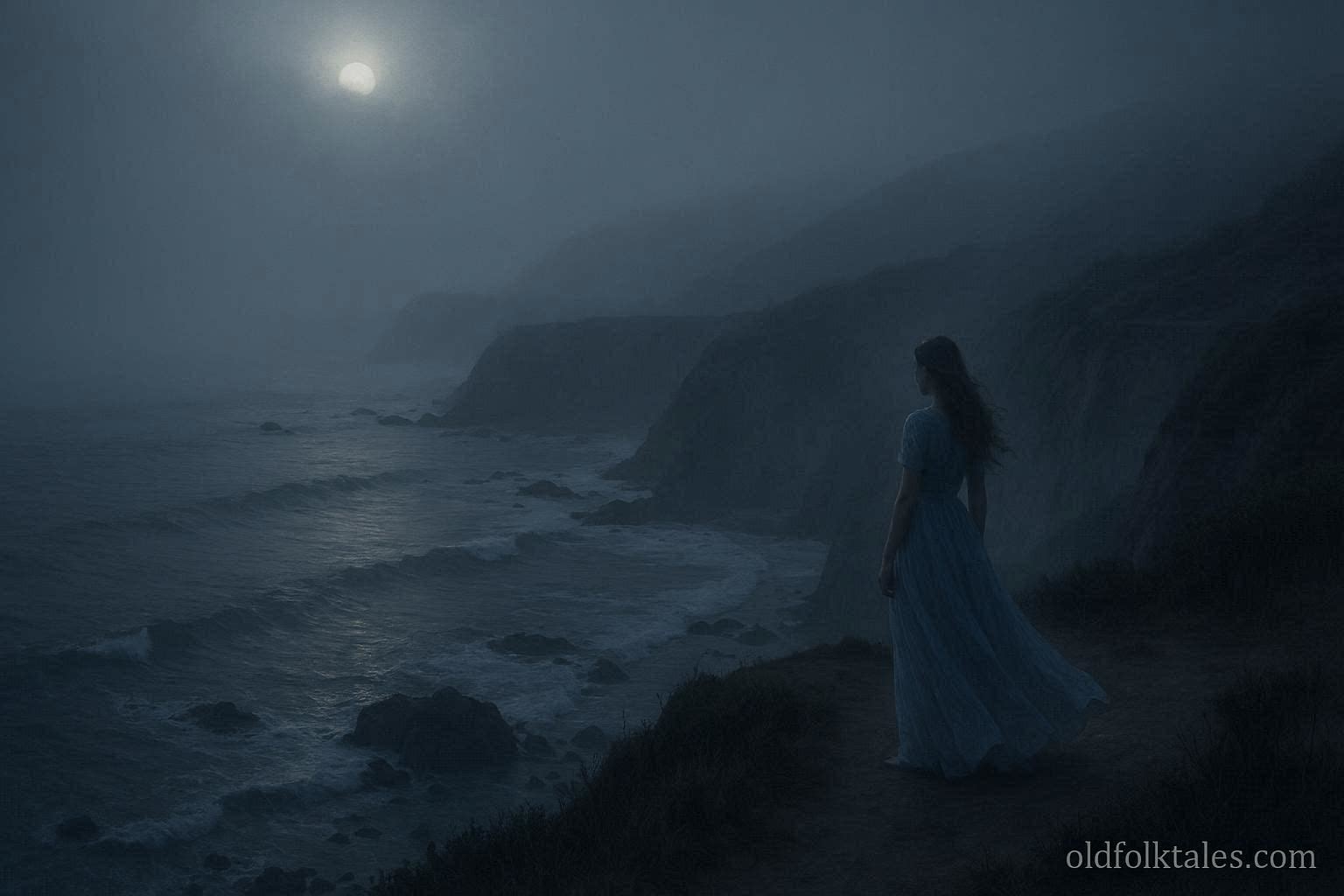
Later that night, the woman was seen walking alone along the cliffs. Witnesses described her moving slowly, her blue dress catching faint moonlight as fog rolled in from the sea. Whether by accident or intention, she fell from the cliffside. Her body was recovered days later below the rocks, claimed by the same ocean that continues to shape the coast. Official records marked the death briefly. The story, however, refused to remain buried.
Soon after, residents reported seeing a figure near the cliffs at night. The woman appeared silently, often standing where the land drops sharply into the sea. She was always dressed in blue. Those who approached claimed she never spoke. Instead, she looked toward the water, her presence heavy with emotion. When noticed directly, she vanished without sound.
The sightings followed a pattern. The Blue Lady was most often seen during foggy evenings or near anniversaries associated with the club. Some witnesses claimed to hear soft footsteps on gravel paths, followed by a feeling of overwhelming sadness. Others described sudden chills or the scent of salt and fabric, as if the air itself remembered her.
Local fishermen and longtime residents treated the legend with restraint. They warned visitors not to mock the story or approach the cliffs carelessly at night. The Blue Lady, they said, did not seek harm, but the cliffs themselves were dangerous. In this way, the legend served both as remembrance and caution, blending emotional history with physical reality.
As Moss Beach developed, the legend adapted. New generations learned the story through whispered conversations, late-night drives, and local lore shared at diners and bars. Tourists occasionally came searching for the Blue Lady, drawn by curiosity rather than belief. Some left disappointed. Others left unsettled, reporting fleeting glimpses of blue against the fog.
Folklorists studying coastal apparition legends note that cliffs often become symbolic spaces. They represent edges not only of land but of social acceptance and personal stability. In the Blue Lady’s story, the cliff marks the point where shame, isolation, and judgment converge. Her continued presence reflects unresolved questions about responsibility and compassion.
The legend also highlights how women’s stories were often controlled or silenced. The Blue Lady is remembered not for who she was, but for how she was judged. Her ghost, if it exists, reclaims visibility denied to her in life. She stands where she fell, refusing to disappear quietly.
Skeptics offer explanations rooted in environment. Fog distorts vision. Moonlight reflects strangely off water and rock. Coastal winds carry sounds unpredictably. Yet these explanations fail to address the emotional consistency of the encounters. People leave the cliffs not frightened, but reflective. The experience lingers, heavy with empathy rather than fear.
Today, Moss Beach remains a place of striking beauty. During the day, visitors walk the trails unaware of the stories beneath their feet. At night, the cliffs grow quiet. Those who pause long enough sometimes feel a presence that does not demand attention, only acknowledgment. The Blue Lady does not chase or threaten. She waits.
Her legend endures because it speaks to the cost of judgment and the permanence of memory. The ocean may erase footprints, but it does not erase stories. Along the cliffs of Moss Beach, the past continues to walk softly, dressed in blue, looking toward the sea.
Click now to read all American Legends — heroic tales where truth and imagination meet, defining the American spirit.
Moral Lesson
Unspoken shame and unresolved loss do not fade with time; they linger until remembered with empathy and understanding.
Knowledge Check
- Where is the Blue Lady legend located?
Answer: Moss Beach along the California coast - What color is consistently associated with the apparition?
Answer: Blue - What social setting is tied to the legend’s origin?
Answer: A private early 20th-century coastal club - What environment does the Blue Lady most often appear in?
Answer: Foggy or nighttime coastal conditions - Does the legend portray the Blue Lady as dangerous?
Answer: No, she is associated with sorrow and memory - What does the cliff symbolize in the story?
Answer: Social judgment, isolation, and irreversible loss
Source
Adapted from California State University coastal folklore research
Cultural Origin
San Mateo County, California