Candles flicker softly in the early November night as families gather around tables covered in marigolds, photographs, and favorite foods once enjoyed by loved ones. The air carries the scent of copal incense and warm pan dulce. In Mexican American communities across the United States, Día de los Muertos unfolds not as a somber mourning ritual but as a vibrant celebration of ancestral continuity and sacred remembrance.
Observed on November 1 and 2, this tradition blends Indigenous Mesoamerican beliefs with Catholic observances of All Saints’ Day and All Souls’ Day. Long before European contact, pre-Columbian civilizations honored the dead through seasonal ceremonies that acknowledged death as part of life’s ongoing cycle. Rather than viewing death as an end, it was understood as transition, a passage into another spiritual realm where ancestors continued to exist and influence the living.
With colonization came Catholic liturgical calendars. Over time, Indigenous remembrance rituals aligned with early November feast days. The result was a layered tradition neither entirely pre-Columbian nor solely Catholic but a living synthesis carried forward by generations.
Encounter the strange and the unseen — from Bigfoot to regional monsters hiding in America’s forests.
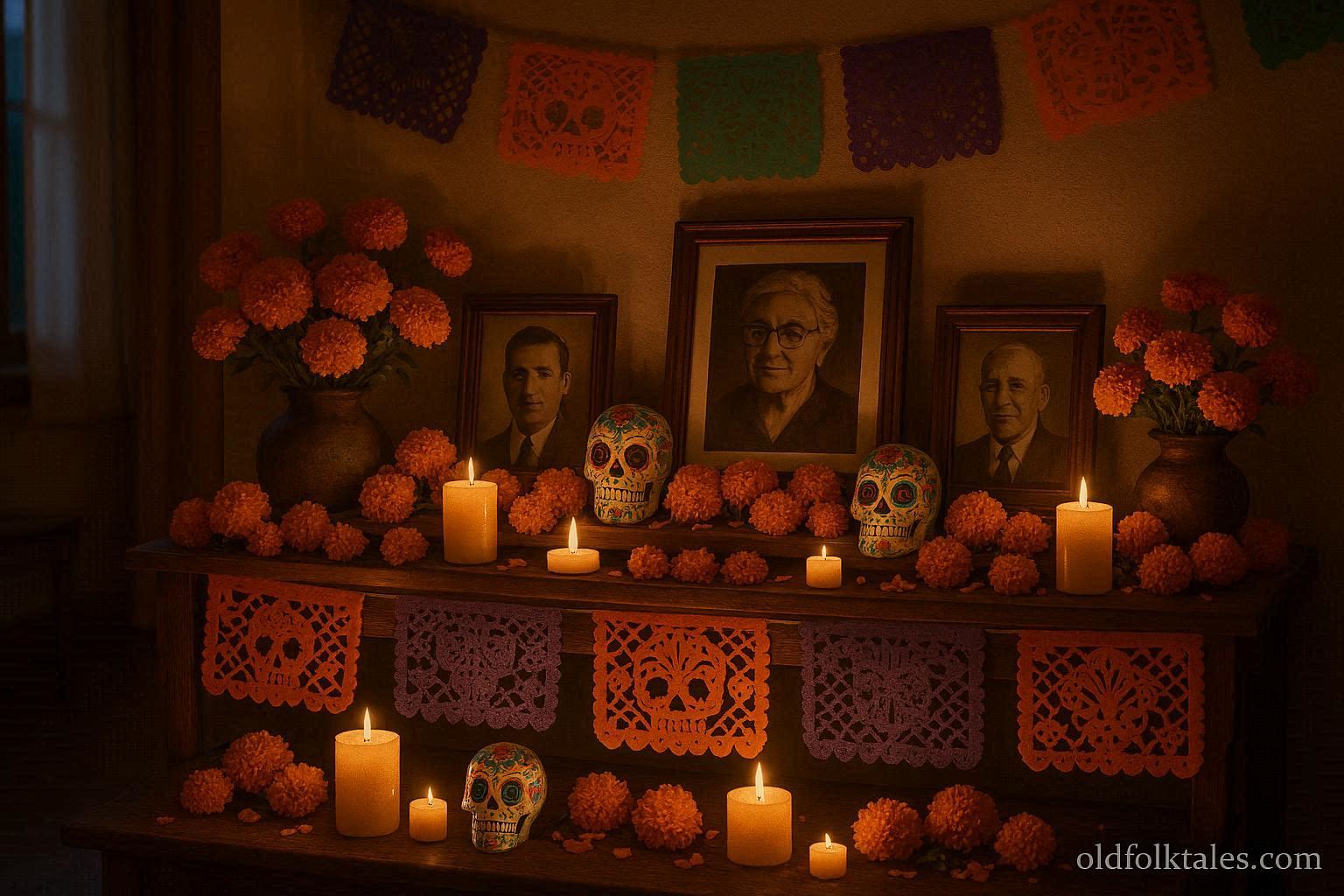
In the United States, Mexican American families maintain and adapt these practices. At the heart of the observance stands the ofrenda, an altar built within homes, community centers, cemeteries, or public spaces. These altars are carefully arranged with symbolic elements such as photographs of the deceased, candles representing guiding light, marigold flowers believed to attract returning spirits, sugar skulls symbolizing the sweetness of life, and favorite meals prepared in loving memory.
Each item placed on the altar carries intention. Water quenches the thirst of traveling souls. Salt purifies. Papel picado, decorative cut paper, represents the fragility of life and the presence of wind or spirit. The altar is not an object of worship but a welcoming space. Families believe that during these nights, ancestors return briefly to visit. The boundary between worlds grows thin, allowing reunion through memory and ritual.
Cemeteries also become gathering places. Families clean gravestones, decorate with flowers, and sometimes share meals beside burial sites. Music may be played and stories are told. Laughter is not considered disrespectful. Instead, joy honors the fullness of the person remembered. Tears and smiles coexist naturally.
Within Mexican American communities in cities such as Los Angeles, San Antonio, Chicago, and Albuquerque, public Día de los Muertos celebrations now include parades, educational workshops, and cultural performances. Schools and museums host altar-building exhibitions that teach younger generations about symbolism and history. These events strengthen cultural identity while inviting broader community understanding.
The tradition also serves as cultural resilience. For immigrant families, maintaining Día de los Muertos reinforces connection to heritage while adapting to life in the United States. The ritual affirms belonging not only to present community but to an ancestral lineage that stretches across time and geography.
Themes of sacred memory and ancestral continuity remain central. Remembering becomes an act of love. Speaking the names of the departed keeps them present in family consciousness. In this way, death does not sever relationships. It transforms them.
At a deeper level, the celebration teaches acceptance of mortality. Skulls and skeleton imagery, often colorful and smiling, normalize death rather than hide it. Children grow up understanding that remembrance is natural and communal. The festival therefore nurtures emotional openness and intergenerational dialogue.
Academic collections such as the Smithsonian Latino Center document how Día de los Muertos evolved within the United States, highlighting its role in preserving Mexican heritage while adapting to new cultural contexts. These archives emphasize that the observance remains rooted in community practice rather than commercial spectacle.
As night deepens, candlelight continues to glow against photographs framed by marigolds. Families sit together, sharing stories that bring voices of the past into the present moment. In these gatherings, memory becomes sacred space. The living and the departed meet not through fear but through gratitude.
Día de los Muertos in the United States stands as an autumn remembrance ritual that bridges centuries, cultures, and generations. It affirms that love endures beyond physical absence. Through altars, vigils, food, and storytelling, communities declare that ancestors remain part of the living world, remembered, honored, and welcomed home each year.
Step into America’s cultural roots — from folk healing and weather lore to seasonal celebrations.
Moral Lesson
Honoring those who came before us strengthens identity, nurtures gratitude, and reminds us that memory keeps love alive across generations.
Knowledge Check
- When is Día de los Muertos observed?
November 1 and 2. - What is the purpose of an ofrenda?
To welcome and honor returning ancestral spirits. - What flower is commonly used on altars?
Marigold. - How does the tradition blend cultures?
It combines Indigenous Mesoamerican beliefs with Catholic feast days. - What central theme does the celebration teach?
Ancestral continuity and sacred remembrance. - Why is laughter acceptable during the observance?
Because joy honors the full life of the person remembered.
Source
Adapted from Smithsonian Latino Center archives
Cultural Origin
Mexican American communities