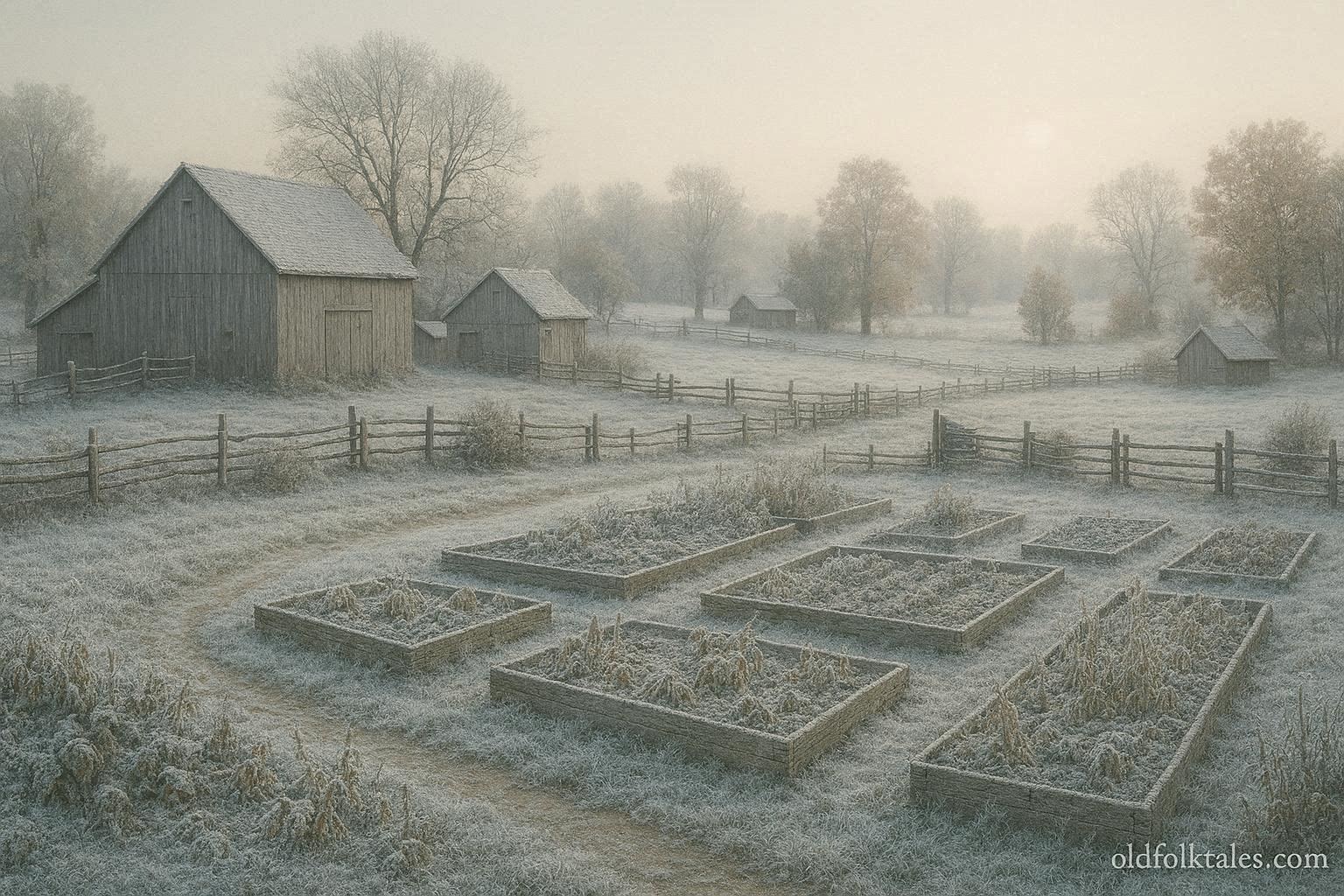
In the heart of Midwestern farmlands, autumn was a season of constant attention. Families and farmers watched the sky for color changes, studied the behavior of livestock, and monitored the temperature as it dipped toward frost. A single icy morning could reveal more than a chill; it could signal the coming weeks of hardship. Among these signs, nothing drew attention like an early frost, white crystals forming on grass, fence posts, and tender crops before the calendar predicted their arrival.
For generations, early frost was interpreted as a warning. The cooler-than-usual night, leaving delicate leaves and garden beds glazed in ice, was believed to foreshadow a long, relentless winter. Farmers relied on these observations to plan labor, store provisions, and adjust expectations for planting and harvest schedules. Each frost was recorded mentally, forming patterns that informed decisions across the season.
The superstition surrounding early frost was rooted in careful observation. Midwestern settlers noticed that years when frost arrived early often coincided with extended periods of cold, heavier snow, and longer ice-covered rivers. While modern meteorology can explain frost timing with air masses and temperature inversion, in the 18th and 19th centuries, the appearance of frost was one of the most reliable indicators farmers had for seasonal forecasting.
Explore ancient Native American creation myths and the symbolic tales that shaped America’s belief systems.
Community stories reinforced the belief. Parents would recall the frost on the pumpkin patch, warning children that “a white blanket before Halloween means winter will stay.” Neighbors shared tales at town gatherings about years when crops had been caught unprepared by early freezes. These stories emphasized the need for vigilance, turning natural observation into a shared cultural memory that guided daily life.
Beyond practical preparation, early frost carried symbolic weight. A frost that arrived before leaves had fully turned or fruit was harvested was seen as a test of endurance. It reminded communities of the fragility of life and the importance of respecting nature’s rhythms. Households responded by securing food, reinforcing barns, and checking on animals more frequently. The frost became a signal not just of weather but of responsibility.
European settlers had similar traditions. In Germany and Scandinavia, frost before All Saints’ Day was considered a sign of a severe winter. Immigrants adapted these beliefs to the American landscape, combining empirical observation with folklore. Over time, the early frost became a seasonal oracle, its crystalline patterns interpreted as a silent communication from the earth itself.
Farmers documented the timing of early frost in journals, noting patterns across years. A frost in late September might indicate a milder winter than one in early October. They observed which crops survived, how rivers froze, and how animals behaved. Through trial and error, communities developed informal but surprisingly accurate forecasting methods. Early frost guided decisions that affected survival, income, and food security.
Even young children were taught to recognize the signs. They learned to distinguish between a mere light dew and a frost that glistened like sugar on garden leaves. Schools sometimes incorporated lessons on seasonal change, connecting observation with storytelling. Families would share accounts of harsh winters preceded by frost, making the natural phenomenon a living part of local heritage.
The superstition also influenced social behavior. Festivals, harvest celebrations, and market days were sometimes timed according to frost patterns. An unexpected early frost could shift schedules, encourage earlier preparation, and instill a sense of urgency. It created a rhythm in rural life where observation and community memory intersected.
In modern terms, frost is understood scientifically: freezing occurs when temperatures drop to 32°F (0°C) or below, forming ice crystals on surfaces. But in a pre-industrial context, each frost was a message. It signaled environmental change and prompted action, much as weather alerts do today. The tradition of reading frost is an example of practical folk knowledge blended with cultural narrative.
Even today, the appearance of frost in early autumn can evoke the old belief. Farmers still note it, gardeners protect crops, and weather enthusiasts record its arrival. The lore of early frost endures as a bridge between past and present, reminding us how closely humans once watched, interpreted, and responded to nature’s subtle signs.
Step into America’s cultural roots — from folk healing and weather lore to seasonal celebrations.
Moral Lesson
Observing natural signs carefully can guide preparation and ensure survival. Attentiveness to the environment, combined with communal wisdom, strengthens resilience against unforeseen hardship.
Knowledge Check
- What did an unusually early frost signal to Midwestern farmers?
That a long, harsh winter was likely approaching. - How did communities respond to early frost?
They secured crops, reinforced barns, rationed food, and monitored animals. - Which cultural tradition influenced this belief in America?
European seasonal forecasting, especially from German and Scandinavian settlers. - Why was early frost considered more than a weather event?
It symbolized responsibility, preparedness, and respect for nature. - How did children learn about the significance of frost?
Through observation, storytelling, and family teaching. - What practical purpose did early frost serve in daily life?
It guided agricultural planning, harvest timing, and survival decisions.
Source
Adapted from Midwestern agricultural folklore studies
Cultural Origin
Midwestern farming communities