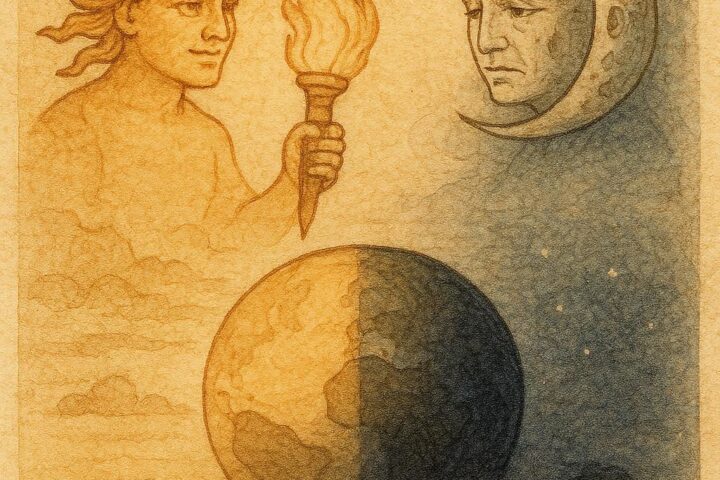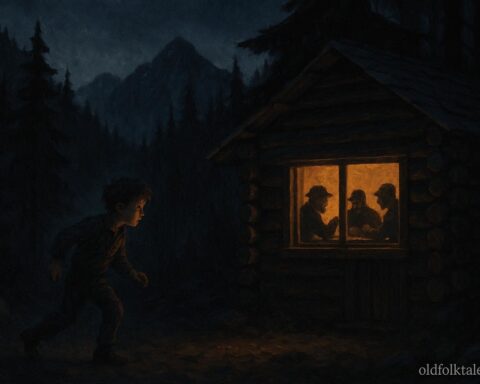
For many generations, the world had known only shadow. Even the stars had grown dim, and rivers mirrored nothing but black. People moved cautiously across forests and mountains, their eyes adjusting to nothing more than faint outlines in the gloom. Survival demanded patience, but life persisted in quiet determination. There were whispers among elders that the darkness was not eternal, that courage and unity could restore the sun’s light.
In the traditions of the Coast Salish peoples, it was told that humans were called to act. The sky had retreated, leaving the world in stillness, and only those willing to take daring steps could bring back the warmth and clarity of day. Families gathered at the edges of cliffs and along frozen riverbanks, discussing plans to reach the high peaks where the sky seemed closest. Children listened to stories of perseverance, understanding that even the smallest action mattered in returning the world to balance.
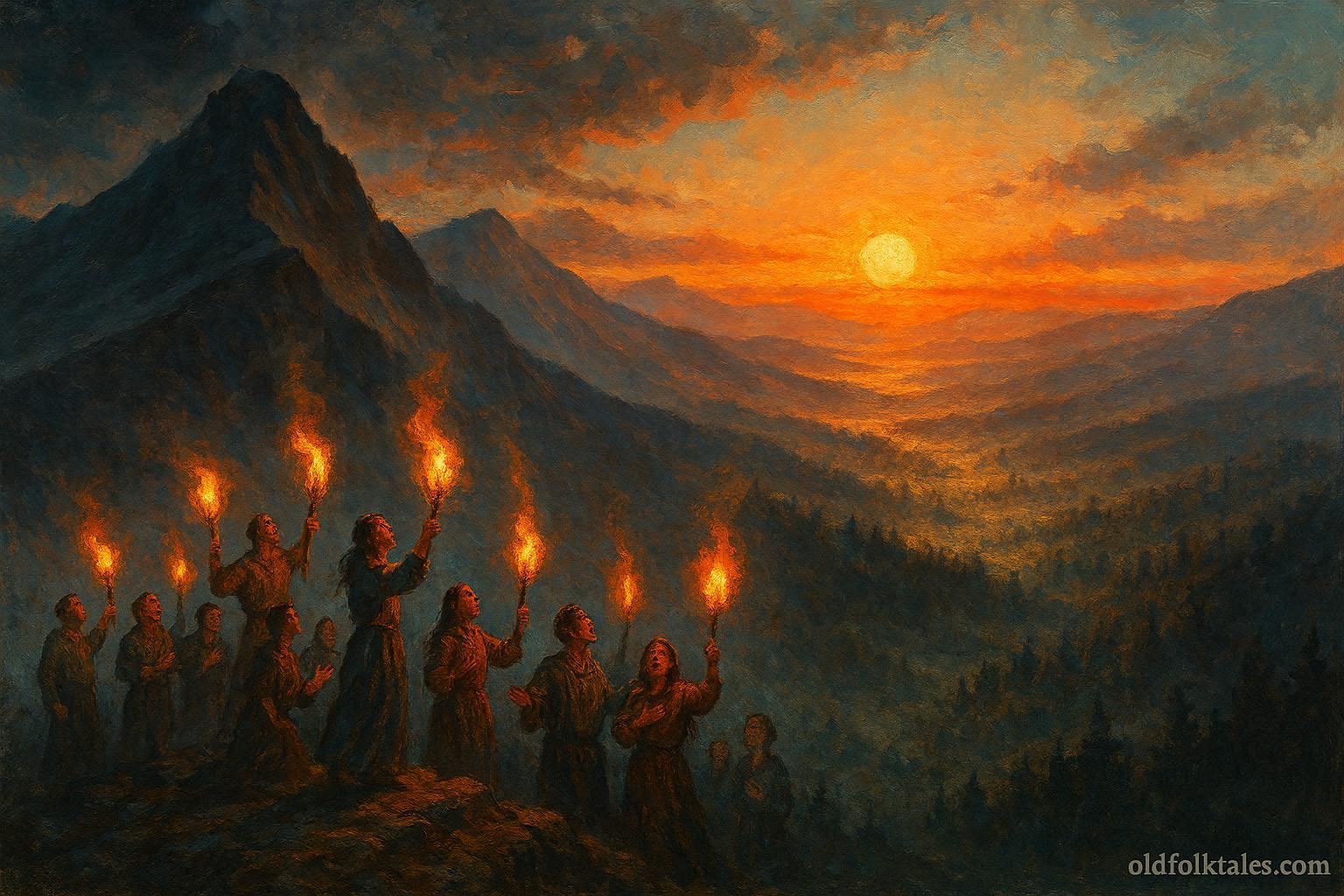
The elders described how the first humans climbed the mountains with fire and song. They carried flames carefully, shielding them from wind and storm, and sang aloud to call the light. Many failed on the steep, icy slopes. Some slipped into hidden crevices, while others turned back in fear. Yet the determined pressed forward. Every step required careful observation of the land, guidance from rivers and winds, and respect for the animals who appeared as messengers.
Explore the heart of America’s storytelling — from tall tales and tricksters to fireside family legends.
At last, the travelers reached the highest ridge. There, they lit the fires together, arranging logs and kindling to form a ring of flame. Their songs filled the still air, calling not only for light but for renewal, for hope to flow into the world once more. Slowly, faint color appeared on the horizon. A thin line of gold separated night from day, and then the glow expanded, filling valleys and forests with warmth. Trees shimmered with dew, rivers sparkled, and life stirred with the return of illumination.
The people realized that light was not simply a gift of the sky but something they had helped bring. Their courage, cooperation, and attention had persuaded the forces of the world to return balance. From that day forward, rituals of gratitude were established. Families would rise before dawn to greet the first sunlight, offering songs and silent thanks. Children learned to watch the sky, understanding that careful observation and patience were as important as bravery.
The myth also carried warnings. Darkness could return if humans ignored the rhythm of the natural world, if greed or neglect prevailed. Light was fragile, and sustaining it required vigilance, respect, and communal effort. Every sunrise became a reminder that hope and perseverance were essential qualities, and that humans had the power to influence the world positively when acting with intention.
Generations later, the story of the first sunrise after darkness continued to inspire. It was told to remind people that even in the bleakest times, action and unity could restore balance. The ritual of lighting fires, singing songs, and offering thanks was passed down, keeping the lesson alive. By honoring the cycles of nature and each other, humans learned that hope was a force capable of illuminating even the deepest shadows.
Even now, as the sun rises each morning, elders recount this tale. The story teaches that light does not simply appear but can be nurtured. Each day, humans have the opportunity to act with courage, to bring warmth and clarity into the world, and to honor those who came before by sustaining hope and balance.
Step into America’s cultural roots — from folk healing and weather lore to seasonal celebrations.
Moral Lesson
Perseverance, courage, and cooperation can restore what seems lost. Darkness may linger, but thoughtful action, respect for nature, and unity bring renewal and light.
Knowledge Check
1. What was the state of the world before the first sunrise?
The world was entirely dark, quiet, and still, with no natural light to guide people.
2. How did humans help restore daylight?
They climbed mountains, carried fire, performed rituals, and sang songs of hope and perseverance.
3. What role did nature play in guiding humans?
Rivers, winds, and animals acted as messengers, showing safe paths and providing guidance.
4. What was the significance of the first sunrise?
It marked the restoration of balance and demonstrated that human courage and cooperation could affect the world.
5. How were future generations taught to honor the sunrise?
By waking early, observing the sun, offering gratitude, and practicing patience and respect for natural cycles.
6. What warning does the myth convey about darkness and light?
Neglect or complacency can allow darkness to return, and sustaining light requires attentive, cooperative action.
Source
Adapted from University of Washington Coast Salish folklore collections
Cultural Origin
Coast Salish peoples, Pacific Northwest