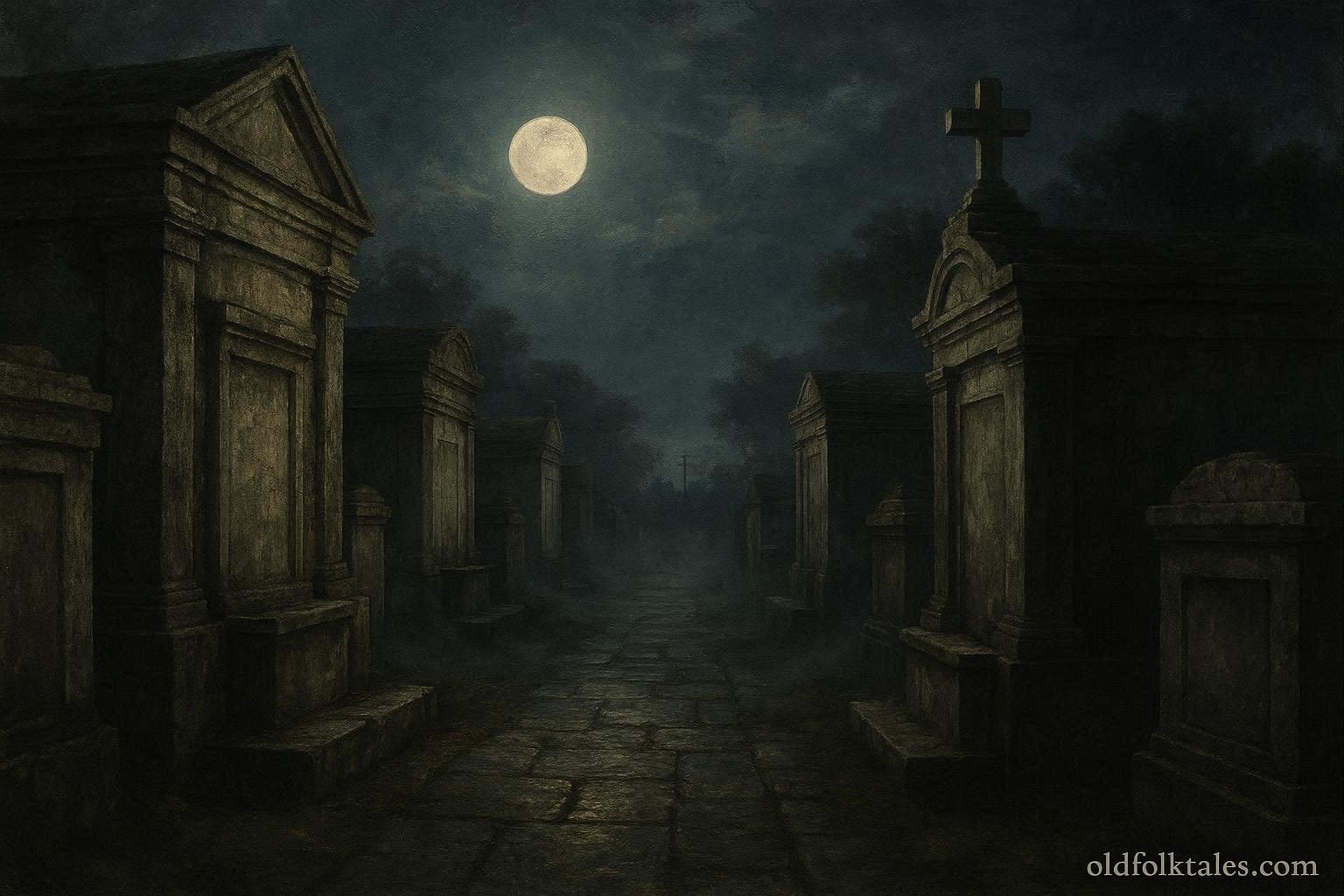
St. Louis Cemetery sits quietly within New Orleans, its above-ground tombs arranged like narrow streets of stone. By day, the cemetery is busy with visitors, history tours, and the distant sounds of traffic drifting in from nearby roads. The city moves around it without pause. Yet when night falls and the crowds disappear, the cemetery takes on a different presence. The air grows heavier, the silence more deliberate, and residents living nearby say that something long removed begins to return.
Long before the cemetery became a historic landmark, rail lines cut through nearby neighborhoods, feeding New Orleans’ role as a hub of trade and industry. Trains carried goods, laborers, and opportunity through the city at all hours. The noise was constant, shaping daily life for generations. Over time, tracks were removed, routes rerouted, and the city modernized. Yet locals insist the sound never fully vanished. Instead, it changed.
Residents living near St. Louis Cemetery report hearing the distant rumble of trains late at night. The sound begins low, like vibration rather than noise, and gradually builds into the unmistakable rhythm of steel wheels on rails. Some hear whistles echoing briefly, followed by the metallic clatter of a passing train. When they look toward the cemetery, there is nothing to see. No lights, no tracks, no movement only stone tombs and shadows.
Step into shadowy legends of restless spirits and ghostly travelers in American Ghost Stories.
What unsettles witnesses most is how precise the sound feels. The rhythm matches older train schedules remembered by longtime residents. The noise follows a consistent path, entering from one side of the cemetery and fading near another, as if obeying routes that no longer exist. For those familiar with the area’s history, the sensation feels less like imagination and more like repetition. Something is replaying itself.
Oral histories suggest the legend gained strength as industrial decline reshaped the city. As rail yards closed and workers disappeared, neighborhoods lost not just employment but identity. The ghost train became a symbol of that loss. It represented an era when labor, movement, and noise defined daily life. Now, in silence, those elements returned only as echoes.
The cemetery’s role in the legend is not accidental. In New Orleans, burial grounds are spaces of continuity rather than separation. The dead remain visible, honored, and integrated into the living city. Sound, like memory, moves freely through these spaces. Locals believe the train does not disturb the dead but passes alongside them, acknowledging shared history rather than haunting it.
Some versions of the legend suggest that railway workers killed in industrial accidents are tied to the phenomenon. These stories emphasize fatigue, long shifts, and dangerous conditions common during the height of rail expansion. While official records confirm numerous accidents, folklore fills in emotional details left undocumented. The ghost train, in this interpretation, carries the memory of laborers who never truly left their routes.
Others interpret the sounds as environmental memory rather than spirits. The city’s architecture, soil, and atmosphere absorbed decades of vibration, releasing it during certain conditions. Humidity, temperature shifts, and nighttime quiet amplify sounds in ways that feel deliberate. Yet this explanation does little to comfort those who hear whistles echo through spaces where rails once ran.
Tour guides occasionally mention the ghost train, though rarely in official narratives. The story is treated with respect rather than spectacle. Locals caution against mockery, believing that dismissiveness invites unease. Visitors who listen quietly report hearing faint sounds that vanish once acknowledged, as though the city itself chooses when to speak.
Folklorists studying New Orleans legends note that sound-based hauntings are especially common in industrial cities. Unlike visual apparitions, sound leaves room for interpretation. It interacts with memory and emotion more directly. The ghost train of St. Louis Cemetery fits this pattern, functioning as both historical echo and cultural reminder.
For residents, the phenomenon blurs time. The past does not feel distant but layered over the present. The train does not arrive or depart; it passes through. Its presence is temporary yet persistent, reminding listeners that progress does not erase what came before. The sound exists not to frighten but to insist on remembrance.
In this way, the ghost train becomes part of New Orleans’ larger relationship with history. The city does not bury its past. It sings it, drums it, and sometimes lets it roll through the night on rails that no longer exist. Those who hear the train often say the experience leaves them reflective rather than afraid. The sound fades, but the awareness remains.
St. Louis Cemetery continues to stand as a place where the living and the dead coexist. When the ghost train passes, it does not interrupt that balance. Instead, it reinforces it. The city remembers itself, and for a moment, it allows others to listen.
Click now to read all American Legends — heroic tales where truth and imagination meet, defining the American spirit.
Moral Lesson
History does not disappear when structures are removed; it endures through memory, sound, and the spaces we choose to honor.
Knowledge Check
- Where is the Ghost Train legend associated?
Answer: Near St. Louis Cemetery in New Orleans - What is commonly reported by residents?
Answer: Phantom train sounds, including whistles and rail noise - What historical feature once existed near the cemetery?
Answer: Active railway lines - Why is sound significant in this legend?
Answer: It represents industrial memory rather than visual haunting - How do locals generally treat the legend?
Answer: With respect rather than mockery - What does the ghost train symbolize?
Answer: Industrial loss and enduring historical memory
Source
Adapted from Tulane University New Orleans folklore and urban studies archives
Cultural Origin
New Orleans, Louisiana