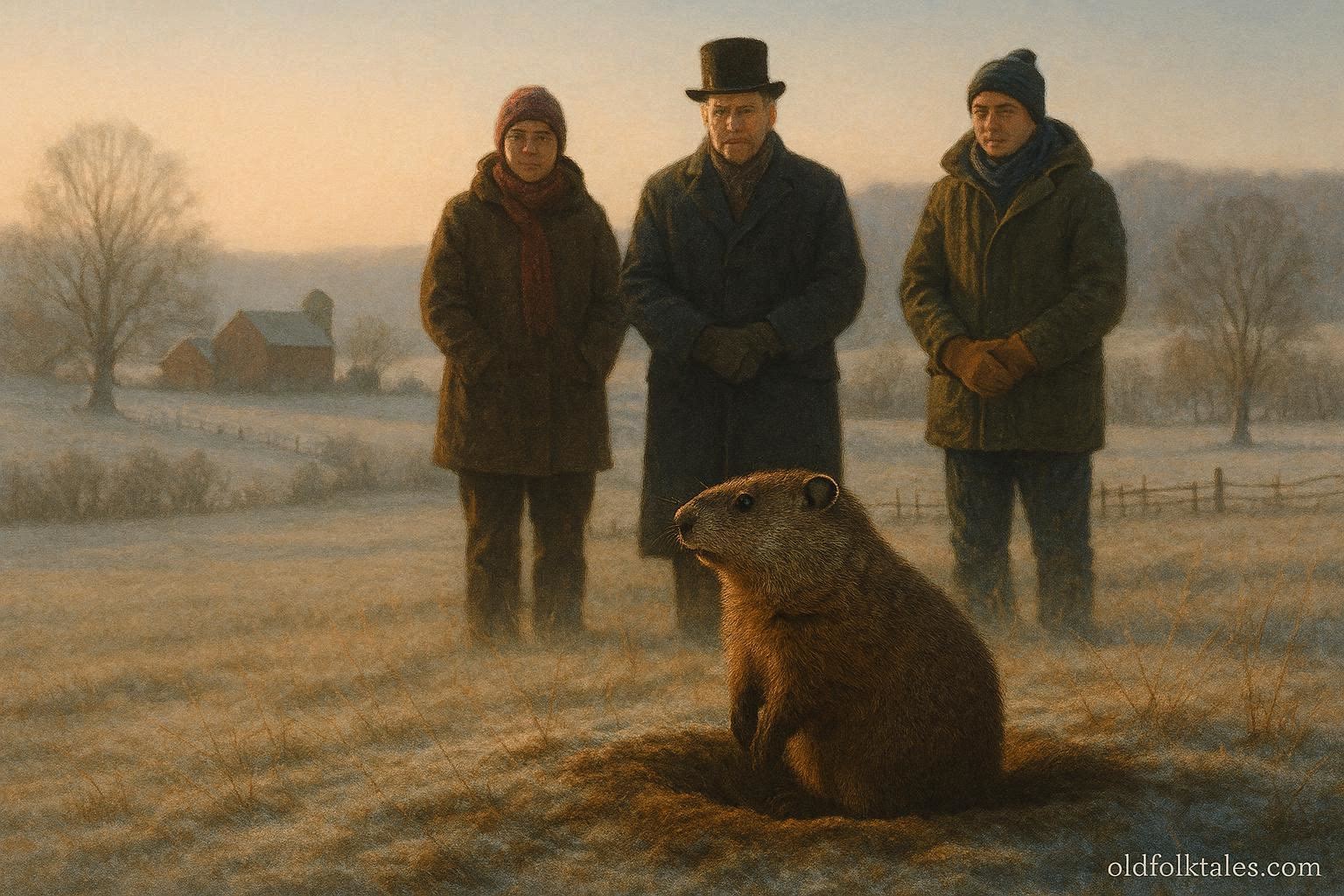
Every February 2nd, a quiet anticipation spreads through towns across the northeastern United States, particularly in Pennsylvania. People gather early in the morning, braving winter cold, eyes fixed on a small rodent emerging from its burrow. This is Groundhog Day, a folk tradition that links nature, weather, and human curiosity in a centuries-old ritual. The day carries the hope of predicting whether winter will linger or soon yield to spring, and the groundhog becomes a whimsical yet respected meteorologist.
The tradition has roots in European Candlemas, a festival marking the midpoint between the winter solstice and the spring equinox. In medieval Germany, people observed the weather on Candlemas to forecast the remaining duration of winter. Bad weather meant winter would persist, while fair weather promised earlier spring. When German immigrants settled in Pennsylvania during the 18th and 19th centuries, they brought these weather observances with them. Over time, they adapted the tradition to the local fauna, choosing the groundhog, abundant in the region, as a symbolic predictor.
The ceremony is simple but laden with symbolism. As dawn approaches, participants gather at a prepared site where the groundhog has its burrow. A local official or “handler” gently removes the animal to observe its reaction. If the groundhog sees its shadow, according to tradition, winter will continue for six more weeks. If it does not, spring will arrive early. Though the forecast is playful, the ritual draws crowds and media attention, particularly in towns like Punxsutawney, Pennsylvania, where the groundhog named Punxsutawney Phil has become a cultural icon.
Explore ancient Native American creation myths and the symbolic tales that shaped America’s belief systems.
Observers over generations have recounted stories of Phil and other groundhogs performing seemingly mysterious behaviors. Some claim that when the animal stretches or scratches, it signals an unusually harsh winter. Others describe the crowd’s reaction as an integral part of the ritual, blending anticipation, excitement, and communal engagement. The ceremony is performed with humor, respect for the animal, and acknowledgment of the unpredictability of weather.
Groundhog Day also serves as a cultural bridge, connecting rural traditions with contemporary celebrations. Towns host parades, festivals, and educational events. Children learn about animals, seasons, and folklore, while adults recall family memories of past ceremonies. Local businesses capitalize on the event with themed merchandise, but the heart of the tradition remains the observation of the groundhog itself.
Beyond entertainment, the ritual reflects deeper human desires to understand and influence natural cycles. Winter can be harsh and isolating, and predicting its length provides psychological comfort. Groundhog Day embodies the interplay of nature and culture, blending observation of the animal world with symbolic interpretation. People participate in a centuries-old dialogue with the land, climate, and heritage, reminding communities of the continuity of tradition.
The Pennsylvania German Society archives document how Groundhog Day evolved from European Candlemas customs into a uniquely American celebration. By incorporating local wildlife and creating communal ceremonies, German immigrants preserved the essence of their folk beliefs while adapting them to new landscapes and social structures. This blending of culture illustrates the resilience and creativity of immigrant communities in sustaining traditions across continents.
Modern observers continue to engage with Groundhog Day both scientifically and folklorically. Meteorologists often note the limited accuracy of the groundhog’s predictions, yet the ritual persists because of its symbolic value. It reinforces community bonds, marks the progression of the seasons, and provides a playful way to celebrate nature’s rhythms. The day’s festivities also offer opportunities for storytelling, passing down folklore from one generation to the next, preserving a link to cultural ancestry.
In small towns and large cities alike, the groundhog’s appearance marks a moment of pause in the winter routine. Families gather, cameras click, children cheer, and the community collectively experiences hope, anticipation, and shared memory. The tradition transforms a simple rodent into a cultural ambassador, demonstrating how observation, symbolism, and folklore combine to create enduring social rituals.
Groundhog Day illustrates the human need to find patterns in nature, to celebrate seasonal transitions, and to maintain connection to cultural heritage. It teaches that folklore is not merely superstition but a social practice that engages imagination, memory, and the natural world. Even in a modern context, the festival retains its charm, offering lessons about continuity, observation, and the joy of communal celebration.
Click to read all American Traditions & Beliefs — the living folklore of daily life, customs, and superstitions.
Moral Lesson
Groundhog Day teaches that traditions help communities understand nature, celebrate seasonal change, and connect with cultural heritage. Observation, patience, and shared experience enrich both individual and collective life.
Knowledge Check
- What date is Groundhog Day observed?
February 2. - What is the significance of the groundhog seeing its shadow?
If it sees its shadow, winter is predicted to continue for six more weeks. - Where did the tradition originate?
It originated from German Candlemas customs. - How did German immigrants adapt the tradition in the United States?
By using the groundhog as a symbolic predictor of winter. - What deeper human need does the ritual reflect?
The desire to understand and anticipate seasonal changes. - What is the main purpose of communal celebrations around the groundhog?
To strengthen community bonds and pass down cultural heritage.
Source
Adapted from Pennsylvania German Society archives
Cultural Origin
Pennsylvania Dutch communities