In the quiet transition between summer and autumn, when the air begins to cool and the land prepares for harvest, there is a night that stands apart from all others. It is not marked by noise or urgency, but by light.
A light that does not come from the sun.
But from the moon.
Across rural parts of United States, communities have long recognized the arrival of the harvest moon as more than just a natural event. It is a moment that signals change, a shift in the rhythm of the land and the lives connected to it.
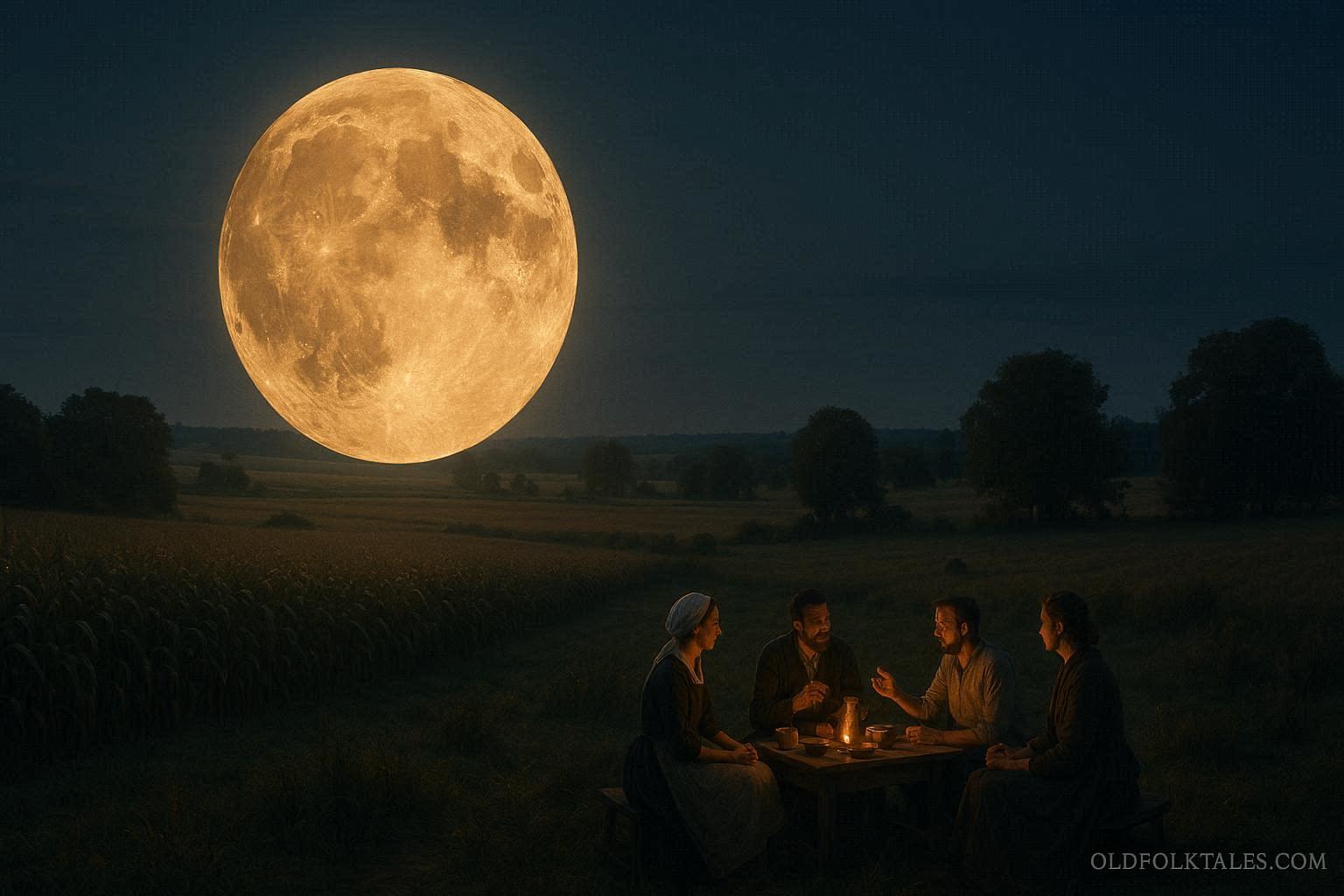
The harvest moon rises when crops are ready, when fields are full, and when the work of the growing season begins to reach its end. Unlike other moons, it appears larger, brighter, and closer, casting a glow that stretches across fields, barns, and open land.
Long before modern lighting, this brightness held great importance.
It extended the day.
It allowed work to continue.
It gave farmers the ability to gather crops late into the evening, guided not by fire or lantern, but by the natural light above.
But over time, the harvest moon became more than a practical tool.
It became a reason to gather.
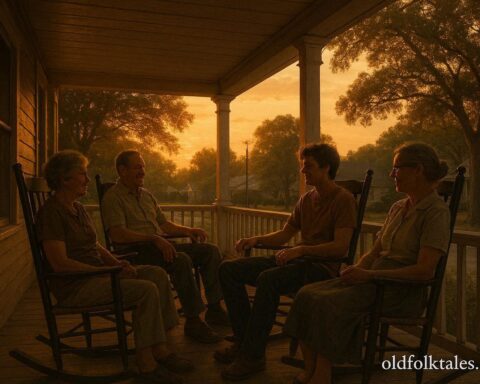
As the moon rose, families and neighbors would come together, not in haste, but with intention. The work of the day would slow, and attention would turn upward, toward the sky.
Discover chilling ghost tales and haunted places that echo through America’s towns and countryside.
The fields, once filled with movement, grew still.
The air carried a quiet calm.
And the moon, steady and bright, became the center of the night.
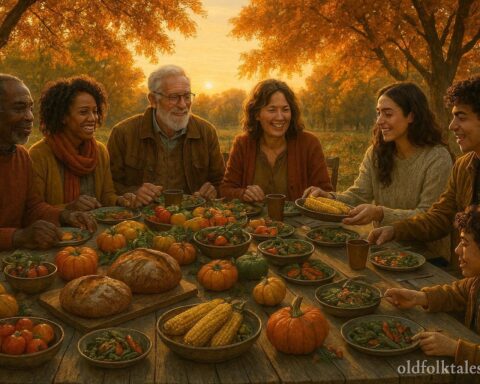
People would bring food, often prepared from the very harvest they had gathered. Corn, apples, and other seasonal crops were shared, not just as nourishment, but as symbols of the work completed and the season’s success.
The gathering was simple.
But meaningful.
Stories were told.
Not rushed or formal, but shared in a way that connected the past to the present. Older voices spoke of earlier seasons, of years when the harvest was strong, and others when it was not. These stories carried lessons, not just about farming, but about patience, effort, and respect for the land.
Children listened, learning not only from the words, but from the atmosphere of the gathering itself.
The moonlight created a space where time seemed to slow.
Where conversation flowed easily.
Where the presence of others felt more connected.
Music was sometimes part of the night, soft and steady, blending with the natural sounds of the environment. The wind through the fields, the distant movement of animals, and the quiet rhythm of the land all became part of the experience.
There was no need for excess.
The light of the harvest moon was enough.
In these gatherings, the focus was not only on celebration, but on recognition.
Recognition of the work that had been done.
Recognition of the land that had provided.
Recognition of the change that was coming.
The harvest moon marked a turning point.
Summer, with its long days and active growth, was ending.
Autumn, with its cooler air and preparation for rest, was beginning.
The gathering allowed people to pause between these seasons.
To stand in the moment of transition.
To acknowledge both what had passed and what was ahead.
In the traditions preserved through institutions like the Library of Congress, these gatherings are seen as part of a broader cultural practice. They reflect the connection between people and the natural cycles that shape their lives.
The harvest moon is not simply observed.
It is experienced.
It becomes part of a shared understanding, a moment where the community aligns with the rhythm of the land.
Even as time has changed, the meaning of the harvest moon has remained.
Modern life may not depend on moonlight for work in the same way, but the desire to gather, to pause, and to reflect continues. In many places, people still step outside to watch the moon rise, still feel its presence as something more than ordinary.
The brightness of the harvest moon continues to carry a quiet power.
It reminds people of the connection between effort and reward, between seasons and change, between individuals and community.
It is a moment that asks nothing.
But offers stillness.
Clarity.
And connection.
Each year, as the harvest moon rises again, the tradition lives on.
Not always in the same form.
But in the same spirit.
A gathering.
A pause.
A shared moment under the light of the moon.
Click to read all American Traditions & Beliefs — the living folklore of daily life, customs, and superstitions.
Moral Lesson
Taking time to gather and reflect strengthens community and helps us appreciate the cycles of life.
Knowledge Check
- What is the harvest moon?
A bright full moon that appears during the harvest season - Why was it important in the past?
It provided light for harvesting crops at night - What do people do during harvest moon gatherings?
They share food, stories, and spend time together - What does the harvest moon symbolize?
Seasonal change and completion of work - When does it usually appear?
Between summer and autumn - What is the main idea of the story?
That community and reflection are important during times of change
Source
Adapted from materials preserved by Library of Congress
Cultural Origin
Rural American tradition