Los Pastores is a cherished folk tradition performed during the Christmas season in Hispanic communities across the American Southwest. These nativity dramas depict the journey of the shepherds to witness the birth of Jesus in Bethlehem. Rooted in both Spanish colonial and Indigenous cultural influences, the plays blend religious devotion, music, and storytelling to convey the Christmas story in a manner that is communal, participatory, and lively.
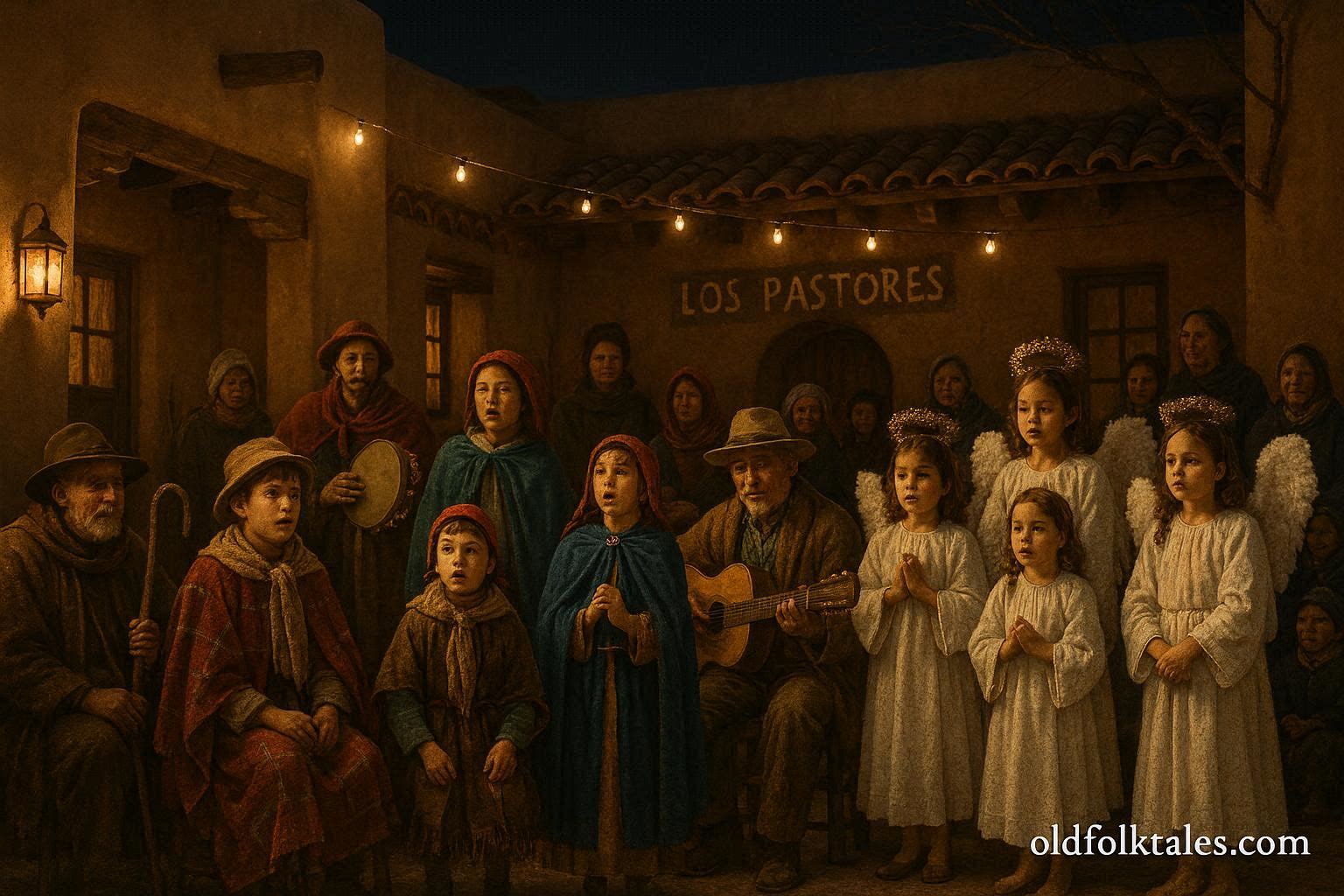
Performances typically take place in homes, community centers, or church courtyards. Local families and community members take on roles as shepherds, angels, the Holy Family, and other figures from the nativity story. Costumes are often handmade, with colorful robes, staffs, and headdresses, reflecting both historical interpretations and local artistic expression. Children and adults alike participate, learning lines, songs, and dances that bring the story to life for both performers and audiences.
A distinctive feature of Los Pastores is its integration of music. Villancicos, traditional Spanish Christmas songs, accompany the drama, creating a festive and spiritual atmosphere. Instruments such as guitars, tambourines, and violins may be used, and singing often alternates with dialogue. The interplay of music and movement not only enhances the storytelling but also fosters community cohesion, as neighbors gather to share in the performance and join in the singing.
Explore the heart of America’s storytelling — from tall tales and tricksters to fireside family legends.
The narrative emphasizes pilgrimage, obedience, and devotion. Shepherds leave their flocks to follow divine guidance, demonstrating humility and faith. Along the journey, they encounter challenges, such as convincing skeptical townspeople or navigating difficult terrain, which serve as moral lessons about perseverance and trust in higher wisdom. These elements make the drama both entertaining and spiritually instructive.
Los Pastores also serves as a conduit for cultural continuity. Families pass down the scripts, songs, and performance techniques from generation to generation, maintaining a living connection to their heritage. In New Mexico and Texas, the tradition has persisted for centuries, surviving social and economic changes, and adapting while preserving its core devotional purpose. Audiences often experience a sense of continuity with their ancestors, participating in rituals that have been performed in the same communities for hundreds of years.
Community interaction is central to the celebration. After performances, attendees may share tamales, champurrado, or other seasonal foods, further reinforcing bonds of kinship and friendship. Children are encouraged to participate actively, whether by carrying props, singing, or helping organize the event. Elders offer guidance, ensuring that the plays maintain their spiritual and cultural integrity.
The timing of Los Pastores during the Christmas season links the drama to both the liturgical calendar and agricultural cycles. In rural communities, winter is a time when indoor gatherings are natural, and families come together to celebrate, reflect, and share in collective joy. The plays also coincide with Las Posadas in some areas, reinforcing themes of hospitality, journey, and preparation for the holiday.
For many participants, Los Pastores is more than performance; it is an act of devotion. Preparing the play involves careful planning, rehearsals, and prayer, creating an atmosphere in which faith and creativity intersect. The dramas are a medium through which participants express reverence for religious traditions, honor ancestors, and celebrate the collective spirit of the community.
Over the years, Los Pastores has also been recognized as an important element of Southwestern folklore. Scholars of Hispanic cultural traditions have documented variations across towns and families, noting regional differences in music, dialogue, and staging. These studies highlight how the tradition adapts to local environments while maintaining its core purpose of honoring the nativity story.
Ultimately, Los Pastores exemplifies how seasonal traditions combine spirituality, cultural heritage, and communal experience. The shepherds’ journey becomes both a reenactment of a biblical story and a celebration of identity, faith, and local creativity. Through these performances, Hispanic communities preserve a vibrant, participatory expression of devotion that continues to inspire audiences year after year.
Click to read all American Traditions & Beliefs — the living folklore of daily life, customs, and superstitions.
Moral Lesson
Los Pastores teaches that devotion, perseverance, and community participation enrich spiritual life. Following guidance with faith and celebrating together strengthens cultural and moral bonds.
Knowledge Check
- What is the main story depicted in Los Pastores?
The journey of the shepherds to witness the birth of Jesus in Bethlehem. - Where are these nativity dramas primarily performed?
In Hispanic communities of New Mexico and Texas. - What role does music play in the performances?
Music enhances the drama, sets the festive atmosphere, and encourages communal participation. - How is cultural continuity maintained through Los Pastores?
Scripts, songs, and performance techniques are passed down through generations. - What broader moral lesson does the tradition convey?
Faith, perseverance, and community involvement strengthen spiritual and cultural life. - What foods are often shared after the performance?
Tamales, champurrado, and other seasonal treats.
Source
Adapted from University of Texas at Austin Benson Latin American Collection and New Mexico folklore archives
Cultural Origin
Hispanic communities of New Mexico and Texas