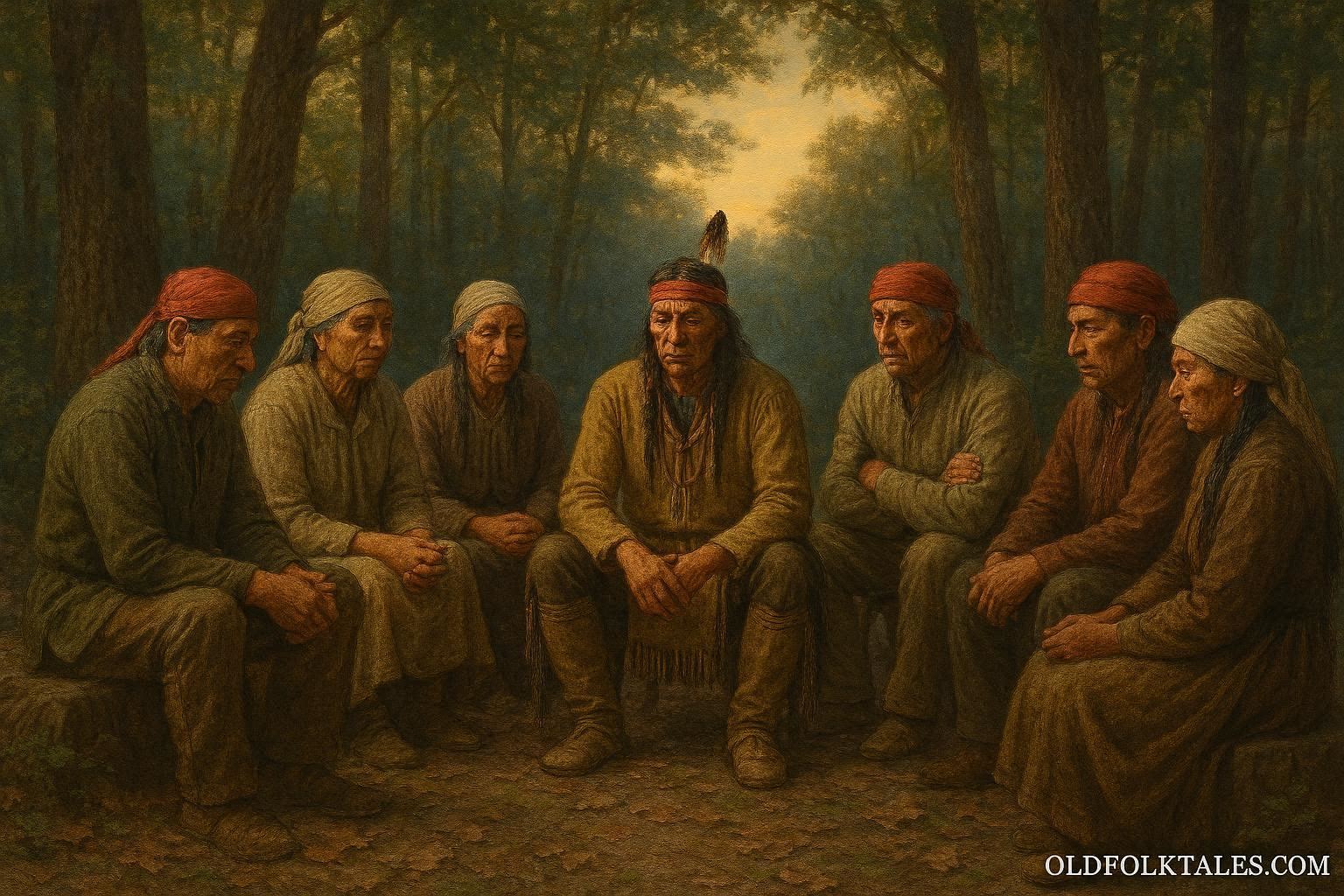
Speech was never treated lightly among the people. Words were understood as living things, capable of shaping events long after they were spoken. Children learned early that language carried weight. Elders taught that speaking was an act of creation, while careless speech could unravel harmony faster than any visible force. Silence, though respected, had always existed in the background, secondary to dialogue and explanation.
The community governed itself through memory and shared understanding rather than written law. Decisions were shaped by precedent, story, and careful listening. Disagreements were expected, even welcomed, because they revealed where balance needed attention. But balance depended on patience. When patience failed, words became weapons instead of tools.
The harm did not arrive suddenly. It accumulated.
A concern voiced without caution became a rumor. A rumor repeated with confidence turned into an accusation. Voices moved faster than reflection, and each repetition sharpened the edges of the story being told. Those spoken about were discussed before they were heard. Conversations happened in fragments, separated from context and intention.
As speech multiplied, trust thinned.
Discover chilling ghost tales and haunted places that echo through America’s towns and countryside.
Families who had shared labor and ceremony grew distant. Communal gatherings felt strained. People spoke loudly but listened briefly. Correction replaced curiosity. Even those who sensed something was wrong struggled to interrupt the momentum of words already in motion.
Elders observed quietly.
They noticed how often people spoke to win rather than to understand. They noticed how rarely pauses occurred between statements. Speech had become reflexive, no longer deliberate. The elders understood that this shift, if left unchecked, would damage more than individual relationships. It would weaken the fabric holding the community together.
When the council was called, many arrived ready to speak.
The gathering space filled with expectation. People positioned themselves not in hostility, but in guarded readiness. Voices rose early, each speaker attempting to clarify their role, defend their words, or explain what they had meant rather than what had been received. Language collided with language, producing heat but little clarity.
As the discussion intensified, something essential went missing.
No one waited.
Each voice entered the space before the previous one could settle. Explanations overlapped. Apologies were drowned out by justification. The noise itself became a barrier, preventing resolution rather than guiding it.
At the height of the confusion, an elder stood.
There was no command for silence. No raised voice. The elder simply lifted a hand and remained standing. Gradually, the sound thinned. Words fell away not because they were forbidden, but because the pause demanded attention.
When the quiet arrived, it felt unfamiliar.
People shifted. Some looked uncomfortable. Others waited for instruction that did not come. The silence stretched, pressing gently but persistently into the space. It revealed impatience. It exposed unresolved emotion. It allowed thoughts to surface that speech had previously buried.
Only after the silence had done its work did the elder speak.
The elder explained that the damage the community was experiencing did not come from disagreement itself. It came from the absence of restraint. Words had moved faster than responsibility. Speech had replaced reflection. Without pause, truth had no space to emerge.
The elder proposed a change.
Before any discussion of conflict, there would be silence.
Not symbolic silence. Not a brief pause. A true interval of quiet long enough for emotion to settle and intention to clarify. Only after that silence would speech be permitted. Words spoken after stillness would carry greater accountability, because they would emerge from choice rather than impulse.
The proposal unsettled many.
Some feared silence would protect wrongdoing. Others worried that restraint would become avoidance. The elder responded calmly. Silence was not erasure. It was preparation. Those who intended to speak truth would still do so, but with care. Those who spoke only to defend pride would find the quiet uncomfortable.
The practice was adopted without ceremony.
In the days that followed, the change felt awkward. Disputes slowed. People struggled with the pause. Some filled the silence with restless movement. Others discovered thoughts they had not expected. The quiet revealed how often words were used to mask uncertainty rather than address it.
Gradually, something shifted.
Conversations grew shorter but deeper. Accusations softened into questions. People waited longer before speaking, knowing their words would be heard more clearly if chosen carefully. Children noticed the change first, observing how adults paused before responding rather than interrupting.
Silence became a signal.
It marked seriousness. It marked accountability. When quiet settled over a gathering, everyone understood that responsibility was present. Words spoken after silence carried greater consequence, because they could no longer hide behind haste.
Over time, the community began to understand silence not as absence, but as presence.
It protected truth from distortion. It allowed listening to precede response. It reminded everyone that speech was a privilege, not a reflex. Silence became sacred not because it replaced words, but because it gave them meaning.
The elders did not write this law. They did not announce it as doctrine. It lived through practice, reinforced by memory and example. The people carried it forward because it worked.
And so, without declaration or record, silence took its place beside speech as an equal force in communal life.
Not every word needed to be spoken.
Not every truth needed to be rushed.
Balance returned, not through louder voices, but through quieter wisdom.
Discover African American wisdom, Native American spirit stories, and the humor of early pioneers in American Folktales.
Moral Lesson
Words shape reality, but restraint shapes truth. Silence, when practiced with intention, protects both justice and understanding.
Knowledge Check
- Why were words considered powerful in the community?
Answer: Because speech was believed to shape outcomes and carry lasting consequences - What caused conflict to escalate initially?
Answer: Careless speech, repetition of rumors, and lack of listening - Why did the elders introduce silence before discussion?
Answer: To allow reflection, reduce impulsive speech, and restore balance - How did silence change communal behavior?
Answer: It encouraged patience, accountability, and thoughtful communication - Why was silence described as sacred?
Answer: Because it created space for truth and responsibility to emerge - What lesson did children learn from the change?
Answer: That listening and restraint are as important as speaking
Source
Adapted from University of Oklahoma Southeastern Indigenous oral tradition archives
Cultural Origin
Chickasaw communities