Nat Love stands as one of the most celebrated figures among African American cowboys of the post–Civil War American West. Born in 1854 in Tennessee, Love grew up during a period of great social change. As a young man, he ventured westward seeking opportunity and freedom. The open plains, cattle drives, and frontier towns became the stage for a life that would blend real accomplishments with legendary tales.
The American West during Love’s lifetime was a place of both promise and danger. Railroads were expanding, cattle ranching dominated the economy, and frontier towns often lacked formal law enforcement. It was also a space where African Americans, recently emancipated from slavery, had the chance to carve out new lives. For many, the role of a cowboy offered independence, steady work, and the possibility of recognition for skill and courage.
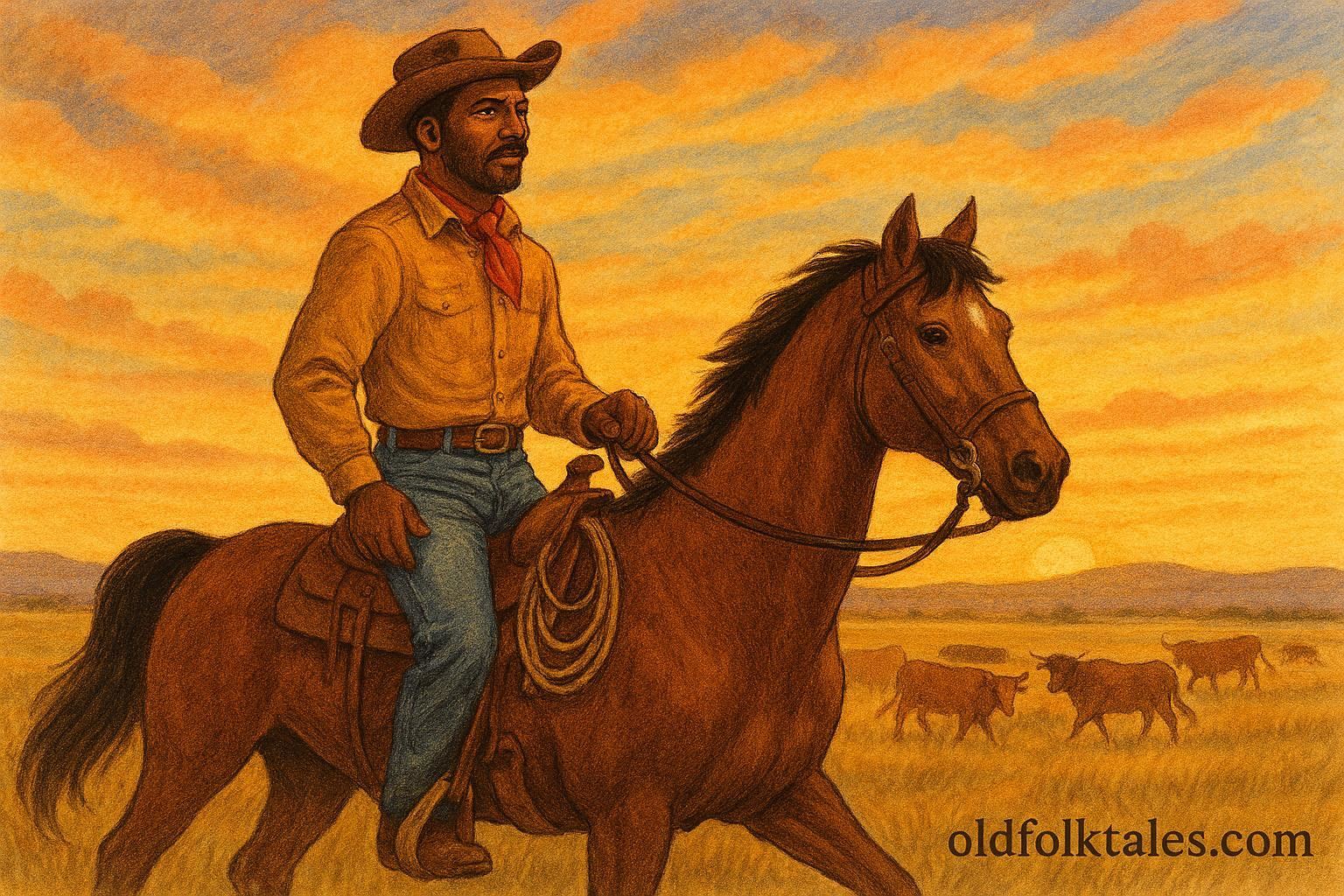
Nat Love quickly gained a reputation for his exceptional horsemanship, sharp shooting, and ability to manage large herds of cattle. He worked on ranches across Texas, Arizona, and New Mexico, participating in long cattle drives that tested endurance and resourcefulness. In folklore, these feats are often amplified, portraying him as a cowboy who could out-ride, out-shoot, and outthink anyone in the West.
Explore the heart of America’s storytelling — from tall tales and tricksters to fireside family legends.
Stories recount Love’s daring encounters with cattle rustlers, outlaws, and the harsh elements of the frontier. He reportedly earned the nickname “Deadwood Dick” after surviving gunfights and demonstrating remarkable marksmanship. Tales of his exploits spread through ranching communities, passed from one campfire to another, becoming part of the oral tradition that celebrated frontier bravery.
Beyond his physical skill, Nat Love was known for intelligence, perseverance, and integrity. Unlike some cowboys romanticized solely for their violence or recklessness, Love’s legend emphasizes discipline and honor. He respected the work of ranching, valued cooperation among cowboys, and upheld a personal code of ethics. Folklore often highlights these qualities, showing that heroism in the West was as much about character as it was about skill.
Love’s life was also shaped by racial dynamics on the frontier. While African Americans had opportunities as cowboys, they often faced discrimination and prejudice. Nat Love’s success demonstrates resilience and the ability to navigate challenging social landscapes. His autobiography, published in 1907, combined personal memory with folklore elements, giving the public a first-hand account of life as a Black cowboy and reinforcing his legendary status.
One of the most famous stories from his autobiography recounts a cattle drive in which Love outpaced a violent storm while guiding a herd through treacherous terrain. His horsemanship saved both the cattle and his fellow cowboys. Such tales, whether fully factual or somewhat embellished, illustrate the qualities admired in the West: courage, quick thinking, and loyalty.
Love also became celebrated for his marksmanship and self-defense skills. Folklore describes him confronting armed bandits or evading dangerous situations with cleverness and precision. These stories often depict him as calm and composed in the face of life-threatening danger, reinforcing the idea that a true cowboy combined courage with intelligence.
The frontier lifestyle demanded adaptability. Cowboys faced unpredictable weather, long hours, and grueling travel. Nat Love’s legend reflects his ability to endure these challenges. He survived blizzards, dust storms, and heat, demonstrating resilience that inspired generations of workers and storytellers alike. Communities celebrated these qualities in their oral traditions, turning daily struggles into heroic narratives.
Beyond physical skill, Nat Love’s story emphasizes freedom and identity. As an African American navigating the frontier, he forged a life on his own terms. His independence, mobility, and competence made him a role model for young men and women seeking to assert their place in a changing society. Folklore transformed these real-life achievements into legendary feats, merging fact with narrative to inspire pride and aspiration.
Nat Love’s adventures eventually became widely known, influencing Western films, novels, and popular culture depictions of cowboys. Unlike purely fictional characters, his legend was grounded in lived experience. His autobiography served as both historical document and folk narrative, bridging the gap between reality and imagination. The blending of the two has ensured his story endures as both educational and inspirational.
In addition, Nat Love’s life highlights the intersection of labor, adventure, and personal morality. A cowboy’s work was physically demanding and morally complex, balancing respect for property, adherence to contracts, and loyalty to fellow workers. Love’s stories illustrate the virtues of fairness, responsibility, and perseverance—qualities that became central to his legend.
Even today, Nat Love’s legacy persists in discussions of the American West, African American history, and folklore. He is celebrated not only for his remarkable skills and daring, but for representing a broader story of freedom, determination, and achievement. In the folklore tradition, his narrative has grown, with each retelling emphasizing courage, resourcefulness, and moral integrity.
Ultimately, Nat Love exemplifies the merging of history and legend. His life as a cowboy demonstrates the challenges and opportunities of the post–Civil War frontier. Through oral histories, autobiography, and cultural memory, he has become an enduring symbol of African American heroism in the West. His story continues to inspire admiration for resilience, freedom, and ethical courage in the face of adversity.
Click now to read all American Legends — heroic tales where truth and imagination meet, defining the American spirit.
Moral Lesson
Courage, skill, and integrity define true heroism. Overcoming adversity requires perseverance, resourcefulness, and moral strength, not just physical ability.
Knowledge Check
1 Who was Nat Love?
An African American cowboy celebrated for skill, courage, and legendary exploits
2 What nickname did he earn during his career?
Deadwood Dick
3 Which regions did he primarily work in?
Texas, Arizona, and New Mexico
4 What themes define his folklore legend?
Freedom, perseverance, and identity
5 Why is his story significant for African American history?
It highlights resilience, independence, and contribution to frontier life
6 How was his story preserved?
Through autobiography, oral storytelling, and folklore traditions
Source
Adapted from National Cowboy & Western Heritage Museum collections
Cultural Origin
Western cattle ranching communities