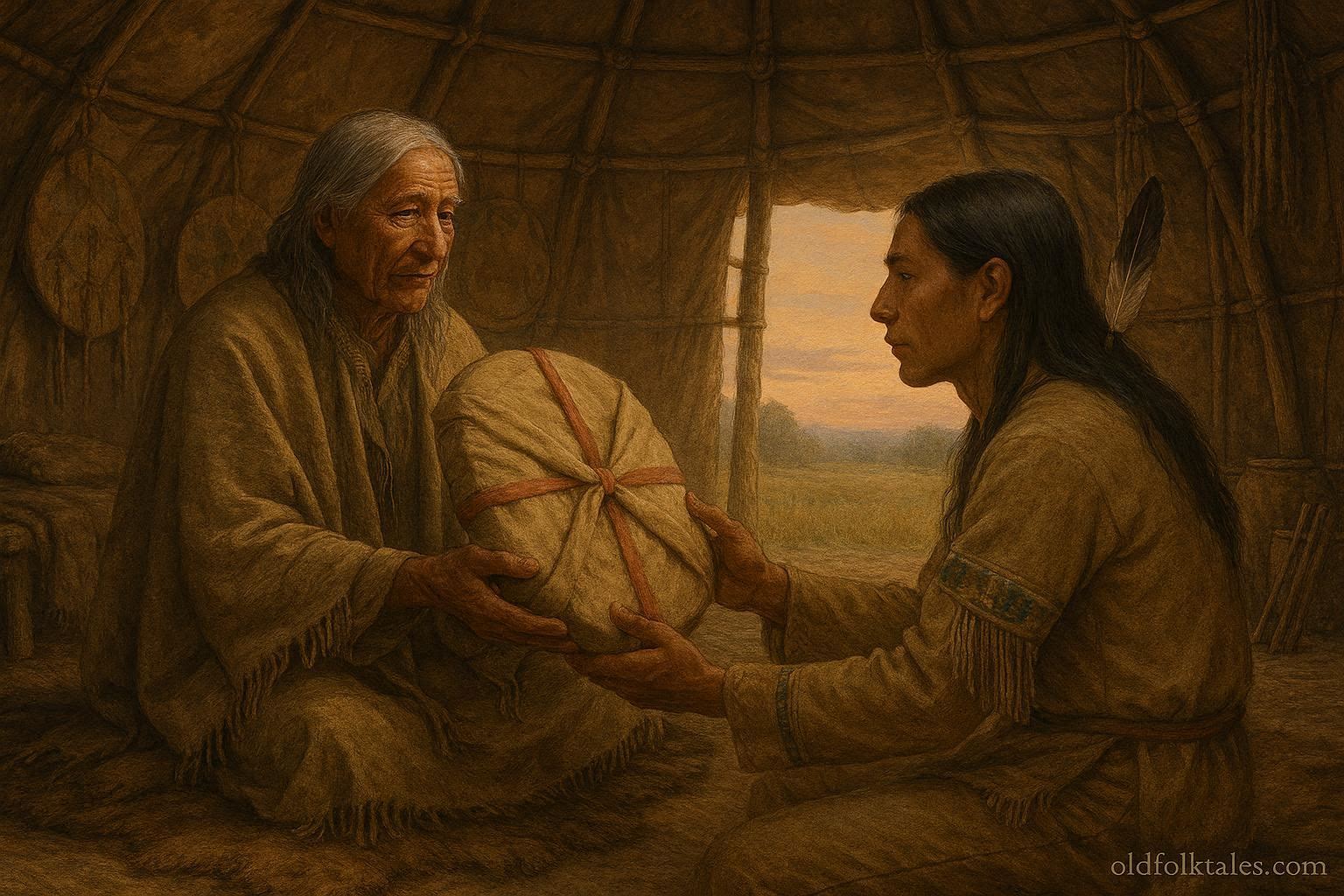
Dawn crept over the prairie, casting long shadows across the village. Inside the central lodge, a group of young warriors waited quietly. At the center rested a shield, polished and adorned with intricate symbols, wrapped in soft cloth. Elders spoke little, but their eyes carried the weight of history. This was no ordinary shield. It was said to awaken its protective power only in times of conflict, remaining dormant in times of peace. The ritual of presenting it was both a test and a lesson: restraint, respect, and responsibility came before any display of strength.
The shields were crafted with care, each design intentionally chosen to honor ancestors, the land, and spiritual guidance. Feathers, painted patterns, and carved symbols were not merely decorative they held meaning, representing courage, vigilance, and protection. Oral histories explain that their power did not come from the materials alone, but from the responsibility of the person who bore the shield. Only those prepared to act wisely and ethically could access its protective force.
Elders emphasized that the shield’s use was tightly regulated. During peace, it remained hidden, stored safely in lodges or ceremonial spaces. Displaying it unnecessarily was considered dangerous, for the shield’s energy could be misapplied or misunderstood. In this way, the shield taught that power must be paired with discretion. Courage without wisdom could harm not only the individual but the entire community.
Step into America’s cultural roots — from folk healing and weather lore to seasonal celebrations.
The process of passing the shield was ceremonial. Young warriors were first instructed to reflect on their intentions, their understanding of duty, and their respect for ancestors. Only then were they allowed to approach the shield. In some accounts, they touched it lightly, feeling the texture of the materials, the engraved symbols, and the energy preserved through generations. The elders watched carefully, ready to guide or correct if respect was lacking.
One story describes a young warrior who eagerly reached for the shield during a time of peace. The elders intervened, reminding him that the true test was patience and understanding, not haste. Only months later, when a threat approached the village, was he entrusted with the shield. This delay was not punishment, it was preparation. By waiting, he learned that power is not possession; it is responsibility, exercised at the right moment.
These shields were also educational tools. Their designs contained visual lessons about tactics, vigilance, and community coordination. Elders would describe each symbol’s meaning, often tying them to stories of past battles, heroic deeds, and ethical decisions. Young warriors learned to interpret not only the shield itself but the values it represented. Through this practice, knowledge of history, strategy, and morality was passed seamlessly from generation to generation.
Legends emphasize that the shield’s protective power extended beyond physical defense. Its presence inspired confidence, unity, and calm among warriors and villagers alike. Those entrusted with the shield were expected to embody these qualities, demonstrating restraint in addition to bravery. Using the shield recklessly or outside of its intended purpose was believed to invite misfortune, underscoring the principle that responsibility must guide power.
The ritual surrounding the shields also reinforced community cohesion. Passing the shield was a communal act, observed by elders, warriors, and sometimes the entire village. The collective presence ensured that lessons of respect, patience, and readiness were witnessed and remembered. It reminded everyone that protection in times of conflict was a shared duty, not a personal privilege.
Even after the shield was no longer needed in battle, its legacy continued. Stories of its use and the warriors who wielded it were retold in lodges and gatherings. Young members were reminded that true strength lies in knowing when to act and when to wait. The shield symbolized not only physical protection but ethical leadership and the thoughtful application of power.
These shields remain a potent symbol in oral tradition. They teach that readiness is as much about restraint as action, and that power, untempered by responsibility, can become dangerous. Communities that preserved the story of the shields preserved lessons about balance, ethical conduct, and the enduring importance of memory and guidance.
Through centuries, the legend of these ritual shields has endured, reminding all who hear it that courage alone is not enough. Leadership, wisdom, and the timing of action are equally critical. In this way, the shields carried a dual role: as objects of protection and as enduring teachers of moral responsibility.
Explore how American legends shaped the nation — from frontier heroes to Revolutionary War tales.
Moral Lesson
True strength combines power with restraint. Responsibility, patience, and ethical judgment ensure that protection benefits the entire community rather than causing harm.
Knowledge Check
- What made these ritual shields special compared to ordinary shields?
They were believed to activate protective power only during times of conflict. - Why were the shields kept hidden in times of peace?
To prevent misuse of their power and to teach restraint. - What lessons did young warriors learn when receiving a shield?
Patience, responsibility, respect for ancestors, and ethical use of power. - What did the designs and symbols on the shields represent?
Courage, vigilance, protection, historical lessons, and moral guidance. - Who oversaw the passing of the shields?
Elders and community leaders, ensuring proper instruction and respect. - Why is restraint emphasized in the shield legends?
Because power without responsibility can cause harm, and true protection requires ethical action.
Source
Adapted from Field Museum Indigenous arms and ritual collections
Cultural Origin
Plains Indigenous nations