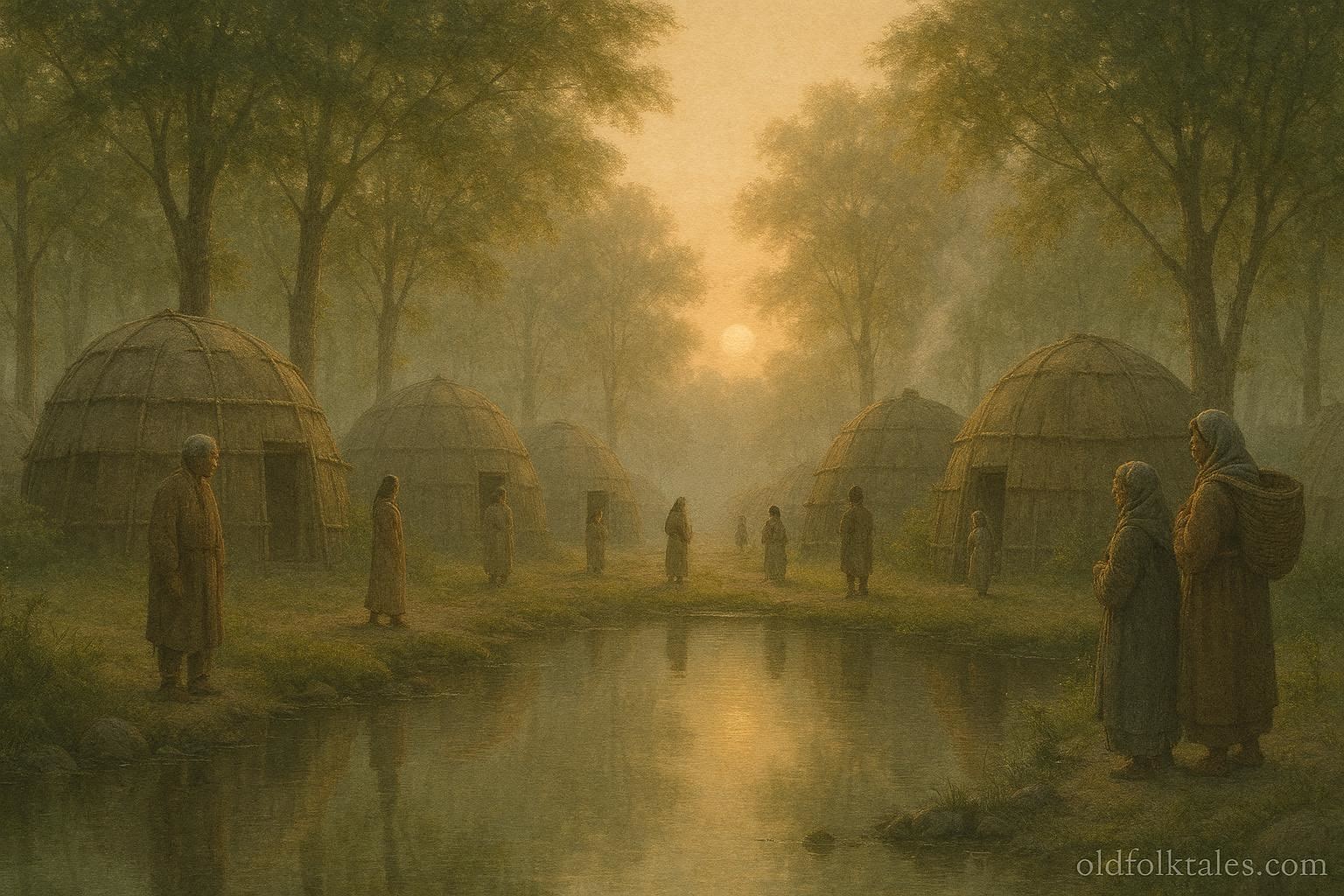
When the last echoes of conflict faded, the villages did not rush to speak. Fires were tended carefully, footsteps softened, and voices lowered until they disappeared altogether. Elders taught that the time immediately following war was not meant for words. Silence, they believed, allowed the land to settle and the spirits of those lost to find their way without disturbance. In this quiet, communities began the long work of remembrance and healing.
Across Southeastern Indigenous nations, ritual silence was practiced as an intentional response to warfare. Oral traditions explain that speech carried power, and careless words could disrupt spiritual balance. Silence was not emptiness; it was an active state of respect. By withholding speech, communities acknowledged loss, responsibility, and the seriousness of what had occurred.
This period of quiet often began immediately after warriors returned. No celebratory cries followed their arrival. Instead, families gathered, elders signaled the beginning of silence, and daily life slowed. Tasks continued, but communication shifted to gestures, shared glances, and deliberate movement. Children learned quickly that this was not a punishment, but a necessary pause.
Discover chilling ghost tales and haunted places that echo through America’s towns and countryside.
Elders explained that the spirits of the fallen lingered near the community for a time. Loud speech, arguments, or careless laughter could confuse or distress them. Silence created a clear path, allowing spirits to depart peacefully. In this belief, quiet became an act of guidance rather than absence.
The duration of silence varied. Some traditions observed it for a single day, others for several days or an entire moon cycle. The length depended on the scale of the conflict and the losses endured. Elders determined when the silence would end, watching for signs in dreams, nature, or ceremonial guidance that indicated balance had begun to return.
Silence also served as accountability. Warriors were expected to reflect deeply on their actions during this period. Without words to distract or justify, they confronted memory and consequence internally. Oral histories emphasize that this reflection shaped ethical behavior in future conflicts. Speaking too soon was seen as avoiding responsibility rather than honoring survival.
Women played a central role during these quiet days. They organized food, cared for children, and maintained the rhythm of life without spoken instruction. Their actions demonstrated that leadership did not require loud command. The community functioned through shared understanding, reinforcing bonds strengthened by mutual respect.
Children were taught to observe rather than ask questions. Elders later explained the meaning of the silence, ensuring that the practice was understood, not feared. Through this teaching, young members learned that grief and healing required patience. Silence became one of the first lessons in emotional discipline and communal responsibility.
As the quiet period progressed, subtle changes marked its nearing end. Elders might hum softly, a drum might be touched but not struck, or a prayer might be whispered at dawn. These signs signaled that the spirits had settled and the community could begin to speak again.
The first words spoken after silence were chosen carefully. They were often prayers, acknowledgments of loss, or expressions of gratitude for survival. Ordinary conversation resumed slowly, reinforcing the idea that words carried weight and should not be wasted.
Over generations, this ritual silence became a defining cultural practice. Even as warfare changed or faded, the stories of silence endured. They reminded communities that healing was not immediate and that restraint was as important as expression.
Today, these legends are remembered as teachings rather than prescriptions. They offer insight into how societies confronted trauma without rushing past it. Silence was not weakness. It was strength shaped by care, accountability, and respect for both the living and the dead.
The tradition endures as a reminder that some moments require listening rather than speaking, reflection rather than reaction. In honoring silence, communities honored life itself.
Click now to read all American Legends — heroic tales where truth and imagination meet, defining the American spirit.
Moral Lesson
Healing requires patience and accountability. Silence can be a powerful form of respect, allowing reflection, balance, and renewal after loss.
Knowledge Check
- Why did communities practice silence after warfare?
To honor the fallen and avoid disturbing their spirits. - Who determined how long the silence lasted?
Elders, guided by tradition, ceremony, and spiritual signs. - What did silence represent in these traditions?
An active form of respect, reflection, and healing. - How did warriors benefit from the period of silence?
It encouraged accountability and reflection on their actions. - How did daily life continue without spoken communication?
Through gestures, shared routines, and mutual understanding. - What usually marked the end of the silence period?
Subtle ceremonial signs followed by carefully chosen first words.
Source
Adapted from University of Oklahoma Indigenous ceremonial folklore archives
Cultural Origin
Southeastern Indigenous nations