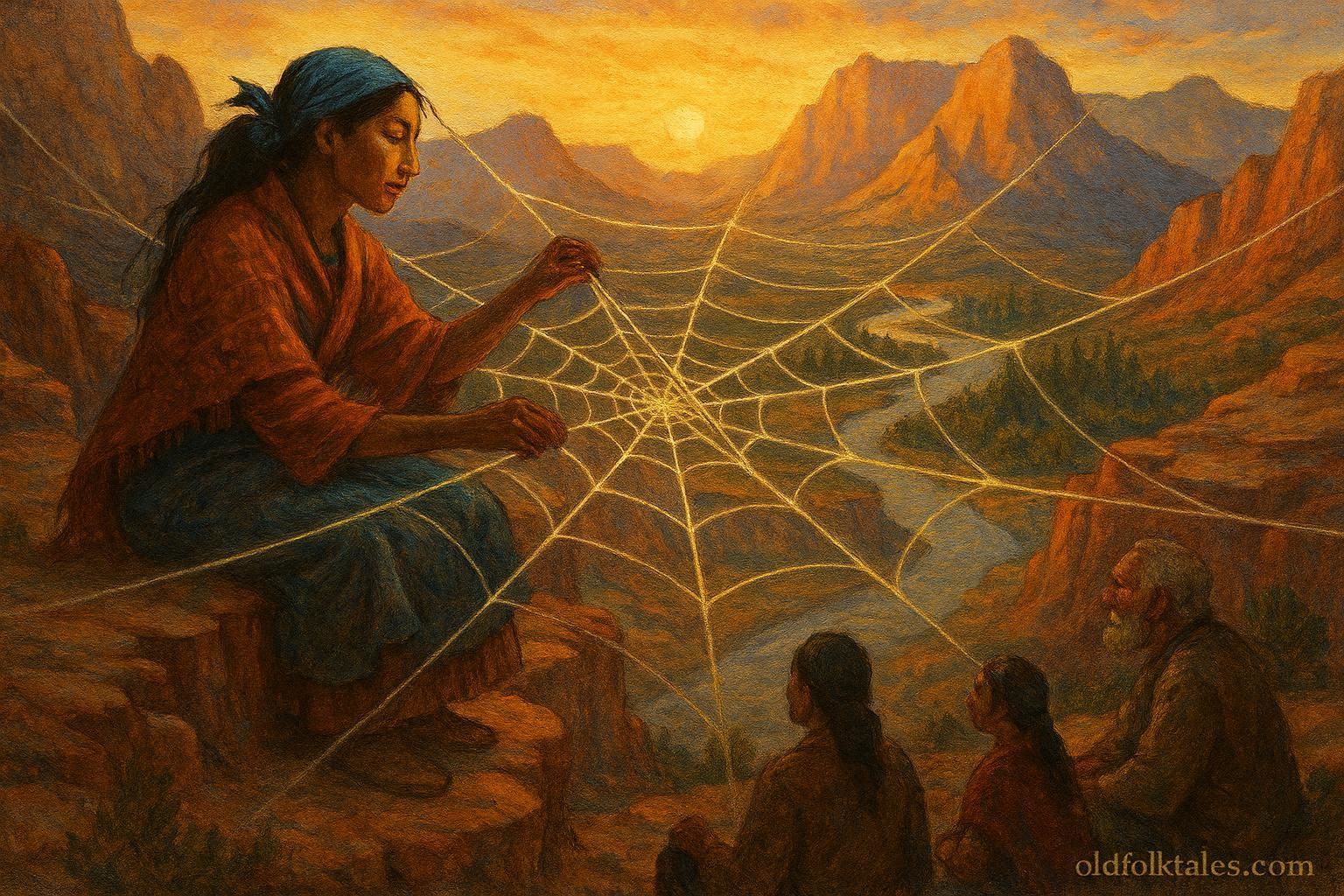
The first light of dawn had not yet painted the skies, but the world already stirred with potential. In the vast expanse of land and sky, patterns waited to emerge. From the Southwest deserts and canyons, a figure appeared who would bring order and wisdom to the unfolding world. She was known as Spider Woman, a being of remarkable skill, patience, and foresight. Her hands wove the threads that would shape mountains, rivers, forests, and the paths of all living beings.
Spider Woman’s work was meticulous. She moved with quiet determination, touching soil, water, and stone. With every delicate thread she spun, the land took shape. Rivers curved around mesas, canyons deepened where water would flow, and seeds planted themselves in fertile valleys. Each living creature found its place. Nothing was left to chance. Her weaving was not merely physical but spiritual, intertwining balance, harmony, and order into creation itself.
Humans, the newest beings in this emerging world, watched with curiosity. They were small and fragile, unsure how to walk or speak in harmony with the land. Spider Woman did not take them for granted. She taught them essential lessons. Through her threads, she demonstrated patience and foresight. She showed humans how to build shelter without harming the environment, how to cultivate food respectfully, and how to live in balance with animals and plants.
Explore Native American beings, swamp creatures, and modern cryptid sightingsacross the country.
Her teachings extended beyond practical survival. She instructed humans on community and cooperation. Just as her threads interlaced to form the fabric of the world, human lives were meant to intertwine with care and responsibility. Families learned to share water, trade food, and protect one another from harm. Conflicts were resolved not by force but by dialogue and understanding, reflecting the harmony inherent in the spider’s weaving.
Spider Woman also taught humans the sacredness of creativity. Every hand that molded clay, every brush that painted the earth, every basket woven from reeds reflected a piece of her wisdom. Creativity was not frivolous; it was a means of understanding the world, a way to honor the delicate balance of life. Through this gift, humans could see their role in the great web of existence.
Yet her guidance was not passive. When humans acted recklessly, overhunting, taking more than they needed, or ignoring the cycles of seasons. Spider Woman intervened. She sent reminders in subtle forms: a sudden drought, an unexpected frost, the disappearance of game. These events were not punishments but lessons, encouraging humans to reflect and restore balance. Those who listened grew wise. Those who ignored the threads risked disorder in their communities and in the land itself.
Over generations, Spider Woman became both a teacher and a symbol. She embodied patience, foresight, creativity, and justice. Her presence reminded humans that the world was not theirs to command but to understand and nurture. Those who honored her guidance thrived. Crops grew, rivers flowed steadily, and communities flourished. Those who neglected her lessons suffered setbacks that reinforced the importance of wisdom and harmony.
Stories of Spider Woman were passed down carefully. Elders shared the tales during gatherings, around fires, and at ceremonial spaces. Children learned the value of planning, skill, and creativity. They were taught that every thread of life mattered, and that even the smallest action could affect the whole. They learned that patience, respect, and cooperation were essential qualities for sustaining life.
Even today, Spider Woman’s teachings endure. Artists, weavers, and builders draw inspiration from her careful craftsmanship. Communities continue to honor the web of connections in nature and society, recognizing that wisdom is earned through observation, practice, and attentiveness. Her lessons remain relevant, guiding human interaction with each other and with the natural world.
The Spider Woman myth also carries a warning. Chaos emerges when humans fail to respect the web of life. Selfishness, haste, and ignorance can unravel harmony. Balance requires vigilance and understanding, and creativity must serve the greater good. Through her story, humans learn that patience and foresight are as vital to survival as food, water, or shelter.
The Spider Woman shapes not only the physical world but also the moral and spiritual order. By honoring her lessons, humans maintain harmony, live creatively, and contribute to the stability of the world around them. Her web is unbroken, stretching from mountains to rivers, from the smallest insect to the tallest tree, reminding every generation that life is an interconnected, living fabric.
Moral Lesson
Wisdom, patience, and creativity sustain both people and the world. Life is interconnected, and harmony is preserved through foresight, cooperation, and respect for all beings.
Knowledge Check
1. Who is Spider Woman in this myth?
Spider Woman is a wise creator who weaves the threads of the world, shaping land, rivers, plants, and human life.
2. How does Spider Woman teach humans to live?
She teaches patience, foresight, creativity, cooperation, and respect for the balance of nature.
3. What happens when humans act recklessly?
Natural reminders occur, such as drought, frost, or scarcity, guiding humans to restore harmony.
4. How is creativity presented in the story?
Creativity is sacred and practical, reflecting Spider Woman’s web and helping humans understand and honor the world.
5. Why is the web of life important in the myth?
It illustrates that every action is connected; disrupting one thread affects the whole.
6. What warning does the Spider Woman myth convey?
Chaos emerges if humans act selfishly or without foresight; balance requires attentiveness, patience, and respect.
Source
Adapted from Smithsonian National Museum of the American Indian Southwest myth collections
Cultural Origin
Navajo and Pueblo communities, Southwestern United States