Winter in the northern forests is not merely a season. It is a force that reshapes thought, movement, and survival. Snow silences the land, rivers harden into stone, and hunger presses closely against every decision. Among Algonquian speaking nations, winter was understood as a time when balance could easily fracture. It is within this fragile space that the legend of the Cannibal Ice Being was born.
The being was once human. This truth lies at the center of every telling. Elders describe a person who abandoned restraint during extreme hardship. Food was hoarded. Kin were ignored. Hunger was allowed to rule thought and action. Over time, the cold did not merely surround the person. It entered them.
Transformation did not occur suddenly. It crept in through isolation. The individual withdrew from community, choosing solitude over shared survival. As days shortened and storms grew harsher, the person began to see others not as relatives but as resources. This shift marked the point of no return.
Explore how American legends shaped the nation — from frontier heroes to Revolutionary War tales.
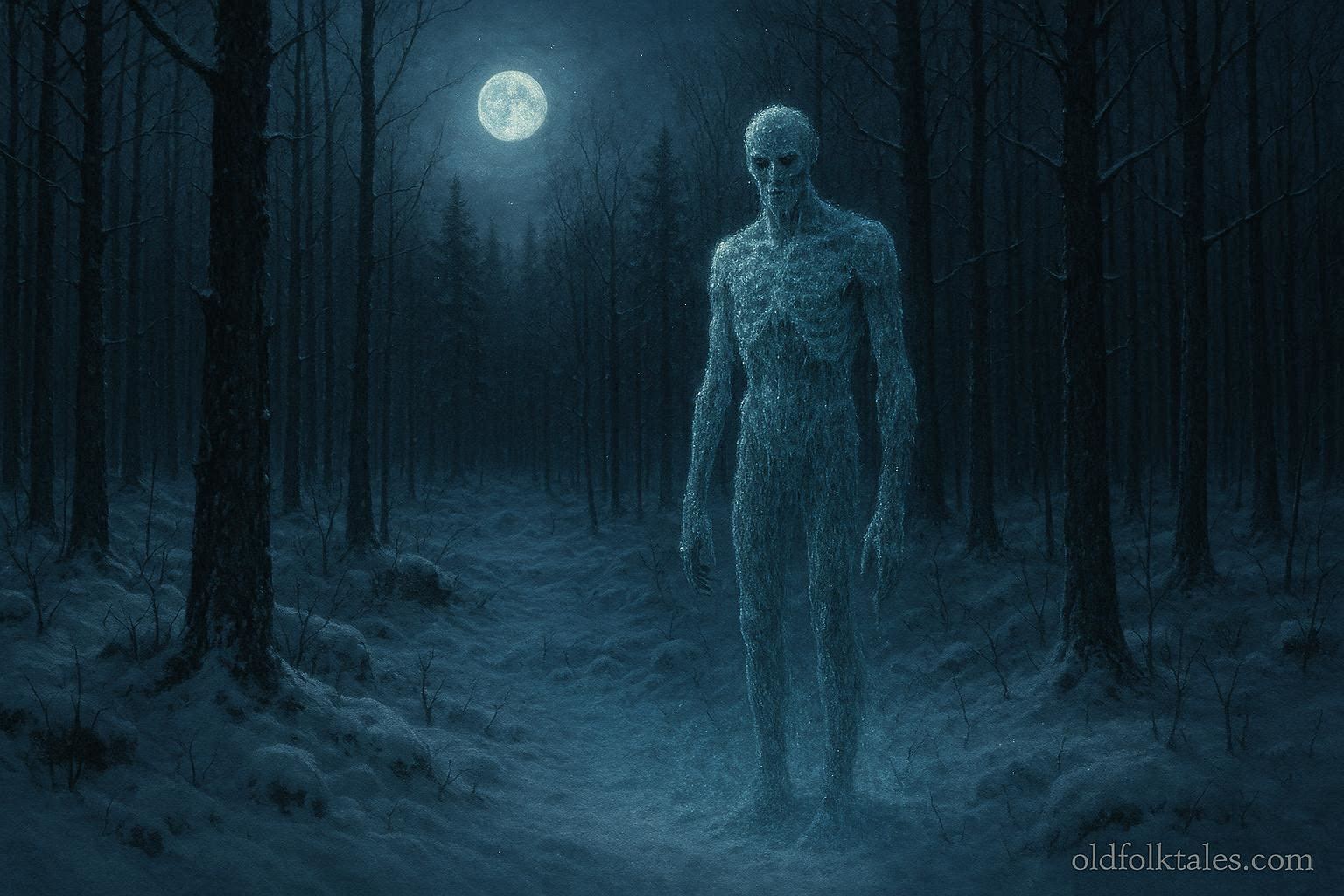
The Cannibal Ice Being is described as tall and gaunt, with skin pale as frost and stretched tightly over bone. Its eyes reflect light like ice under moonlight. Breath escapes in thick white clouds even when it stands still. Its heart is said to be frozen, no longer beating with human rhythm.
Unlike animals, the being walks upright and speaks rarely. When it does, its voice mimics human speech but lacks warmth. Elders warn that the being can call out in familiar tones to lure the unwary. Those who follow the sound risk disappearing into the snow.
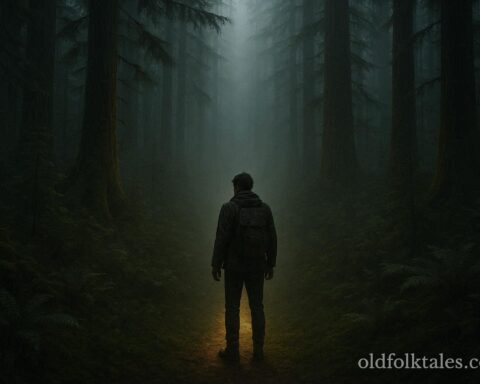
The being roams deep winter landscapes, favoring forests, frozen lakes, and abandoned trails. It avoids settlements but circles their edges, watching for weakness. Children were taught never to answer voices in the snow and never to wander alone during storms.
The Cannibal Ice Being feeds on flesh, but elders emphasize that its hunger is never satisfied. Each act of consumption deepens its suffering. The being is trapped in a cycle of need created by its own choices. It eats not to survive but because it no longer remembers restraint.
Animals sense the presence of the being long before humans do. Wolves grow restless. Birds flee suddenly. Dogs whine and refuse to move forward. These signs were taken seriously, prompting people to return home and strengthen communal bonds.
Fire is one of the few protections against the being. Warmth disrupts its presence. Bright flames and shared gatherings weaken its ability to approach. For this reason, winter nights were filled with stories, songs, and vigilance. Togetherness was both comfort and defense.
The being is said to grow stronger during extreme cold. Blizzards and long nights empower it. Elders explain that when people despair and abandon community values, the being moves closer. It feeds on moral collapse as much as flesh.
There are stories of individuals who encountered the being and survived. These survivors describe overwhelming cold and fear but also a moment of clarity. Those who resisted selfish instinct and remembered teachings found the strength to escape. Survival was tied to moral choice.
The legend teaches that the being cannot enter homes where generosity and care are practiced. Food shared openly creates a barrier. Laughter and warmth disrupt the silence the being depends on. In this way, culture itself becomes protection.
Some stories describe the being as once loved by their community. This detail deepens the warning. Anyone can become the Cannibal Ice Being if they abandon restraint. The legend does not place evil outside humanity. It locates danger within unchecked desire.
The being does not die easily. Weapons harm it only temporarily. True defeat comes when communities restore balance. When people care for one another, the being retreats into deeper wilderness, weakened by the absence of fear and greed.
Elders caution against speaking the being’s name too often during winter. Naming invites attention. Instead, teachings focus on behavior. Stay together. Share resources. Watch over children. Respect the season.
As winters changed and modern life reduced isolation, belief in the being faded for some. Yet elders say the lesson remains relevant. Greed and isolation still create monsters, even if they no longer wear ice.
The Cannibal Ice Being endures as a moral mirror. It reflects what happens when survival loses compassion. Winter tests not only the body but the spirit. Those who pass the test do so together.
The legend remains a warning and a guide. Cold alone does not transform people. Choices do. The being walks the snow not because winter demands it but because someone once forgot how to remain human.
Click to read all American Cryptids & Monsters — creatures of mystery and fear said to inhabit America’s wild landscapes.
Moral Lesson
Greed and isolation destroy humanity while generosity and community preserve life.
Knowledge Check
- What was the Cannibal Ice Being originally?
A human. - What caused the transformation?
Greed and abandonment of community during hardship. - Where does the being roam?
Winter landscapes such as forests and frozen areas. - What weakens the being?
Warmth, fire, and communal care. - How do animals react to its presence?
They show fear and avoidance. - What central lesson does the legend teach?
Moral restraint is essential for survival.
Source
Adapted from Algonquian winter belief studies published by the American Anthropological Association
Cultural Origin
Algonquian speaking nations