On the vast, open plains of the Crow territory, the winter had been harsher than anyone could remember. Snow blanketed the grasslands in heavy layers, and the wind carried a biting chill that seemed to cut straight to the bone. In a small lodge near the river, Nita, a young child of seven, lay pale and motionless. Her laughter, which had once filled the home like sunlight, had faded into silence.
Her parents tried everything they knew. Herbs and teas prepared from the roots and leaves gathered in warmer months were brewed carefully, each steeped with whispered prayers. Smoke from sacred plants drifted through the lodge as chants and invocations were offered to the spirits of the land. Yet each day, Nita’s condition worsened. The village elders shook their heads, and even the strongest healers seemed powerless.
Desperate, Nita’s mother, Wichi, decided to seek guidance directly from the animals that roamed the plains. She wrapped herself in furs and walked to a bluff where eagles were known to soar. The cliffs overlooked the endless golden grasses, and from this height, she could see the vast stretches of land that the Crows had traveled for generations. Kneeling on the frost-covered earth, she whispered into the wind.
Discover chilling ghost tales and haunted places that echo through America’s towns and countryside.
“Spirit of the eagle,” she said softly, “guardian of the skies, hear my prayer. Protect my child, guide me, and bring her back to life.”
She waited, her hands folded, her heart heavy with fear. Hours passed. Snow drifted in light swirls around her, and the cry of distant wolves echoed faintly through the valleys. Still, no eagle appeared, and no answer came. Wichi’s hope began to waver, but she refused to leave. She remained, silent, letting the cold bite through her gloves and cloak, trusting that the spirits would hear her devotion.
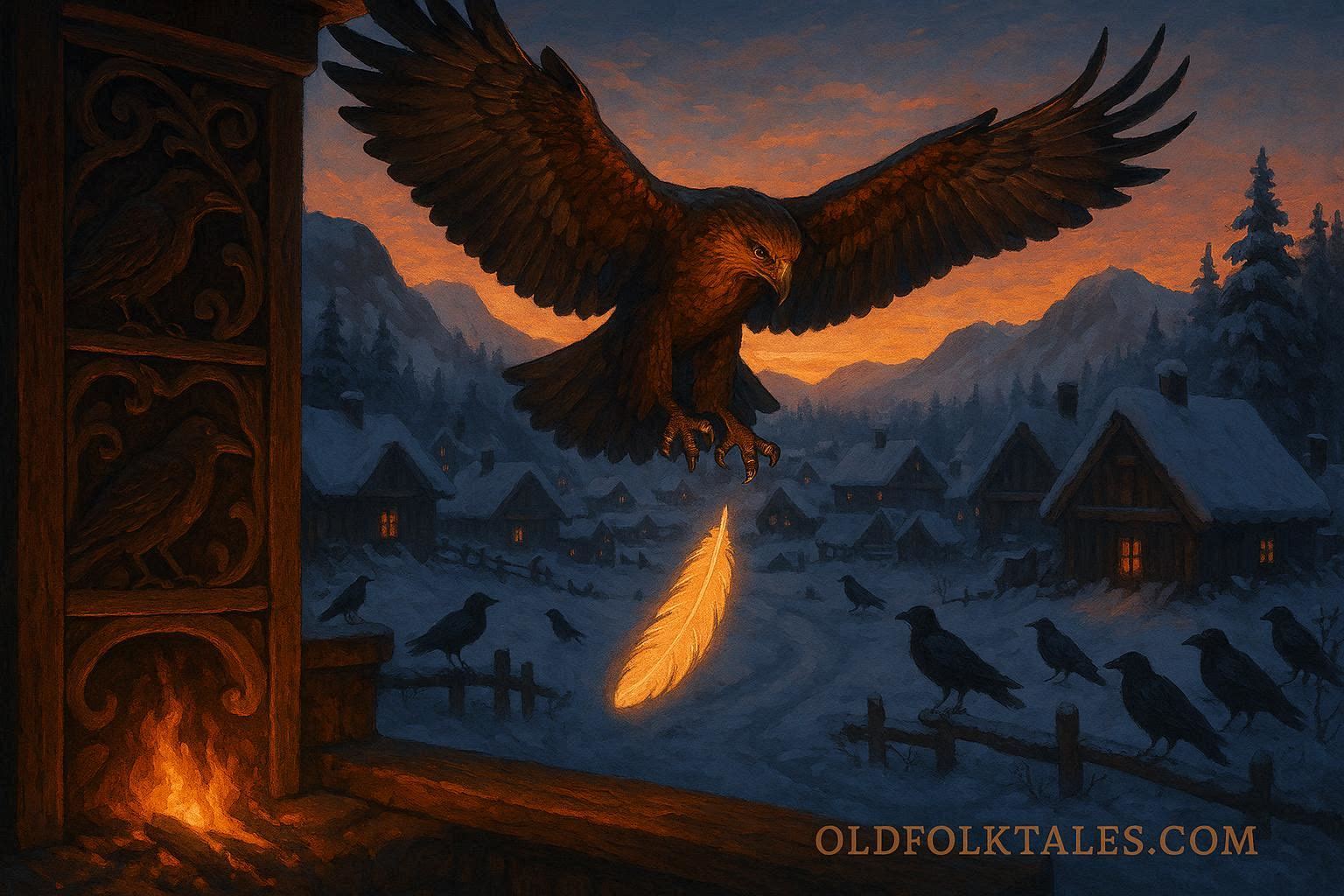
As the sun began its descent, painting the sky in streaks of amber and rose, a shadow passed over the bluff. Wichi looked up to see a golden eagle gliding effortlessly on the wind. Its wings were enormous, spanning wider than any bird she had ever seen, and its eyes burned with the light of wisdom and power. The eagle circled the bluff twice, as though studying her and weighing her sincerity, before descending slowly toward the edge of the cliff.
In its talons, the eagle carried a single feather, glowing faintly in the light of the setting sun. It landed gracefully in front of Wichi and released the feather at her feet. The warmth from it spread through the snow and into her hands as she picked it up. It pulsed softly, almost as if it were alive, carrying the energy of the plains, the wind, and the sky. She felt a connection to the earth, to the eagle, and to the life she so desperately wanted to save.
Rushing back to the lodge, careful not to drop the feather, she entered Nita’s room and held it above her daughter. She whispered prayers of gratitude and hope, calling on all the spirits of the plains to lend their power to the feather. The room filled with a faint golden glow, and a gentle warmth spread through Nita’s body. Slowly, color returned to her cheeks, and her shallow breathing grew steadier. Her small hand reached for Wichi’s, grasping it with renewed strength.
The family rejoiced. Tears of relief and gratitude flowed freely as they realized that the eagle’s gift had saved their child. They understood that the feather was not merely a magical object but a symbol of the sacred connection between humans and the natural world. The eagle, they knew, was a messenger of the Creator, sent to guide and protect those who lived with respect for the land and its creatures.
From that day on, the family treated every animal, every plant, and every river with reverence. Nita grew strong and wise, learning the lessons of the plains from her parents and elders. She learned that the feather was a reminder: that all life is connected, that every creature has a purpose, and that gratitude must be offered for every gift the earth provides.
Seasons passed. Each time an eagle soared above the lodge, the family paused to watch and give thanks. They taught Nita to do the same, explaining that the birds are more than animals; they are spiritual guardians who watch over the balance of the land. The child never forgot the feeling of warmth and power that pulsed through her when the feather rested in her mother’s hands.
Eventually, the feather began to lose its glow. The family knew that it was time to return it to the earth. Together, they walked to the bluff where Wichi had first received it. Carefully, they buried the feather in a small mound, covering it with soil and marking the spot with wildflowers. From that place, the flowers grew brighter, the grasses seemed taller, and the eagles continued to soar above, as if honoring the promise made between humans and the land.
The story of Nita, Wichi, and the eagle spread throughout the village. Elders told it to children, emphasizing the importance of living in harmony with nature and giving thanks for every breath, every harvest, and every creature. Travelers and hunters who passed by the bluff often reported glimpses of eagles circling overhead, a living reminder of the sacred bond and the healing power of respect and gratitude.
Nita grew into adulthood, carrying the lessons of the eagle and the feather with her. She taught her own children to honor the land, care for animals, and offer thanks for every gift. The family never again took more than they needed and always sought to live with humility, understanding that the power to heal comes not only from magic but from gratitude, respect, and harmony with the world around them.
Generations later, the story of the eagle and the sky feather remained alive in the memory of the Crow people. It became a symbol of hope, of the guidance that comes from nature, and of the sacred responsibility humans have to protect and honor all living things. The feather, now resting deep in the soil, continues to nourish the land, ensuring that the eagle’s lesson endures with every sunrise over the plains.
Click to read all American Folktales — timeless oral stories passed through generations across the United States.
Moral Lesson
Healing and wisdom come from gratitude, respect for nature, and living in harmony with the world around us.
Knowledge Check
- Q: Who delivered the magical feather?
A: A golden eagle. - Q: What did the feather do for Nita?
A: It healed her illness. - Q: What lesson did the family learn?
A: To live in gratitude and harmony with nature. - Q: Where was the feather initially placed in the house?
A: On a carved wooden shelf by the fire. - Q: How did the elders describe the eagle?
A: As a messenger of the Creator and protector of balance. - Q: Why did the family bury the feather eventually?
A: To return it to the earth and let it nourish the land.
Source:
Adapted from University of Montana Great Plains Indigenous folklore collections
Cultural Origin:
Crow communities