Long before the present world took its familiar shape, humanity lived below the surface of the earth. These earlier worlds were not places of darkness alone but realms of learning, trial, and gradual understanding. The people who lived there were not yet ready for the responsibilities of the surface world. They were learning what it meant to live together, to respect balance, and to recognize the limits of desire.
In the lowest world, life was simple and instinctive. People followed their needs without reflection. Conflicts arose easily, and harmony was fragile. The spirits who watched over creation observed that while humans possessed potential, they lacked discipline and awareness. The earth itself reflected this imbalance, growing unstable and inhospitable.
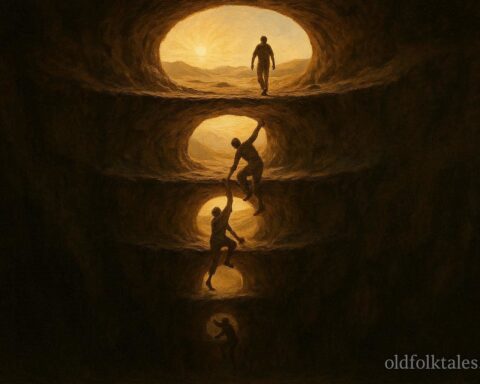
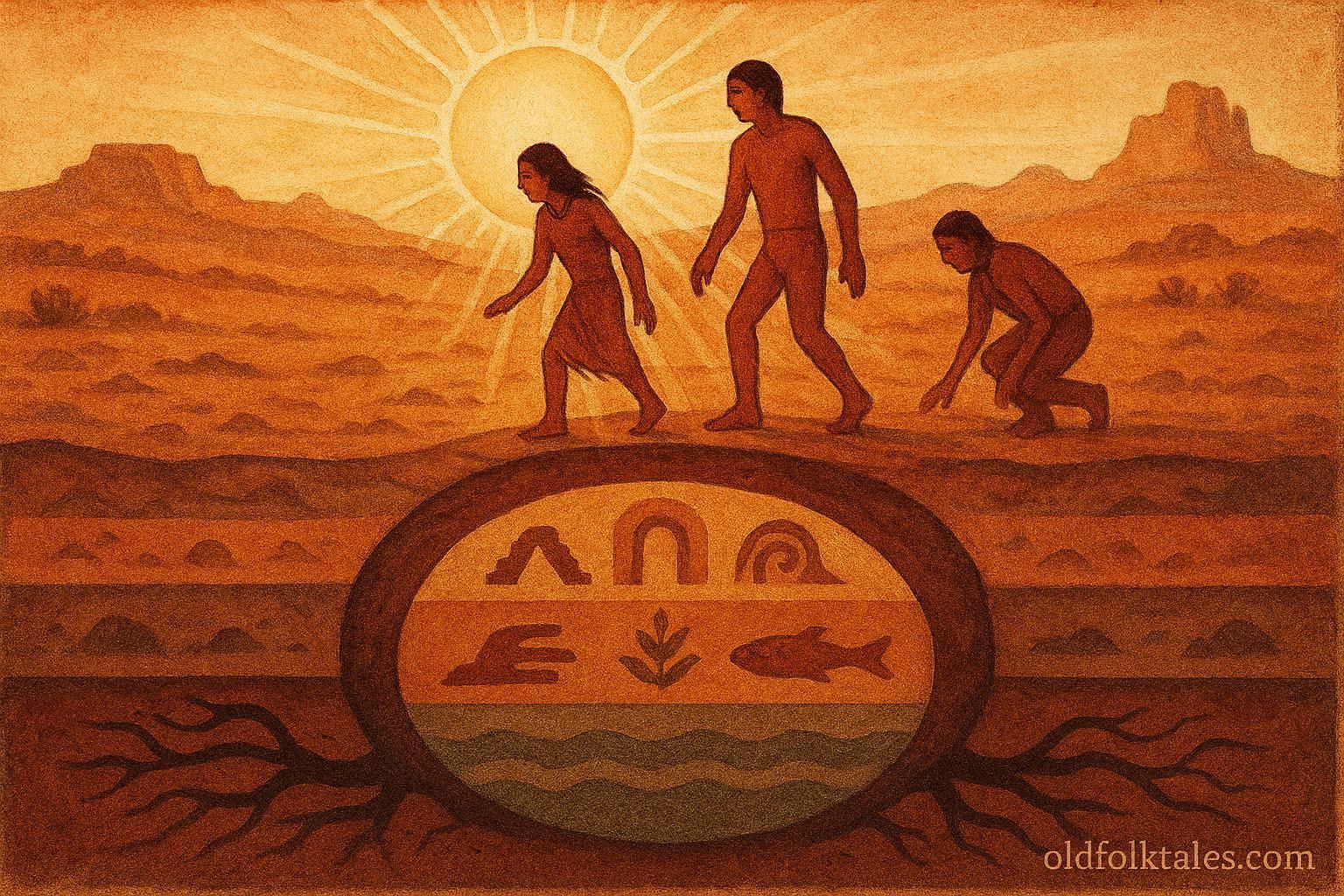
Guided by spiritual helpers, humanity was urged upward. A small opening appeared in the ceiling of the first world, a sacred passage that would later be remembered as the Sipapu. Through it, the people climbed into the second world. This new realm offered more light and space, but it also demanded greater responsibility.
Explore the heart of America’s storytelling — from tall tales and tricksters to fireside family legends.
In the second world, humans learned agriculture, cooperation, and ceremony. They began to understand seasons and cycles. Yet pride grew alongside knowledge. Some took more than they needed. Others ignored the wisdom of elders. Though progress had been made, imbalance returned. The earth trembled, signaling that the people had not yet learned restraint.
Once again, spiritual beings guided humanity toward the Sipapu. The ascent was not easy. The passage was narrow, requiring effort, humility, and cooperation. Only those willing to help one another could pass through safely. When they emerged into the third world, they found a place richer and more complex than before.
The third world was expansive, filled with rivers, mountains, and fertile land. Humans flourished here, building communities and developing arts, language, and social order. Knowledge increased rapidly. However, with growth came division. People argued over land, status, and power. Ceremonies were neglected. The balance between humans and nature weakened.
Warnings came in subtle forms at first. Crops failed. Animals disappeared. Storms grew stronger. Elders reminded the people of their obligations, but many ignored them. The spirits decided that humanity must rise once more, or risk destroying itself entirely.
The final ascent through the Sipapu was the most difficult. By this time, the opening had become sacred, guarded by rituals and prayers. Only those who approached with humility and respect could pass. The journey required patience, cooperation, and a willingness to leave behind harmful ways of living.
When humanity emerged into the fourth world, the present world, everything changed.
Sunlight filled the sky. The land stretched far and wide, shaped by lessons learned below. This world was stable but demanding. Survival required effort, wisdom, and constant balance. The people were no longer children of creation. They were caretakers.
Spiritual beings instructed humans carefully. This world would not tolerate the same mistakes. Ceremonies must be maintained. The land must be respected. Every action would carry consequences. The Sipapu remained as a reminder, not just of where humans came from, but of what happens when balance is forgotten.
The Hopi people taught that the Sipapu still exists, symbolically connecting all worlds. It is a place of emergence and remembrance. Through ritual and story, each generation is reminded that growth is not automatic. It requires discipline, humility, and responsibility.
The Emergence is not merely a tale of movement from below to above. It is a lesson in maturity. Humanity did not earn the present world by strength alone, but by learning from failure. Each world represented a stage of development, and each ascent marked a deeper understanding of harmony.
Even now, the story teaches that humanity could fall again if balance is lost. The earth listens. It responds to care and neglect alike. The Emergence reminds people that survival is not guaranteed, but earned through respect for life, community, and the unseen forces that shape existence.
The Sipapu stands as a symbol of hope and warning. It represents both beginnings and accountability. Through it, humanity was given multiple chances, and through it, humans are reminded that growth is an ongoing responsibility.
Click to read all American Traditions & Beliefs — the living folklore of daily life, customs, and superstitions.
Moral Lesson
True progress comes through humility, cooperation, and respect for balance. Humanity survives not by domination, but by learning from past mistakes and honoring responsibility to the world.
Knowledge Check
1. What is the Sipapu?
The Sipapu is a sacred opening that connects the different worlds and allows humanity to emerge upward.
2. Why did humanity move through multiple worlds?
Each world became unbalanced due to human behavior, requiring growth and transformation.
3. What lessons were learned in the lower worlds?
Humans learned cooperation, restraint, ceremony, and respect for natural balance.
4. What made the final emergence different from the earlier ones?
The final world demanded full responsibility and allowed no return to careless behavior.
5. How is the Sipapu remembered today?
It is honored symbolically through rituals and stories as a reminder of human responsibility.
6. What warning does the Emergence story give?
If balance is forgotten, humanity risks repeating past failures.
Source
Adapted from University of Arizona Southwest Indigenous cosmology collections
Cultural Origin
Hopi communities of the Southwestern United States