The summer the fields failed, no one in the settlement could remember a hunger like it. The corn stalks stood thin and yellowed, their leaves curled inward as if ashamed to face the sun. Wheat heads formed but never filled. Even the beans, which usually survived dry seasons, shriveled in their pods. By early autumn, it was clear that the land had turned its back on the people, and winter was coming fast.
The settlement had been built by families who believed that hard work alone could conquer any hardship. They cleared forests with blistered hands, raised homes from rough timber, and planted fields where only stones and roots once lay. But this famine was different. No amount of labor could force grain from dead soil.
Among the farmers was a quiet man named Elias Turner. He was not wealthy, nor was he poor by frontier standards. His land lay at the edge of the settlement, where the soil was rocky but dependable in better years. Elias was known less for his success than for his steadiness. He spoke little at gatherings, kept his promises, and never took more than he needed.
Explore ancient Native American creation myths and the symbolic tales that shaped America’s belief systems.
As winter approached, the settlement elders called a meeting. Families gathered in the meeting hall, their faces drawn and their children unusually silent. The elders spoke plainly. The food stores would not last the winter unless everyone reduced their portions. Seed grain for spring planting would have to be guarded above all else. Without seed, even survival through winter would mean nothing.
After the meeting, fear settled over the community like an early frost. Some families began hiding food. Others counted and recounted their seed jars at night, whispering prayers that no one would come asking to share.
Elias went home and opened his seed chest. Inside were a few small sacks of corn and wheat saved from previous harvests. It was not much. If he rationed carefully, he might survive the winter and still plant in spring. If he shared, there would be nothing left.
That night, a knock came at his door. It was a neighbor, Martha Hale, with her youngest child wrapped in a thin blanket. Her husband had fallen ill, and their stores were gone. She did not ask outright, but her eyes told the story.
Elias did not answer immediately. He looked past her at the dark fields and thought of the spring that might never come. Then he turned back, lifted one of his seed sacks, and placed it in her hands.
“This is for eating,” he said. “Not planting.”
Martha wept and thanked him, promising repayment when the land recovered. Elias only nodded and closed the door.
Word traveled quickly. The next day another family came. Then another. Each time, Elias opened his chest and gave what he could. By the end of the week, only one small pouch remained. It was his last seed, enough for a single planting or a few meager meals.
That night, Elias sat by the fire, turning the pouch over in his hands. Hunger gnawed at him, sharp and persistent. He could keep the seed, survive, and plant in spring while others failed. Or he could share it and trust that something beyond his understanding would carry them all through.
Before dawn, he made his choice.
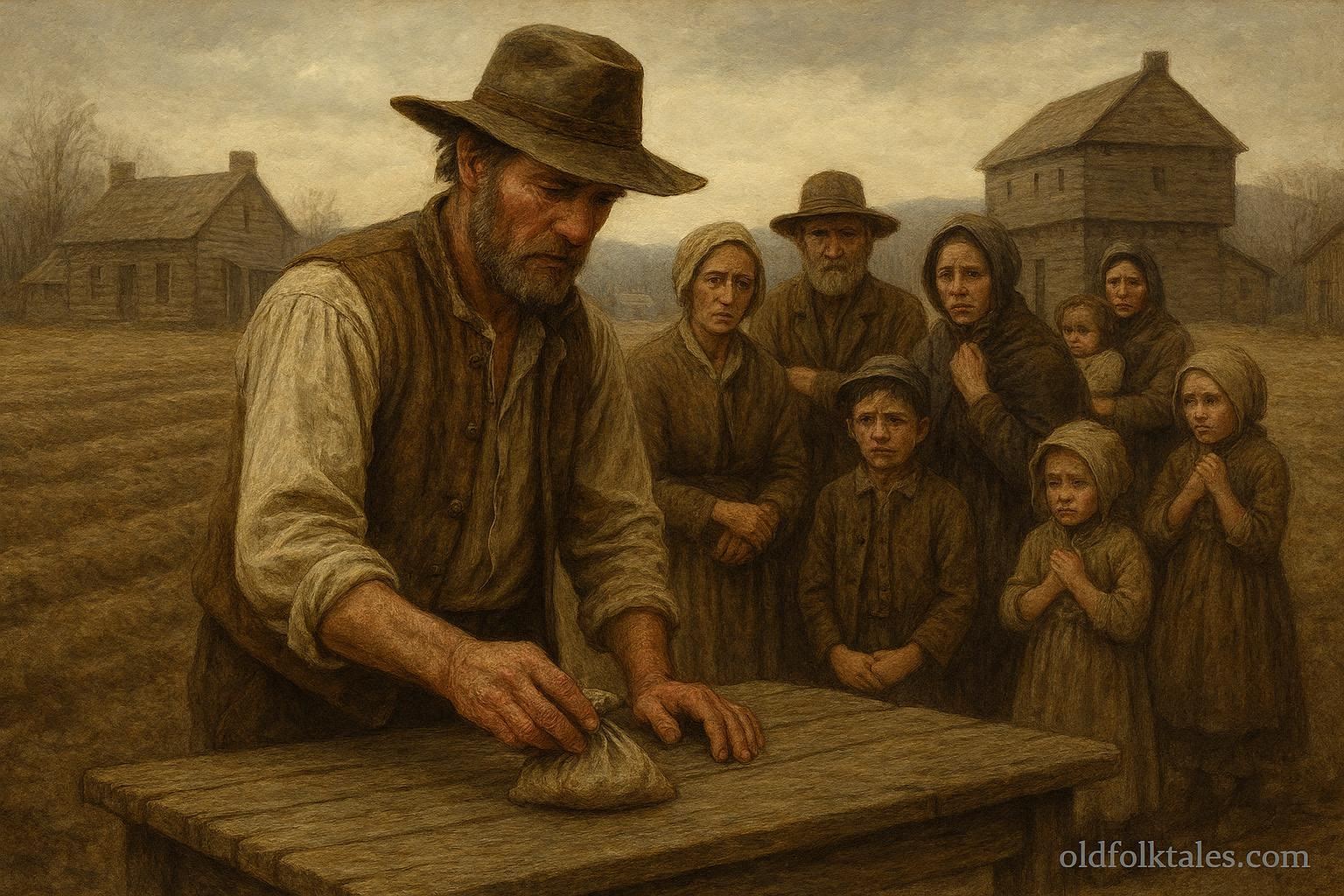
Elias carried the pouch to the settlement square and placed it on the long table where communal notices were usually posted. When the people gathered, he spoke for the first time in weeks.
“This is my last seed,” he said. “If we eat it, none of us plants. If we plant it together, none of us eats alone.”
The elders argued. Some said it was foolish. Others said it was dangerous to risk everything on a single field. But hunger had softened pride, and fear had taught humility. At last, they agreed.
The seed was planted in a shared field near the river, where the soil was poorest but the ground held moisture longer. No fences were built around it. No family claimed ownership. Each person worked the field as they were able, not knowing whether their labor would amount to anything.
Winter came hard. Many fell ill. Meals were thin and often skipped. Elias himself nearly starved, but neighbors who remembered his generosity shared what little they had. No one died, though it came close.
When spring arrived, the field by the river changed.
Green shoots emerged thicker than anyone had ever seen. The stalks grew tall and strong, their leaves broad and deep in color. By midsummer, the field stood heavier with grain than all the other fields combined. Elders said the soil must have remembered something ancient, something older than fences and ownership.
At harvest, the yield was enough to feed the settlement and provide seed for every family. No one took more than their share. The elders declared the field communal forever, to be planted first in every season.
Elias never claimed credit. He returned to his land and planted his share like everyone else. But children were told his story, and parents repeated it during hard years.
They said that the land listens. They said that seed knows the hand that releases it. And they said that survival is not secured by what one keeps, but by what one dares to give away.
Click to read all American Folktales — timeless oral stories passed through generations across the United States.
Moral Lesson
True survival is rooted in generosity. When individuals choose shared responsibility over personal fear, communities endure even the harshest trials.
Knowledge Check
1 What crisis threatened the settlement’s survival?
Answer: A widespread famine caused by failed crops
2 What resource was considered most valuable during the famine?
Answer : Seed grain for future planting
3 What choice did Elias face regarding his last seed?
Answer: Whether to keep it for himself or share it with the community
4 Why was the communal field planted near the river?
Answer: Because the soil held moisture longer despite being poor
5 What lesson did the elders teach future generations from this story?
Answer: That generosity and shared effort secure survival
6 What belief emerged about the land itself?
Answer :That the land responds to generosity and communal care
Source
Adapted from American Folklore Society rural life narratives
Cultural Origin
Early American agrarian communities