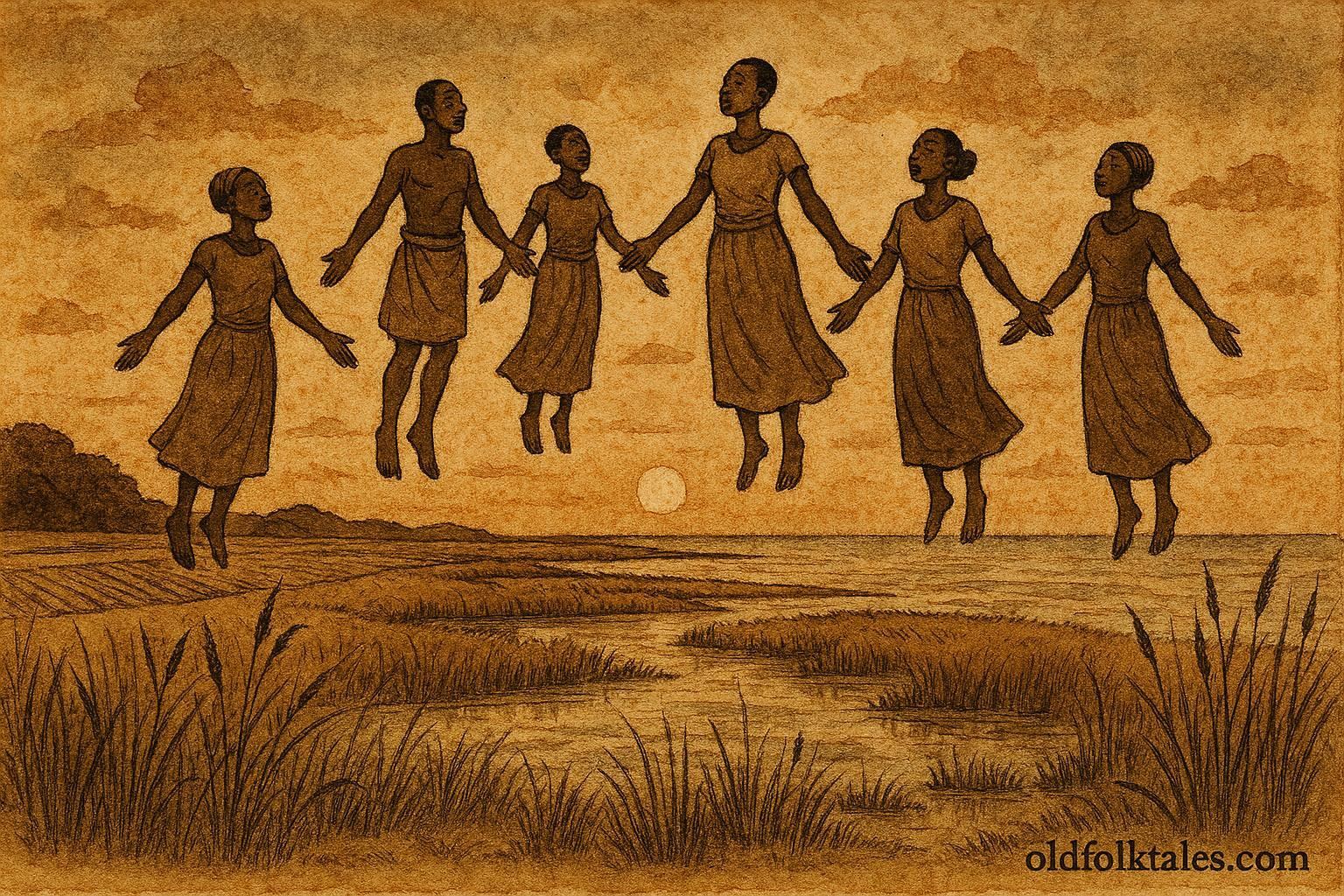
Long ago, along the coastal lowlands of South Carolina and Georgia, the people of Gullah Geechee communities whispered of a power that defied the chains of slavery. They said that some among them carried a memory of home across the ocean, a memory so strong that it could lift a person from the earth and carry them to freedom.
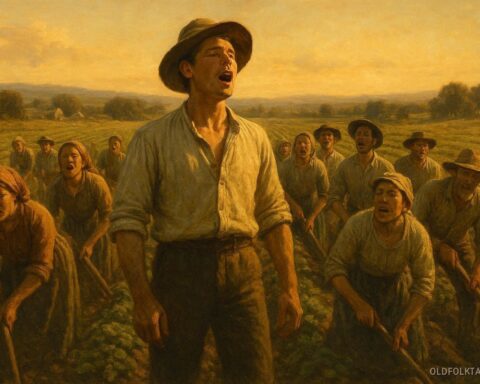
Among the enslaved people, there was a man named Kofi. He had been taken from his village in West Africa and forced to labor on the rice fields under the scorching sun. Though weary and beaten by the unrelenting toil, Kofi never forgot the songs of his homeland, the rhythm of the drums, and the stories told by his elders beneath the shade of ancient trees.
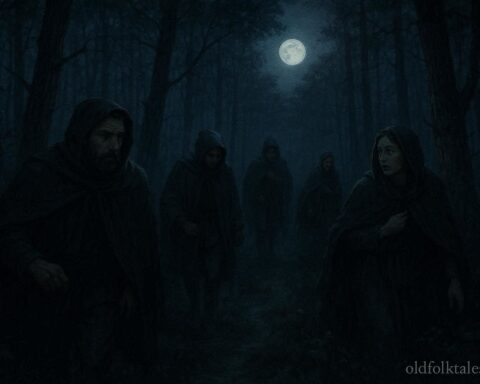
At night, when the overseers slept and the fields were silent, Kofi would gather with others to sing. Their songs spoke of rivers that ran through their villages, of ancestors who guided them, and of the winds that carried whispers of freedom. Some nights, the air would feel alive, thick with a presence the others could not see. The elders would say, “Listen closely, and you may remember the way home.”
Discover chilling ghost tales and haunted places that echo through America’s towns and countryside.
It was said that those who remembered truly could lift their bodies from the ground. Slowly, at first, their feet would leave the earth just an inch, then two, until one by one, they floated above the fields. The strongest among them would soar higher, their spirits riding the night winds, flying over the rivers and marshes, their hearts free even when their bodies remained chained.
One evening, Kofi felt a pull stronger than ever before. He thought of his village, his mother, the rhythms of drums beneath the baobab tree, and the freedom he had never known. He sang louder than ever, calling on the memory of his ancestors, on the power of the wind. Slowly, he rose. His fellow enslaved people gasped in awe. Kofi’s flight was not just a movement of the body; it was the embodiment of hope, resistance, and ancestral wisdom.
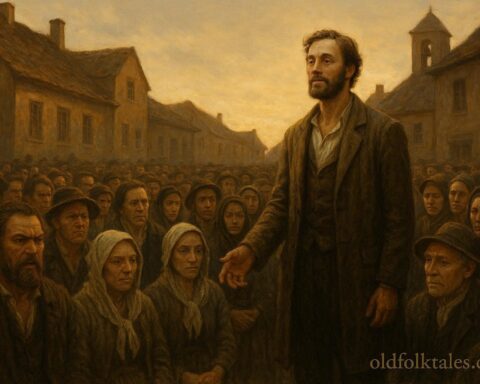
Word spread among the fields of those who could fly. They would disappear under the cover of night, vanishing from the fields, only to be spoken of in stories the next day. Some never returned, choosing the path that carried them across the water, leaving behind a world of suffering for a world of freedom. Others would return to teach the songs and secrets to those still bound, so that they too might remember the way to rise.
The Flying Africans became a symbol of resilience. In the songs of the Gullah Geechee people, in the rhythmic beating of drums, in the whispered tales passed from one generation to the next, the memory of flight endured. Even in the harshest circumstances, when chains bound the body and cruelty threatened the spirit, the Flying Africans reminded all who listened that freedom begins in the heart, in the mind, and in the memory of those who came before.
The legend taught that flight was not just literal but it was spiritual, a reclaiming of dignity and agency denied by oppression. It reminded the community that they carried within them a strength no captor could take, a path back to home, to ancestors, to self.
Those who dared to fly taught that liberation was possible even in the darkest times. They carried their stories, songs, and lessons across the winds, and even today, the descendants of those who remembered the way home honor the Flying Africans in festivals, songs, and art. The story endures, a testament to courage, memory, and the unbroken spirit of a people.
Click to read all American Folktales — timeless oral stories passed through generations across the United States.
Moral Lesson
True freedom begins in the heart and mind. Even when bound by oppression, resilience, memory, and courage can carry the spirit beyond chains, teaching that liberation is a journey as much spiritual as physical.
Knowledge Check
- What gift did Kofi and others carry that allowed them to rise?
Answer: The memory of their homeland and ancestral teachings. - How did songs and drums help the enslaved people?
Answer: They awakened ancestral memory and spiritual power. - Why is the legend of the Flying Africans significant to the Gullah Geechee community?
Answer: It symbolizes resilience, hope, and spiritual freedom despite oppression. - Was the flight of the Flying Africans purely physical?
Answer: No, it was primarily spiritual, representing liberation and agency. - What lesson does the story teach about oppression?
Answer: Even under oppression, strength and freedom of the spirit cannot be taken away. - How is the story preserved today?
Answer: Through songs, art, festivals, and oral traditions of the Gullah Geechee people.
Source: Adapted from African American oral histories preserved by the Smithsonian National Museum of African American History and Culture
Cultural Origin: Gullah Geechee and coastal African American communities