Deadwood, South Dakota grew rapidly during the Black Hills gold rush of the late nineteenth century. What began as a small mining camp quickly developed into a busy frontier town filled with prospectors, merchants, gamblers, and travelers hoping to find fortune in the surrounding hills. Wooden buildings lined the narrow streets and the sound of wagons, horses, and lively conversation filled the air. Among the most important establishments in the growing settlement were the saloons, which became the center of social life for the town’s residents.
Saloons in frontier towns served many purposes beyond simply selling drinks. They functioned as gathering places where miners exchanged news about gold strikes, stagecoach drivers shared stories from distant towns, and traveling musicians entertained crowds late into the night. For many workers who spent long days in the mines or hauling supplies through the rugged hills, the saloon offered a place to relax and reconnect with the community.
Behind every successful saloon stood a bartender who managed the constant flow of customers. These bartenders worked long hours, often standing behind the counter from early evening until the final patron left after midnight. Their responsibilities included serving drinks, maintaining order during arguments, cleaning the bar, and preparing the establishment for the following day. A good bartender needed patience, attention, and the ability to remain calm even during the busiest nights.
Encounter the strange and the unseen — from Bigfoot to regional monsters hiding in America’s forests.
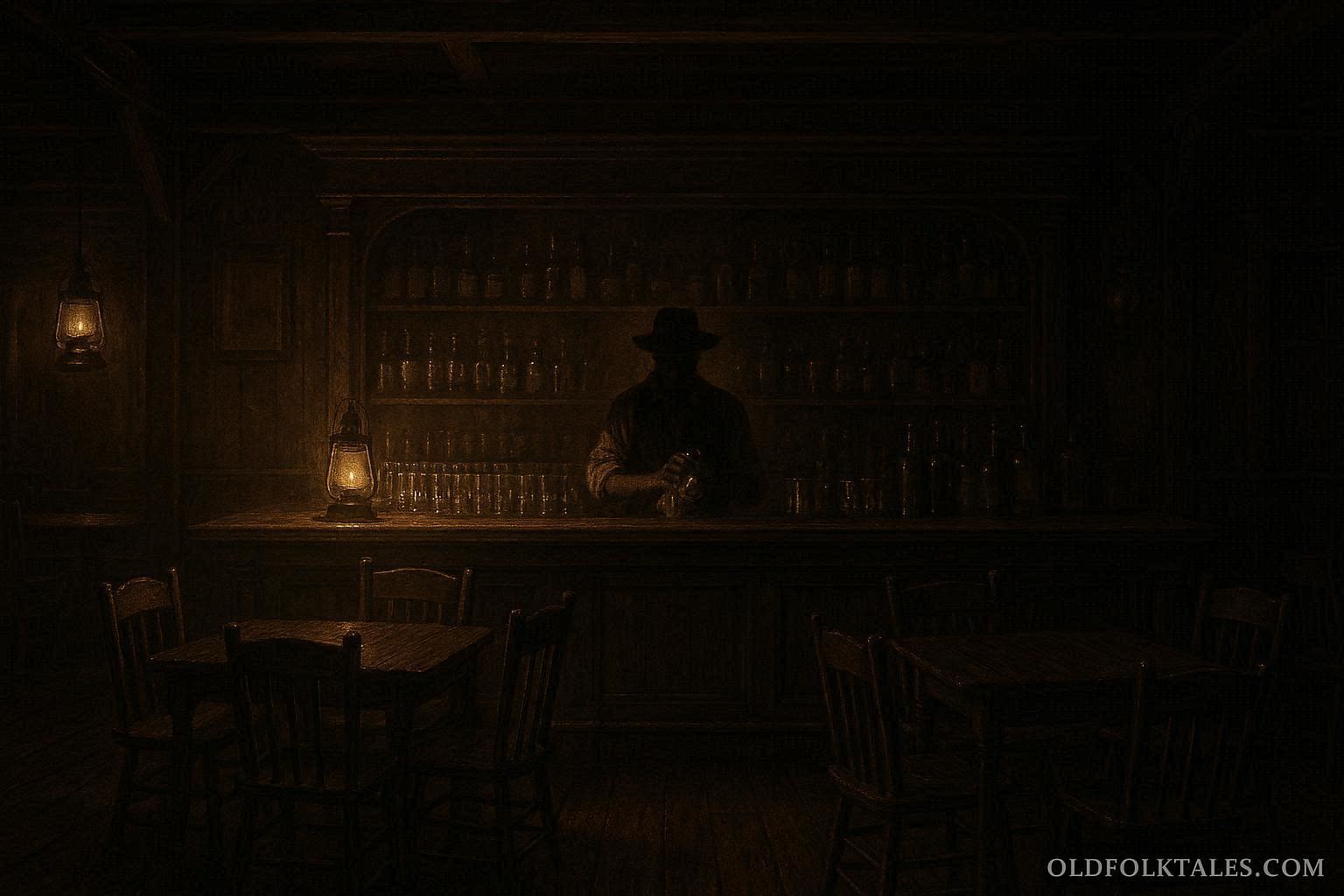
According to local legend preserved in Deadwood folklore, one particular bartender earned a strong reputation among the town’s residents during the gold rush era. He was known for his quiet personality and careful habits behind the bar. Customers remembered that he always polished every glass before placing it neatly on the shelf. Even when the saloon filled with noisy miners and gamblers, he continued his work with steady concentration.
Regular patrons claimed that the bartender rarely rushed through his duties. After serving drinks he would wipe the counter, clean the glasses, and carefully arrange the bottles on the wooden shelves behind him. His dedication to maintaining order in the crowded saloon impressed many customers, who believed his steady presence helped keep the establishment running smoothly during the chaotic years of the gold rush.
As the legend explains, the bartender spent nearly every night working inside the busy saloon. Lanterns hung from the ceiling and cast warm light across the room while piano music echoed through the building. Miners laughed loudly at card tables while travelers leaned against the bar sharing stories of distant towns. Amid the noise and excitement, the bartender continued his routine of pouring drinks and polishing glassware.
One night the saloon remained open later than usual. A heavy storm rolled across the Black Hills and rain struck the wooden roof while a few stubborn customers lingered inside the building. Eventually the final patrons left and the bartender prepared to close for the night. As always, he finished by wiping the counter and carefully polishing the last of the glasses before placing them on the shelf.
According to the most widely repeated version of the story, the bartender never truly left the saloon after that night. Some versions suggest that he died suddenly after years of exhausting work, while others claim that a tragic accident occurred during the closing hours of the establishment. Whatever the true cause, the legend maintains that his spirit remained connected to the place where he had spent so many nights working.
Years passed and Deadwood gradually changed from a rough mining camp into a historic town. Some saloons closed while others were restored to preserve the town’s colorful past. Yet unusual events began to be reported inside one of the old buildings associated with the hardworking bartender.
Employees who worked late shifts sometimes noticed strange details when preparing the saloon for the next day. Glasses that had been left slightly dusty appeared freshly polished when workers returned in the morning. A few bartenders reported that glasses occasionally shifted position on the shelves even when no one had touched them.
The most common story involves the faint sound of a cloth moving across glass after the building has already been closed for the night. Staff members finishing their duties occasionally pause when they hear the quiet scraping sound behind the counter. When they turn toward the bar, they find everything perfectly arranged as though someone has just completed the final cleaning.
Visitors have also contributed their own accounts to the legend. One traveler reportedly remained inside the saloon during a quiet evening while staff prepared to close. While looking toward the bar he noticed a figure standing behind the counter. The man appeared to be wiping a glass slowly with a cloth in a careful and deliberate motion. When the visitor blinked and looked again, the figure had disappeared.
Another story describes a worker who stayed late to finish counting receipts. As the building grew silent, he heard the soft clinking of glassware from behind the bar. Assuming a colleague had returned, he walked toward the counter. Instead he discovered a single glass placed neatly in the center of the bar, shining brightly as though it had just been polished.
These stories have circulated for decades and gradually became part of Deadwood’s local folklore. Residents often explain the strange occurrences by referring to the spirit of the bartender who once worked tirelessly inside the saloon. In their view, his dedication to the establishment was so strong that it continued even after death.
The legend reflects the deep connection between workers and the places where they spent their lives during the frontier era. In towns like Deadwood many people devoted long hours to difficult jobs that helped sustain the growing community. Bartenders, miners, shopkeepers, and stagecoach drivers all played important roles in supporting the town’s economy and social life.
Because saloons were such important gathering places, the memory of the people who worked there remained strong in local tradition. The ghost bartender legend may represent a symbolic way of remembering those individuals whose labor helped shape the town’s history. Instead of fading into obscurity, their presence continues through storytelling.
Historians studying frontier towns often note that legends like this appear in many communities with long histories. Stories about ghostly workers continuing their duties reflect the belief that dedication and responsibility leave lasting impressions on the places where people lived and worked.
Today Deadwood attracts visitors interested in its gold rush heritage and preserved nineteenth century buildings. Many of the historic saloons remain open, allowing guests to experience the atmosphere of the old frontier town. Wooden bars, antique mirrors, and rows of glasses still line the shelves just as they did during the earliest days of the settlement.
When visitors hear the story of the ghost bartender, they often glance toward the bar with curiosity. The quiet clink of glassware or the reflection of light in a polished glass can easily stir the imagination. In a town where history feels close at hand, such small details sometimes seem to hint at unseen activity.
Whether the legend is interpreted as a supernatural event or simply as a reflection of local tradition, the story of the Ghost Bartender of Deadwood continues to fascinate those who hear it. It captures the atmosphere of a frontier town where long nights, hardworking individuals, and lively saloons formed the heart of daily life.
In the end, the tale reminds listeners that the past is never entirely gone. Through stories passed from one generation to the next, the memory of the people who shaped historic communities remains alive. In Deadwood’s case, that memory sometimes appears in the quiet image of a bartender patiently polishing glasses behind a wooden bar long after the last customer has gone home.
Click to explore all American Ghost Stories — haunting legends of spirits, lost souls, and mysterious places across the U.S.
Moral Lesson
Dedication to one’s work and responsibility toward a community can leave a lasting legacy. The legend suggests that the efforts of hardworking individuals are remembered long after their lives have ended.
Knowledge Check
- Why were saloons important in frontier towns like Deadwood?
They served as social centers where miners, travelers, and townspeople gathered to relax, exchange news, and socialize. - What habit was the bartender in the legend known for?
He was known for carefully polishing and arranging glasses behind the bar every night. - What unusual events were reported in the old Deadwood saloon?
Workers and visitors reported hearing glassware being polished and seeing glasses mysteriously arranged after closing time. - How do locals explain these strange occurrences?
Many believe they are signs of the bartender’s spirit continuing his nightly routine. - What role did bartenders play in frontier communities?
They maintained order, served drinks, and helped manage the busy social life of saloons. - What does the ghost bartender legend symbolize?
It represents the dedication and hard work of the people who helped build frontier towns.
Source
Adapted from materials preserved in the South Dakota State Historical Society Archives
Cultural Origin
Black Hills frontier folklore, Deadwood South Dakota