Before maps gave the Mississippi River a name and before people argued over where its waters began or ended, the river moved as it wished. It wandered across the land slowly, testing the soil, listening to the ground, and remembering everything it touched. In those early days, when the earth was still soft with newness, there lived a giant whose footsteps reshaped the world.
The giant was called many names, depending on who told the story. Some called him Long Walker. Others called him the Sleepless One. But most knew him simply as the River Giant, because wherever he traveled, water followed.
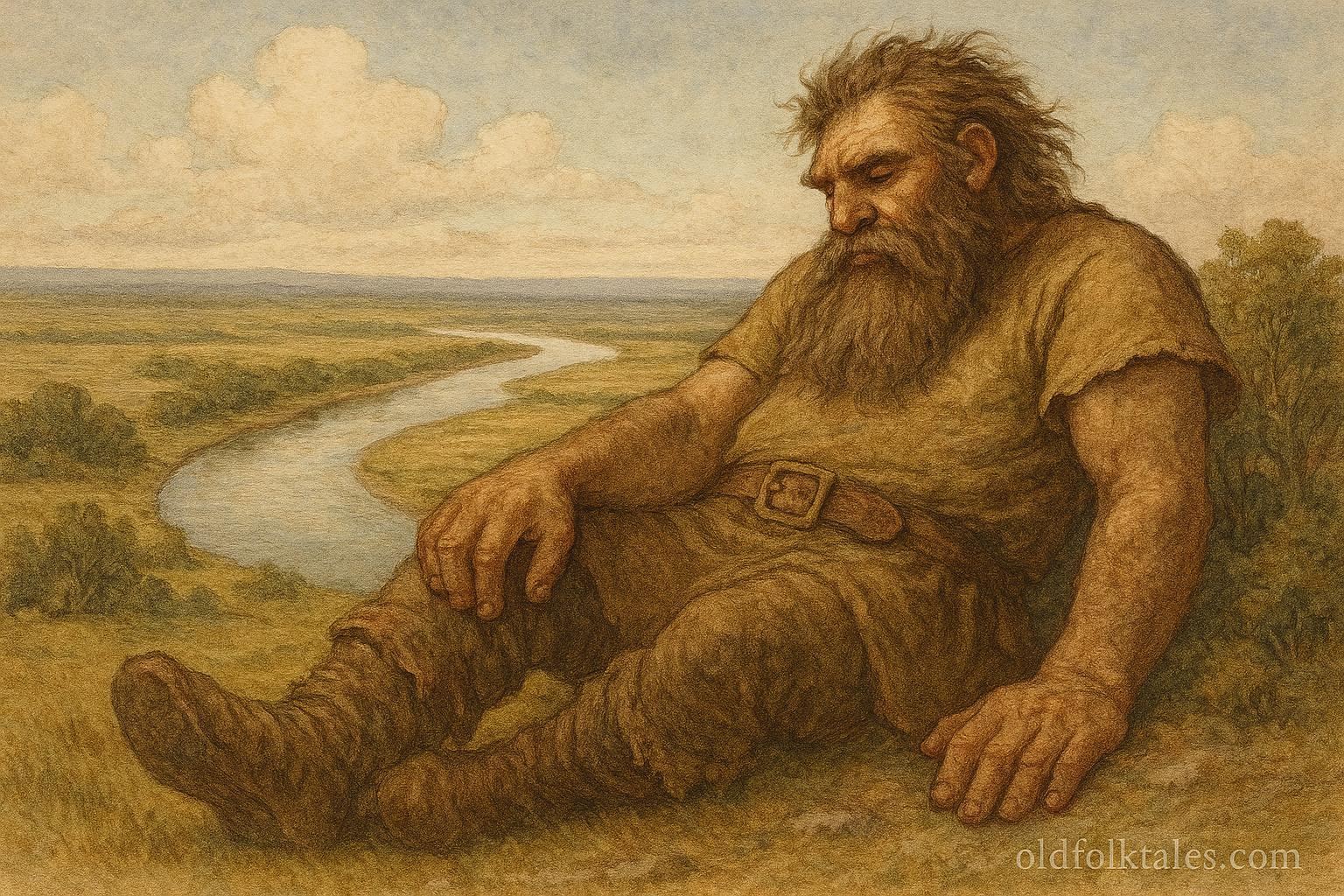
He was not born among humans, nor among spirits. He came from the meeting place of stone and sky, where hills rose before learning their final shape. The giant was taller than forests and broader than valleys, yet he carried a quiet sadness within him. He had strength enough to move mountains, but nowhere he went felt like home.
For ages uncounted, he walked.
Each step pressed into the land, forming low places where rain gathered. His hands brushed against hills, softening them into slopes. Animals fled at the sound of his passing, but none were harmed, for the giant had no taste for destruction. He sought only rest.
Discover chilling ghost tales and haunted places that echo through America’s towns and countryside.
When the giant grew weary, he followed water, believing it might lead him to peace. Streams guided his path, their voices cool and steady. He widened them accidentally as he drank, turning narrow paths of water into growing channels. Fish followed him, sensing something ancient and patient in his presence.
Eventually, the giant reached a wide plain where the land dipped gently toward the horizon. The soil was rich, dark, and deep, holding the memory of countless seasons. Here, water lingered longer after rain, spreading into shallow pools. The giant felt a stirring of hope.
He knelt to drink, and the ground sank beneath his weight. Water rushed to fill the hollow. When he rose again, a wide curve had formed in the land, and water flowed through it eagerly, grateful for the path.
The giant smiled for the first time in many lifetimes.
He stayed there for a while, resting beside the growing river. He cupped water in his hands and watched it slip through his fingers, returning again and again. Birds came to nest nearby. Animals returned, no longer afraid. The land breathed easier.
But rest did not last.
Though the place was beautiful, the giant could not sleep. His body lay heavy on the earth, but his spirit remained restless. He felt too large, too out of place, even among the wide plains. The land welcomed him, but it could not hold him.
When he rose again, his movement shifted the river. His foot pressed deeper into one side of its path, bending the water around him. The river curved sharply, following the shape of his step. Where he paused, the river lingered. Where he leaned, the river widened.
As he walked again, the river followed, no longer a simple stream but a powerful presence carving its own way. The giant did not command it. He only moved, and the river learned from him.
Human communities began to notice changes. They saw water traveling farther than before, bending around land instead of cutting straight through it. They watched fertile banks appear where floods once stood briefly. Fish became plentiful. The soil grew generous.
Elders spoke of a great being passing through long ago. They said the river was remembering his journey.
The giant wandered for many more days, sometimes returning to the bend he had formed. Each visit deepened it. Each rest reshaped it further. Over time, the curve became permanent, a great sweeping bend in the river that refused to straighten, no matter how much water pushed against it.
At last, the giant felt his strength fading. Not weakening, but settling. He understood then that rest was not a place he would find. It was something he would give.
He walked into the river one final time, lowering himself slowly into its depths. The water rose around him, shaped by his presence, then closed gently as he disappeared. The river swelled and flowed onward, carrying his memory in every turn.
The giant did not die. He became part of the land. His shape remained in the river’s curve, his footsteps in the valleys, his pauses in the fertile bends where people would one day build homes.
Generations later, when people traveled the Mississippi and wondered why the river bent so dramatically in places, elders told the story. They said the river curves because even giants search for belonging, and the land remembers those who walk it with patience.
They taught that the river was not crooked by accident. It bent to honor a being who carried the weight of the world and learned that belonging is not always about staying, but about shaping something that endures.
Click to read all American Folktales — timeless oral stories passed through generations across the United States.
Moral Lesson
Belonging is not always found through rest but through the lasting good one leaves behind. Even great strength must learn humility before the land.
Knowledge Check
1 Why did the giant follow water on his journey?
Answer: He believed water would guide him toward rest and peace.
2 How was the river shaped by the giant?
Answer: His footsteps and pauses bent and widened its path.
3 Why could the giant not find rest?
Answer: He was too large in spirit to remain in one place.
4 What did the human communities gain from the river’s bend?
Answer: Fertile land, abundant fish, and stable water paths.
5 What happened to the giant at the end of the story?
Answer: He became part of the river and the land itself.
6 What does the Mississippi bend symbolize?
Answer: The lasting impact of a journey shaped by patience and care.
Source
Adapted from American Folklore Society river and landscape legend collections.
Cultural Origin
Mississippi River Valley folklore.