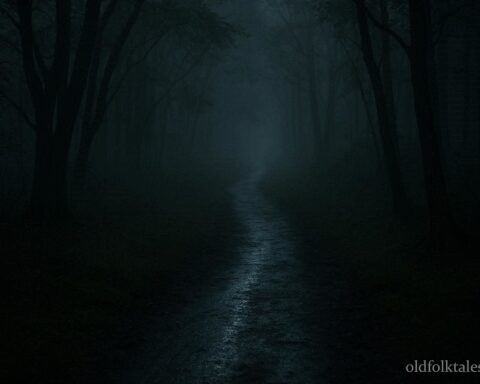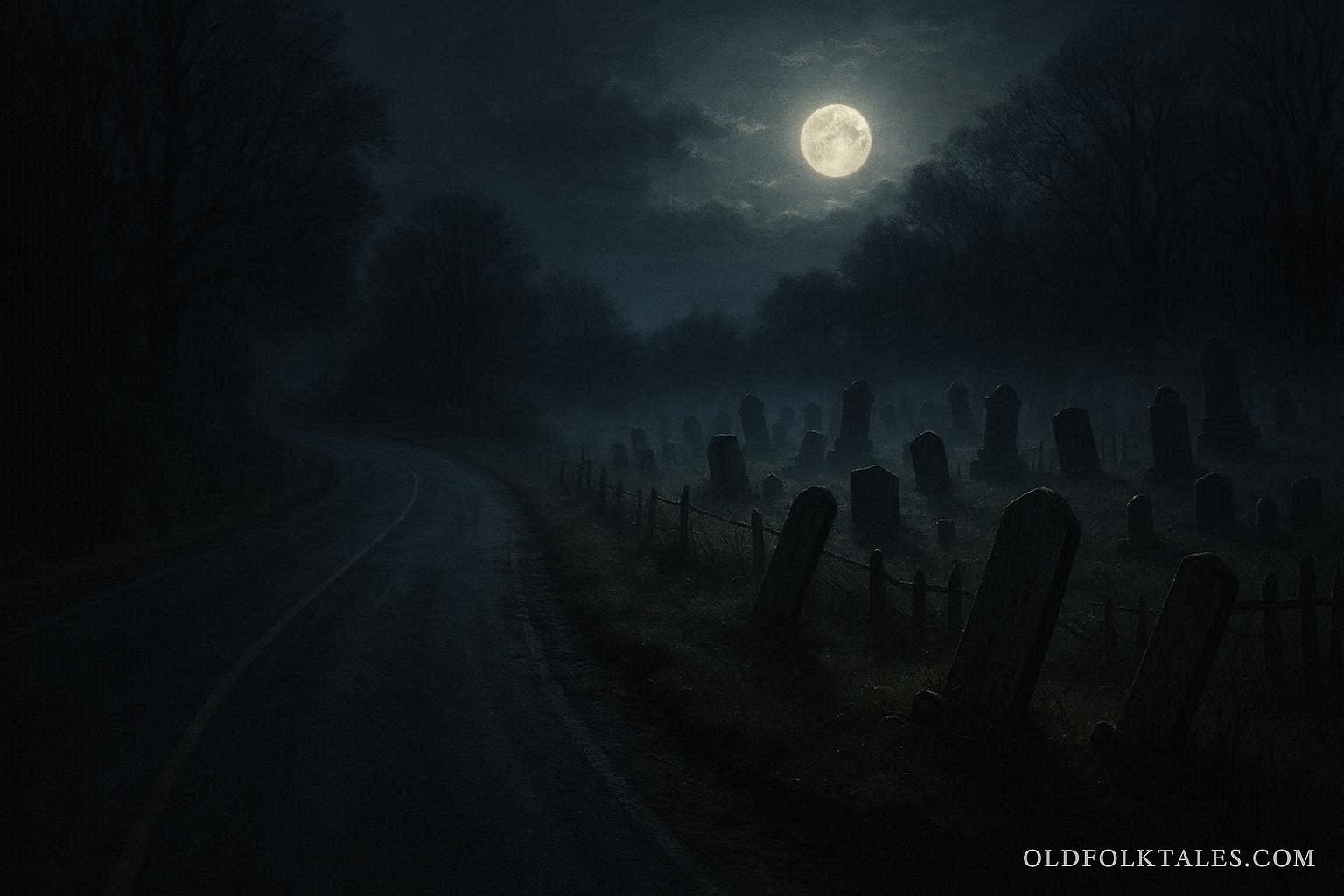
River Road stretched quietly along the edge of the land, winding past tall trees and open fields before disappearing into deeper, less traveled paths. During the day, it seemed like any other road, used by those moving between places without much thought. But at night, the road felt different.
The silence there was heavier.
Travelers who passed along River Road after dark often spoke of an uneasy feeling. It was not something they could easily explain. The air felt still, and even the usual sounds of insects and night creatures seemed distant. Many hurried along, eager to leave that stretch behind them.
The stories began with a sound.
A whistle.
It was not loud or sharp, but low and clear enough to be heard through the quiet of the night. Some described it as slow and drawn out, like someone calling from far away. Others said it came suddenly, cutting through the silence before fading just as quickly.
At first, people thought it was just another traveler.
Step into shadowy legends of restless spirits and ghostly travelers in American Ghost Stories.
Perhaps someone walking along the road or resting nearby. But those who tried to follow the sound quickly realized something was wrong. No matter how far they went, they could never find the source of the whistle.
It always stayed just out of reach.
One night, a man traveling alone decided to take River Road as a shortcut. He had been on the road for hours and was eager to reach his destination before it grew too late. The sky was dark, and the moon provided only faint light through the trees.
As he walked, he noticed how quiet everything felt.
Then he heard it.
A whistle, low and steady, drifting through the air.
He stopped and listened. The sound came again, slightly clearer this time. It seemed to be coming from ahead of him, somewhere further down the road. Thinking it might be another traveler, he called out, but there was no reply.
Only the whistle answered.
Curiosity pushed him forward. He continued walking, following the direction of the sound. But no matter how far he went, he saw no one. The road remained empty, stretching ahead into darkness.
The whistle came again.
This time, it felt closer.
A strange feeling settled over him. The air seemed colder, and the ground beneath his feet felt different, softer in some places, uneven in others. He slowed his steps, unsure of what he was walking into.
Then he noticed something.
To the side of the road, partially hidden by overgrown grass and leaning trees, were shapes rising from the ground.
Grave markers.
Some were broken, others worn down by time. It was an old burial ground, one that had long been forgotten or left untended. The realization made him pause.
The whistle sounded again.
Louder now.
It no longer felt distant. It felt near.
A sudden fear gripped him, stronger than anything he had felt before. The stories he had once dismissed began to return to his mind. He remembered what people said about River Road, about the sound that came at night.
They had warned not to follow it.
Understanding came quickly.
The whistle was not calling him forward.
It was warning him to turn back.
Without waiting any longer, he stepped away from the road and began to move in the opposite direction. His pace quickened as the sound followed, echoing once more through the night air. But as he continued to retreat, the whistle began to fade.
Slowly.
Until it was gone.
When he finally reached a safer part of the road, the silence returned to normal. The air felt lighter, and the unease that had surrounded him began to lift. He did not look back.
When he later shared his experience, others listened closely. Many had heard the same stories. Some had even heard the whistle themselves but had chosen not to follow it. Elders explained that the sound was not meant to lead people into danger, but to keep them from going too far.
According to the tradition, the burial ground along River Road was a place that demanded respect.
Spirits rested there.
The whistle, they believed, was a warning given to the living. It was a sign that they were approaching a place they should not disturb, especially at night when the boundary between worlds felt thinner.
Those who ignored the warning risked more than fear.
They risked crossing into a space not meant for them.
Over time, the story of the graveyard whistle became well known among those who traveled the area. People learned to recognize the sound and understand its meaning. When it was heard, they turned back without hesitation.
No one ever found the source of the whistle.
No figure was ever seen making the sound.
Yet it remained consistent, appearing only in that part of the road, always near the burial ground, always at night.
Even in later years, when the road changed and fewer people traveled it, the story did not disappear. It continued to be told as a warning, passed from one generation to the next.
Some say that if you walk along River Road after dark, you might still hear it.
A low whistle, drifting through the silence.
Not calling you forward.
But telling you to stop.
To turn back.
Before you go too far.
Explore the heart of America’s storytelling — from tall tales and tricksters to fireside family legends.
Moral Lesson
Warnings should be taken seriously, as they may protect us from unseen dangers.
Knowledge Check
- What unusual sound did travelers hear on River Road?
A mysterious whistle echoing through the night. - Where did the whistle often lead people toward?
An old burial ground. - Could travelers find the source of the whistle?
No, they could not find its source. - What did the whistle actually represent?
A warning to turn back. - What happened when the traveler turned away from the sound?
The whistle slowly faded and disappeared. - What does the story teach about warnings?
They should be respected because they may prevent danger.
Source
Adapted from materials preserved by Louisiana State University
Cultural Origin
Louisiana African American folklore