In the humid heart of the Southern United States, whispers of fortune carried through old wooden porches and kitchen gossip. Among the many sayings of the South, none was repeated more often than the one about the itchy palm, a superstition that promised the coming or going of money.
Old Aunt Liza, a wise woman from rural Georgia, was known in her town for her unshakable belief in the signs of luck. Her wrinkled hands had churned butter, tended gardens, and rocked generations of children, but it was her palms, she often joked, that “knew the ways of money.” Whenever her right palm began to itch, she would nod knowingly and say, “There’s silver on the wind.”
Click to read all American Cryptids & Monsters — creatures of mystery and fear said to inhabit America’s wild landscapes.
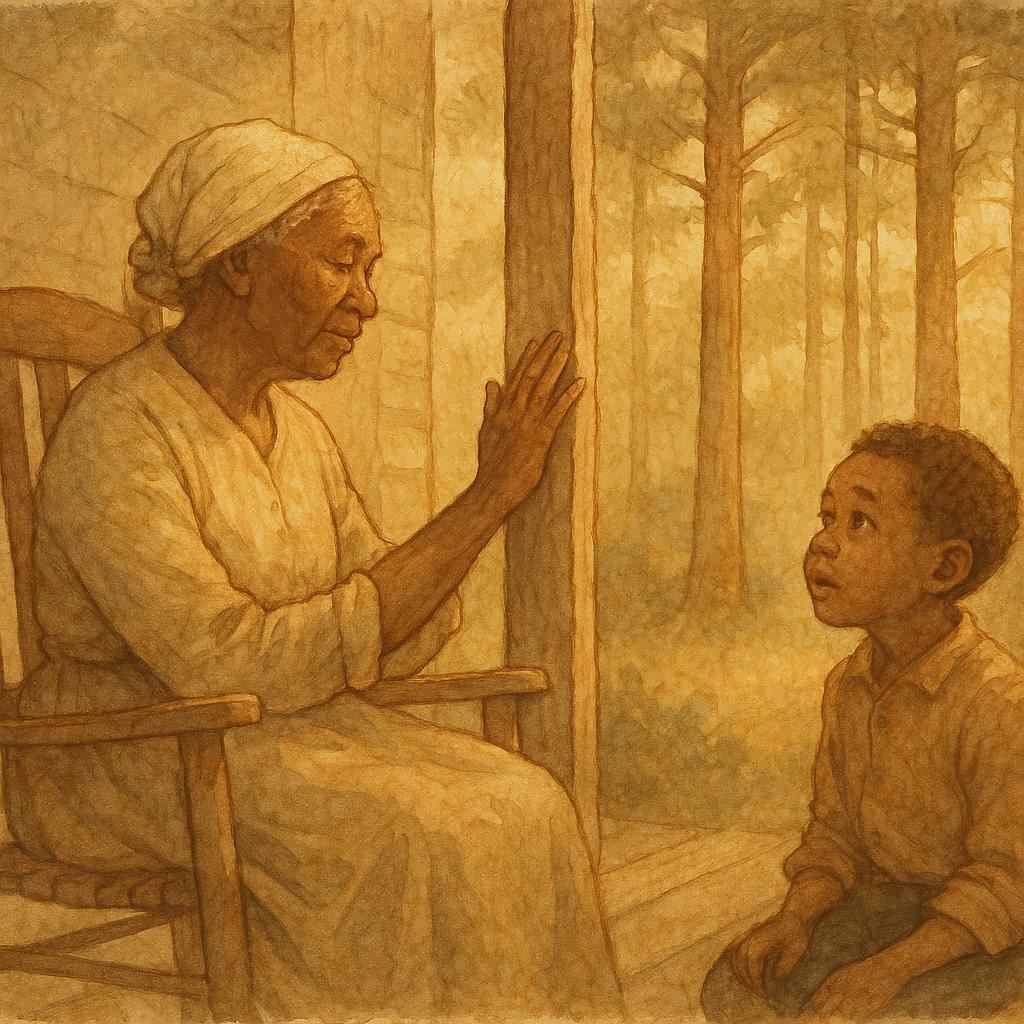
But Aunt Liza never scratched. Instead, she would walk to the old doorpost of her cabin, smooth from years of hands brushing against it, and rub her palm gently on the wood. Then, with a low murmur like a prayer, she’d whisper, “Hold my luck steady.”
Her neighbours had seen her do it for decades. Some thought it was nothing more than a quaint superstition, while others swore she had a way of calling fortune. They said that when her right hand itched, she always came into money, maybe a forgotten coin in her apron pocket, a gift from a relative, or payment long overdue.
One warm summer afternoon, her grandson, Henry, noticed her rubbing her palm again. “Grandma,” he teased, “you really believe that old tale about itchy palms?”
Aunt Liza just smiled, her eyes soft but certain. “Child, belief’s the first half of luck. The second’s respect.”
Later that week, Henry came home boasting that his palm itched too. But instead of following his grandmother’s advice, he laughed and scratched it hard, saying, “Guess I’ll be rich by tomorrow!” Aunt Liza just shook her head. “You scratched it away,” she warned.
The very next day, Henry went into town and gambled away nearly a week’s wages on a bad card game. He came home with empty pockets and a heavy heart. His grandmother said nothing, only glanced at the doorpost where she’d rubbed her hand so many times before.
A week later, Aunt Liza’s right palm began to itch again. Slowly, she rubbed it on the same old post and whispered her charm. Two days afterward, a letter came from her sister in Savannah. Inside was a crisp dollar bill money Aunt Liza had been owed but forgotten long ago. She smiled knowingly, her faith confirmed once again.
Word spread through the little Georgia town. Neighbours started visiting her porch, asking, “Miss Liza, what’s it mean if your palm itches at night?” or “What if both hands itch?” She always had an answer, and always the same piece of advice:
“Luck’s like a breeze, rub wood, not skin, and it’ll stay.”
Over time, Aunt Liza’s “money signs” became part of the rhythm of life in her community. Children learned the difference between an itching left and right palm before they could spell their names. People would pause before scratching and instead reach for a nearby tree, chair, or fencepost, any bit of wood would do.
In truth, the superstition reflected more than just belief in luck. It spoke to the deep cultural blend that shaped Southern folklore, a mixture of African, European, and Native American traditions. From African spiritual customs came the idea of energy flowing through the hands. From European settlers came the notion of wood as a protective charm, a link to the old saying “knock on wood.” And from the frontier spirit of the South came a practical faith: that a person’s actions, however small, could sway the tides of fortune.
To Aunt Liza and many like her, an itchy palm was not just a random sensation. It was a sign, a whisper from the unseen world that money, luck, or hardship was on its way. And by rubbing wood, she was not merely performing an act of superstition; she was keeping alive the old wisdom of her people, carried across oceans and generations.
As she aged, Aunt Liza often sat on her porch in the twilight, rocking gently, palms resting in her lap. When a neighbour passed and asked, “Any luck this week?” she would grin and say, “My right palm’s been dancing, and that’s good enough for me.”
Her life became a quiet testament to belief, not blind faith, but a respect for the little mysteries that colour human life. To some, she was just an old woman with old stories. To others, she was a keeper of ancient knowledge. Either way, she taught that even the smallest signs, if heeded, could bring harmony between the seen and the unseen.
Click to read all American Traditions & Beliefs — the living folklore of daily life, customs, and superstitions.
Moral Lesson
Belief, respect, and patience are powerful forces. Fortune often follows those who honour tradition and approach luck with reverence rather than greed.
Knowledge Check
1. What does an itchy right palm symbolize in Southern folklore?
An itchy right palm predicts money coming in or future financial gain.
2. What does an itchy left palm symbolize in the story?
It signals that money is leaving or a loss may occur.
3. Why does Aunt Liza rub her palm on wood instead of scratching it?
She believes rubbing wood “holds luck steady,” while scratching drives it away.
4. What cultural blend shaped this superstition?
It combines African spiritual beliefs, European folk customs, and Southern frontier traditions.
5. What lesson does Aunt Liza teach her grandson, Henry?
Respect for traditions and patience invite fortune; mockery and haste repel it.
6. What is the moral message of the tale?
True luck is guided by faith, respect for old wisdom, and mindfulness of one’s actions.
Source: Adapted from “Current Superstitions,” Nos. 211–213, collected by Fanny D. Bergen (1897), American Folklore Journal.
Cultural Origin: Southern United States (African-American and European settler folklore blend).