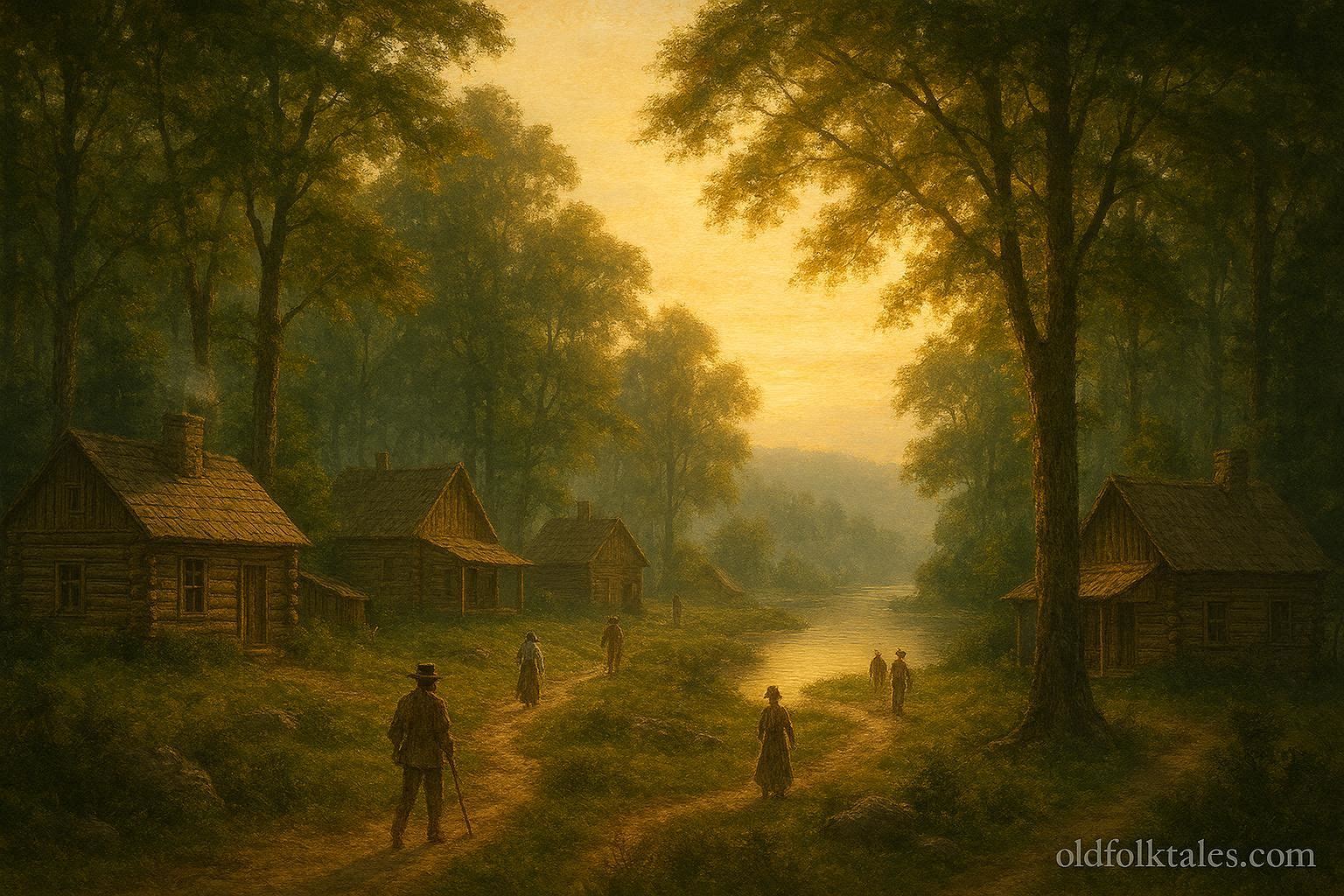
In the quiet forests and winding rivers of 19th-century Wisconsin, whispers spread of a man who was unlike anyone else in the frontier villages. His name was Eleazer Williams, a man who claimed Cherokee heritage yet carried an air of dignity and knowledge that set him apart. Settlers and Native families alike noted his unusual speech and mannerisms. Some began to speculate that he was no ordinary man that perhaps he was Louis XVII, the young French prince who had supposedly escaped the guillotine during the chaos of the French Revolution.
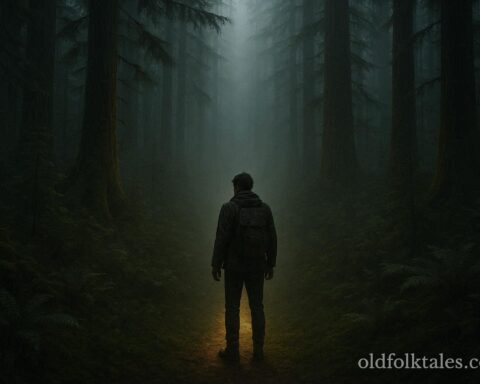
Williams’s life was intertwined with the frontier. Born at the end of the 18th century, he grew up learning to hunt, track, and navigate the forests of Wisconsin alongside Native communities. He understood the land as others did not, moving silently through the trees, reading the patterns of rivers, and sensing the rhythms of wildlife. Yet there was something about him that seemed to hint at a world far beyond the American frontier, a refinement in his gestures, a knowledge of European courts, and a familiarity with history that seemed almost impossible for someone raised on the wilderness.
The earliest rumors began when travelers reported seeing Williams in small towns, carrying himself with a noble bearing despite his modest attire. He spoke of places far away, described customs of royalty, and occasionally referenced events from France that were unfamiliar even to well-educated settlers. Some townsfolk claimed he carried a secret letter from Europe or spoke of ancestors who had survived the revolution. These stories quickly became the seeds of the legend of the Lost Dauphin.
Discover chilling ghost tales and haunted places that echo through America’s towns and countryside.
What made Williams’s story compelling was not just the mystery of his origin but how he lived among the people. He worked as a missionary and teacher, aiding both settler and Native communities. He treated children with care, advised families on disputes, and guided newcomers through the wilderness. In all his actions, there was a quiet dignity that lent weight to the rumors of a royal identity. Even skeptics admitted that there was something captivating about the way he carried himself, the intelligence behind his words, and the certainty in his manner.
As tales of the Lost Dauphin circulated, newspaper editors and curious visitors began to take notice. Articles appeared describing his refined speech, his knowledge of French etiquette, and his unusual education. Letters arrived from Europe, some seeking confirmation of the identity of the man in Wisconsin. Families living on the frontier were torn between skepticism and fascination. Could this unassuming man truly be the son of Louis XVI and Marie Antoinette, hidden away in the American wilderness for decades?
Despite the intrigue, Williams never fully claimed royal status. He lived modestly and maintained strong connections with the communities that had raised and supported him. Yet he did not deny the rumors either, allowing the legend to grow organically. Children listened wide-eyed as elders recounted tales of a prince living among them, while adults debated the plausibility over evening fires. Williams became a figure who blurred the lines between history and folklore, reality and imagination.
Accounts of Williams’s interactions with the people of Wisconsin added to the mythos. He was said to have an uncanny sense of timing and observation, appearing at just the right moment to assist someone in need. His ability to navigate the forests and rivers with precision made people speculate that a prince, trained for diplomacy and awareness, could not have been so unskilled in public life, there was something almost uncanny about him. Families who met him recounted moments where his knowledge of French history seemed too precise to be coincidental.
Over time, historians examined the claims. Official records, letters, and later DNA analysis would cast doubt on the notion that Williams was Louis XVII. Yet these investigations could not erase the legend entirely. For the people of Wisconsin, the story of the Lost Dauphin symbolized a connection to distant lands and a reminder that even in remote wilderness, extraordinary tales could unfold. Williams’s life illustrated how stories grow, intertwining fact, rumor, and imagination.
The legend of the Lost Dauphin also reflects a broader cultural fascination in 19th-century America. Immigrants and settlers, carving lives from forests and rivers, were drawn to stories of hidden nobility, mysterious survival, and secret identities. Eleazer Williams represented the possibility that history was not always linear and that someone of royal lineage could walk unnoticed through the forests of the American frontier, shaping the lives of those around him without claiming glory.
Even after his death, stories of Williams persisted. Folk songs, local histories, and community anecdotes preserved his name. Some claimed to see his likeness in portraits, some compared children in the towns to his rumored royal features, and storytellers continued to embellish his adventures. For over a century, the story of the Lost Dauphin inspired curiosity and wonder, linking the everyday reality of frontier life to the distant and glamorous world of European royalty.
Ultimately, the tale of Eleazer Williams shows how legends arise from a combination of fact, perception, and imagination. He was a man of skill, intelligence, and kindness, living quietly yet capturing the fascination of those around him. His story demonstrates how ordinary lives can become extraordinary legends when curiosity, rumor, and a touch of mystery are combined. Today, his name reminds historians and folklore enthusiasts alike of the ways myths endure, and how frontier communities transformed real people into symbols of wonder, bridging continents and centuries with a single life story.
Explore how American legends shaped the nation — from frontier heroes to Revolutionary War tales.
Moral Lesson
The story of the Lost Dauphin teaches that legends are born from curiosity, observation, and the human love of mystery. It reminds us that identity can be complex, and the impact of a person is often measured as much by perception and influence as by titles or birth. It also encourages careful reflection before accepting stories as fact, while appreciating the beauty of folklore that connects communities across time and space.
Knowledge Check
- Who was Eleazer Williams?
A man living in 19th-century Wisconsin rumored to be the escaped French prince Louis XVII. - Why did people suspect he was royalty?
He displayed manners, knowledge of French history, and traits unusual for frontier settlers. - Where did Williams live?
In Wisconsin among frontier and Native communities. - What work did he perform in the community?
He served as a missionary, teacher, and advisor to settlers and Native families. - Was there definitive proof that he was Louis XVII?
No; later research and DNA testing disproved the claim. - What does the legend of the Lost Dauphin symbolize?
The blending of mystery, hidden identity, and folklore in frontier America.
Source
Adapted from Wisconsin Historical Society; early American biography archives
Cultural Origin
19th-century Wisconsin frontier communities