In a small Southern village nestled between rolling hills and wide rivers, life moved slowly and predictably. Children played in the dusty streets, farmers tended to their fields, and families gathered each evening under the soft glow of lanterns. Among the village children was a boy named Elijah, quiet and observant, who often watched birds wheel through the sky with longing in his eyes. He admired their freedom, the way the wind carried them without effort, while he remained earthbound, tethered to the ground.
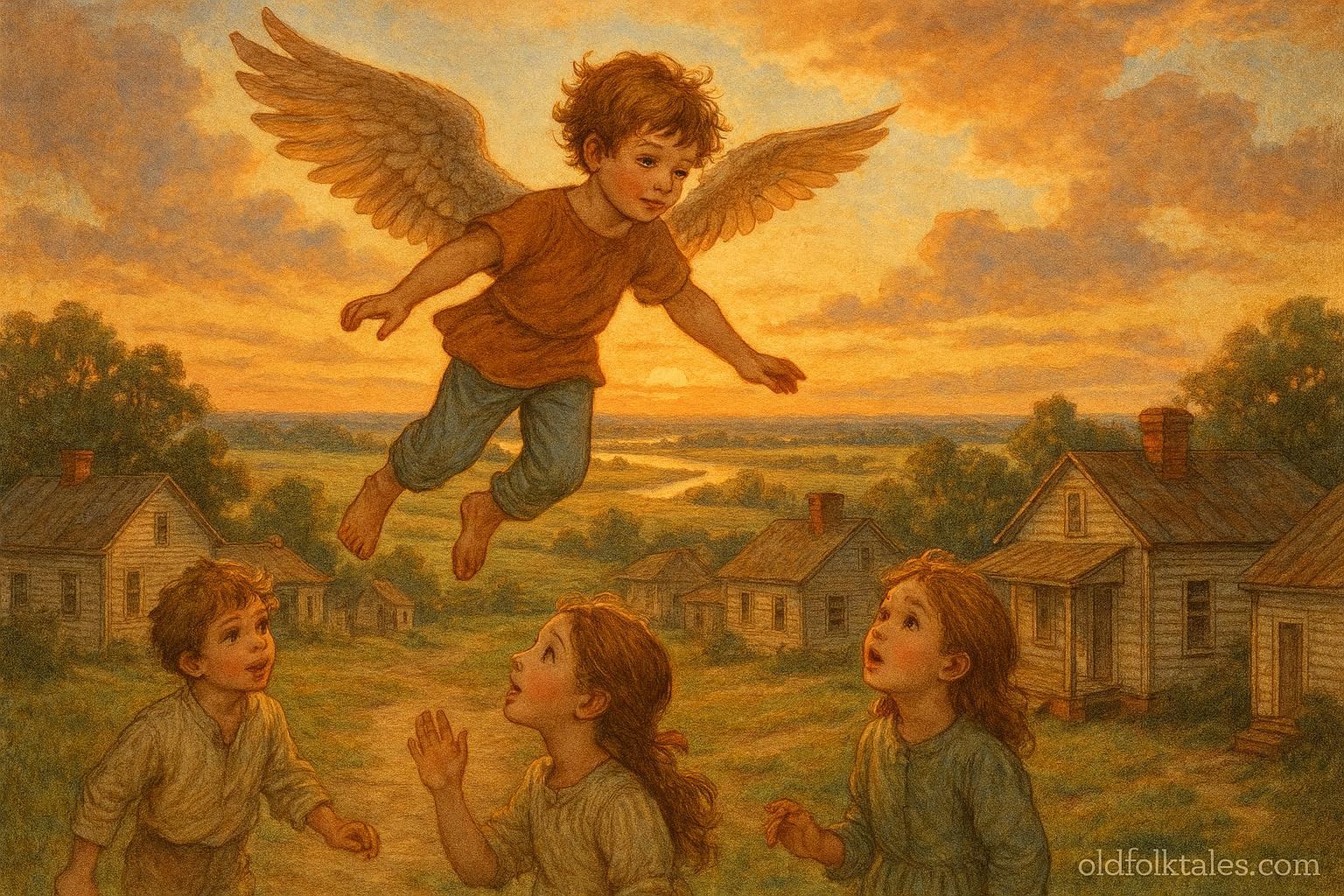
One early morning, after a storm had passed and dew still clung to the tall grass, Elijah woke to an unusual sensation. There was a lightness in his chest and a tingling along his back. When he glanced over his shoulders, he saw soft, pale wings unfurling, delicate yet strong, stretching wide like those of the birds he had long admired. At first, he thought he might be dreaming. He lifted his arms tentatively and felt the breeze swirl through the new feathers. Heart pounding, he stepped forward and found himself rising gently off the ground.
Elijah’s initial flights were short, just a few feet above the ground, but they filled him with exhilaration. He soared over the creek near his home, skimming just above the water, feeling the wind push against his face. He practiced daily, learning to balance, to tilt, and to rise higher without losing control. With each day, his confidence grew, and soon he could hover over trees and glide effortlessly across open fields.
Step into shadowy legends of restless spirits and ghostly travelers in American Ghost Stories.
Word of the boy with wings spread quickly through the village. Neighbors and elders gathered to watch Elijah in awe. Some were skeptical at first, questioning whether the sight was real, while others were filled with wonder. Children clapped and cheered as he swooped and dipped, leaving trails of laughter in the air. Adults paused from their chores, leaning on fences and watching the boy soar, reminded of the possibilities that life could offer beyond toil and routine.
Elijah’s wings became a symbol for the village, representing freedom and hope. During long harvest days, villagers would look up to see him gliding overhead, a living emblem of aspiration. When the heat of summer pressed down on them, his flights offered relief in spirit if not in shade. At times, he carried small items for neighbors, a basket of eggs, a bundle of herbs, demonstrating both utility and joy in his gift.
But with such a gift came challenges. One afternoon, while exploring the skies beyond the hills, Elijah encountered a fierce wind that tossed him off balance. He struggled to right himself and nearly crashed into the treetops. Fear coursed through him, and he realized that his freedom required care, respect, and practice. Landing safely in a clearing, he reflected on the lessons the birds had seemed to embody all along: flight was exhilarating but demanded attentiveness and patience.
Over time, Elijah began teaching younger children the principles of imagination, courage, and perseverance. He explained that while not everyone could sprout wings, each person had their own way of rising above difficulties. Through stories, games, and guidance, he encouraged others to discover their unique gifts, to find ways to soar metaphorically, and to lift each other in times of hardship.
During times of hardship, such as drought or illness, Elijah’s flights took on an almost spiritual significance. Villagers would gather, watching him glide across the fields, seeing not only a boy in flight but a representation of resilience, hope, and liberation. Parents told their children that Elijah’s wings reminded them that even in small villages, imagination and courage could bring joy and renewal.
As the years passed, Elijah grew but never lost his wings. He continued to soar above the village, and his presence inspired generations to believe in themselves and the unseen possibilities around them. Travelers passing through the village marveled at the boy who could fly and often carried tales of his exploits to distant communities. Songs, poems, and stories emerged, capturing the beauty of flight, the wonder of youth, and the power of believing in the extraordinary.
Eventually, the villagers understood that Elijah’s gift was not just about literal flight. It symbolized freedom from fear, the courage to rise above limitations, and the hope that even the humblest among them could achieve greatness. Every flap of his wings reminded them that the world held possibilities beyond what the eye could see, and that lifting each other was as important as lifting oneself.
And so, the tale of the Little Boy Who Grew Wings became a cherished story, told beside hearth fires and under starlit skies. Children imagined themselves soaring alongside him, adults were reminded to nurture hope and imagination, and the village learned that even in ordinary life, extraordinary gifts could transform the spirit.
Discover African American wisdom, Native American spirit stories, and the humor of early pioneers in American Folktales.
Moral Lesson
True freedom comes from courage, imagination, and using one’s gifts to uplift oneself and others.
Knowledge Check
- Who is Elijah in the story?
A boy who discovers he has wings and can fly. - What does Elijah’s flight symbolize for the village?
Freedom, hope, aspiration, and resilience. - How did Elijah help the villagers besides flying?
He carried small items, taught children, and inspired courage and imagination. - What challenge did Elijah face while flying?
He encountered a fierce wind that almost caused him to crash. - What lesson did he teach about using gifts?
That gifts must be used responsibly, with courage and care, to benefit oneself and others. - How did the village change because of Elijah?
Villagers were inspired to believe in possibilities, hope, and supporting one another.
Source
Adapted from contemporary African American folktale patterns.
Cultural Origin
Southern storytelling traditions