In a quiet rural town, people lived by the rhythm of seasons, harvests, and the sun’s steady rise and fall. Life was measured in predictable cycles, and everyone understood the passage of time in the same way. Days followed each other with familiar regularity, and calendars marked months with precise expectation.
Then came the story of the man who claimed to have borrowed a year of time, and everything familiar about life and time seemed to bend around his tale.
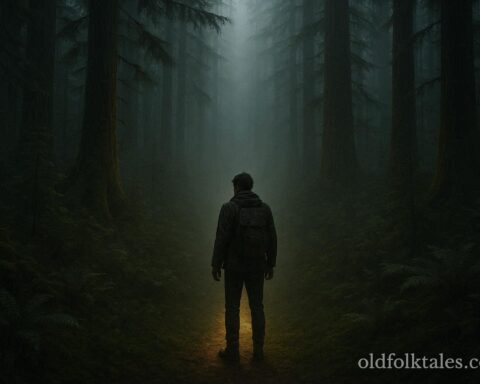
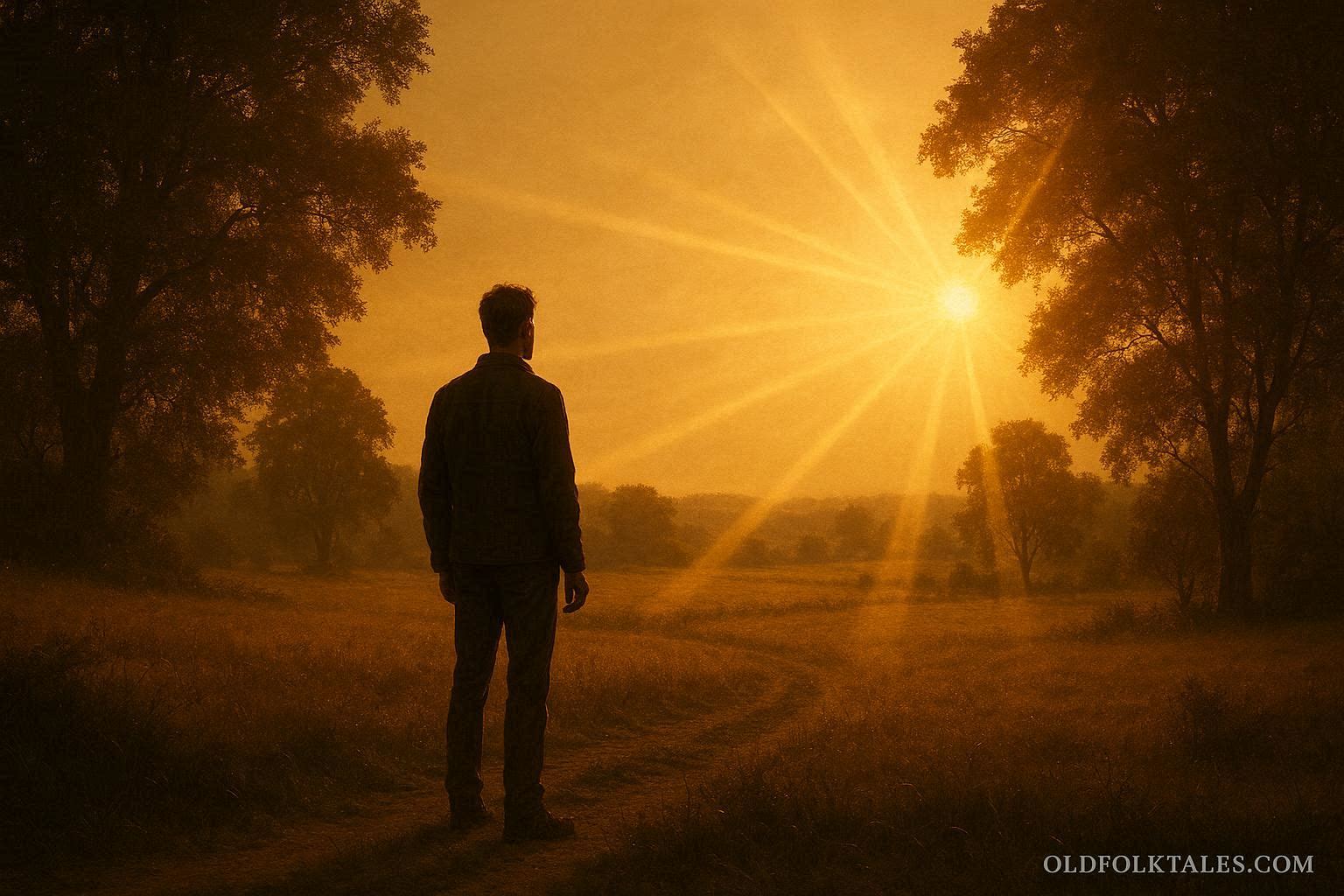
It began when he returned from a solitary journey into the woods, carrying himself with a look that was both weary and strangely distant. The townsfolk noticed at once that something about him had changed. He spoke of events and experiences that no one else could recall, of seasons that had passed while the town seemed to have remained frozen. To them, it was impossible, for the sun had set and risen as usual, yet he insisted he had lived an entire year beyond their notice.
People gathered around him in disbelief. His voice was calm, steady, and full of conviction. He described mornings that stretched like rivers of gold, nights that lingered longer than they should, and moments where hours seemed to fold back on themselves. He spoke of harvesting crops that he alone had tended, meeting people who had never existed in anyone else’s memory, and walking paths that vanished as soon as he left them.
Discover celestial myths of the sun, moon, and stars — and the heroes who bridged earth and sky.
Many laughed at first, thinking it a playful exaggeration or an elaborate joke. Yet as days passed, more townsfolk began to question their own memories. How could one man have experienced something so vast and yet leave no trace? Skepticism gave way to curiosity, and curiosity led to quiet wonder.
The man explained that time, much like the forest, had hidden places where ordinary rules did not apply. He had stumbled upon one of these secret folds while wandering alone. In this hidden year, he had worked, laughed, and endured as he always did, yet the world outside remained unchanged. The sun still rose and set in its usual pattern, children played as if nothing had happened, and the calendar marked days in ordinary succession.
As the townspeople listened, a mixture of fear and fascination took hold. If one could experience a year in secret, what else might be possible? Were there moments hidden from everyone, existing in silence beyond common understanding? Some villagers whispered of old legends, of men and women who had crossed thresholds into places untouched by ordinary time, places where one could live and learn beyond mortal constraints.
The man shared the strange details of his borrowed year. He spoke of attending feasts that shimmered with golden light, of storms that arrived and departed in an instant, and of fields that grew under his hands with impossible speed. Creatures appeared that no one else had seen, some helpful, some mischievous, and all existing only in that hidden stretch of time. He described evenings where the moon hung in the sky for weeks, and mornings that lasted far longer than any human could count.
Despite his rich descriptions, the man emphasized that the hidden year was not entirely joyful. There were days of loneliness and uncertainty, moments when he wondered if he would ever return to the world he knew. He missed the voices of familiar friends, the ordinary rhythm of work and play, and the comforting knowledge that time passed in ways everyone understood. The hidden year offered extraordinary experiences but demanded endurance, patience, and careful observation.
Over time, the villagers began to reflect on their own lives. They noticed fleeting moments that seemed to stretch, days that felt both long and short, and events that seemed to occur out of order. While they could not verify the man’s story, it awakened a sense of awareness about the fluidity of time. They realized that life could be experienced differently depending on perception, attention, and circumstance.
Children asked endless questions, fascinated by the idea of living beyond normal time. Elders nodded knowingly, recalling old tales of mysterious wanderers who had encountered places outside the usual flow of life. Farmers, teachers, and shopkeepers all found themselves pondering whether ordinary days contained hidden depths and lessons yet to be discovered.
The man’s story also inspired caution. Some warned that meddling with time, or seeking to extend it beyond natural limits, could be dangerous. He himself admitted that the hidden year had tested him, exposing vulnerabilities and fears he had never faced before. He reminded listeners that while time could be bent in imagination or secret spaces, life required grounding in the shared, ordinary world as well.
Years later, people continued to speak of the man who borrowed a year. His tale became part of the town’s heritage, told at evening gatherings and around fireplaces. The story was never dismissed as simple fantasy because it captured something profound: the idea that reality could be larger than perception, and that the boundaries of ordinary life were not always absolute.
Even when the man passed on, his legacy endured. Villagers would glance at the horizon, imagining hidden years beyond their own awareness. They would notice moments when sunlight lingered unusually long or shadows behaved strangely, recalling the possibility of hidden layers of time, unseen but meaningful. Children dreamed of secret years where adventures waited just beyond the edge of ordinary life, while adults pondered the lessons of patience, awareness, and humility.
In the end, the story of the borrowed year reminded everyone that life was full of mystery. Ordinary experience was not all that existed; perception, attention, and imagination allowed glimpses of what lay beyond. The tale encouraged reflection on the fleeting nature of days, the importance of being present, and the wonders that might exist just outside human understanding. Time, like a river with hidden currents, flowed in ways that could surprise and teach those willing to observe closely.
Explore the heart of America’s storytelling — from tall tales and tricksters to fireside family legends.
Moral Lesson
Life is full of hidden dimensions, and awareness, patience, and imagination allow us to see beyond the ordinary, teaching humility and wonder.
Knowledge Check
- What unusual experience did the man claim to have lived?
He claimed to have lived an entire extra year that no one else experienced. - How did the townspeople initially react to the story?
They were skeptical, some laughed, and others grew curious. - What did the hidden year teach the man?
It taught endurance, observation, and reflection on life beyond ordinary perception. - How did the story affect the village over time?
It inspired wonder, reflection on the nature of time, and awareness of life’s hidden layers. - What cautionary message did the man share?
That meddling with time or trying to extend it unnaturally can be risky and challenging. - What is the broader lesson of the story?
Life contains hidden mysteries beyond perception, encouraging humility, reflection, and imagination.
Source
Adapted from materials preserved in Indiana University
Cultural Origin
American oral storytelling traditions