Northern Michigan is defined by forest. Pines stretch across long distances, broken only by lakes, gravel roads, and small towns built around logging, hunting, and seasonal travel. These woods are not untouched wilderness, yet they remain vast enough to feel uncontained. Sound travels differently there. Light disappears quickly. It is in these spaces that the legend of the Michigan Dogman has endured.
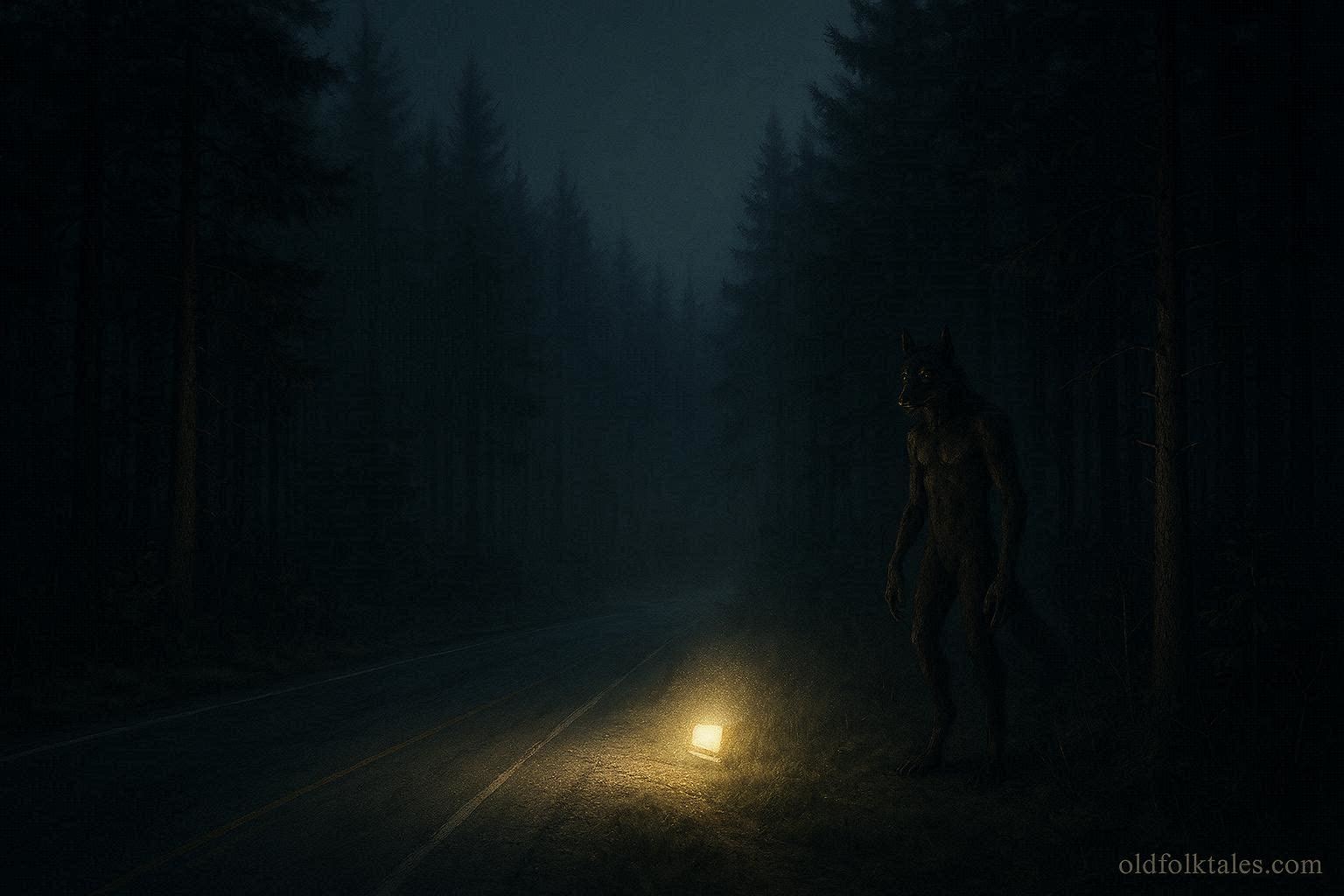
The Dogman is described as a canine humanoid, taller than a man and broader through the shoulders. Witnesses consistently report dark fur, pointed ears, and a long snout. Unlike common wildlife, the creature is said to stand upright with ease. When it moves, it does so deliberately, shifting between two legs and four without visible strain.
Encounters often occur near forest edges or rural roads. Drivers recount seeing the figure illuminated briefly by headlights, standing near tree lines or walking parallel to the road. Hunters and hikers tell of moments when the woods seem to pause, followed by the sudden awareness that something is watching from a distance.
Discover chilling ghost tales and haunted places that echo through America’s towns and countryside.
What sets the Michigan Dogman apart from fleeting sightings of bears or wolves is behavior. The creature does not bolt immediately. It does not panic. Witnesses describe a moment of stillness, a sense that the Dogman is assessing its surroundings. In several accounts, the creature maintains eye contact before turning away and disappearing into the forest.
Michigan State University Great Lakes folklore archives record accounts that span decades. Reports from the late twentieth century echo descriptions found in earlier oral traditions shared among logging communities and rural families. The height remains consistent. The posture remains upright. The location remains tied to forest corridors and sparsely populated roads.
Many sightings occur during late summer and early autumn. This timing coincides with hunting season, increased rural travel, and longer nights. Folklorists suggest that these conditions heighten awareness and place people in liminal spaces where forest and road intersect.
The Dogman is not described as attacking people. Fear arises instead from its presence and apparent intelligence. Witnesses often emphasize the feeling of being evaluated rather than threatened. This distinction matters in folklore. Predators that attack become monsters. Predators that watch become symbols.
Some researchers connect the Michigan Dogman to older European were creature traditions brought by settlers. Wolves held strong symbolic power in these stories, representing both danger and transformation. Others argue that the Dogman is a distinctly American figure, shaped by frontier forests and the isolation of the Upper Midwest.
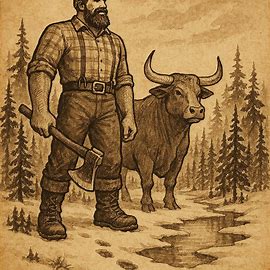
Logging culture plays an important role in the legend. Loggers historically worked deep in forests for extended periods, often alone or in small groups. Stories of strange encounters circulated as a way to explain fear, exhaustion, and the unpredictability of wilderness work. The Dogman fits easily into this tradition.
Modern witnesses often struggle to categorize what they have seen. Bears do not walk upright for extended periods. Wolves avoid humans. The Dogman occupies an uncomfortable space between known animals and imagined beings. This uncertainty reinforces the legend rather than dissolving it.
Rural roads are especially important to the story. These roads cut through forest without fully taming it. At night, headlights carve narrow tunnels of visibility. Everything beyond that light remains unknown. The Dogman appears at the edge of that tunnel, where certainty fades.
The repetition of sightings gives the legend its strength. People who have never spoken to one another describe the same figure in the same places. The consistency suggests a shared cultural image rooted deeply in regional experience.
For many Upper Midwest communities, the Michigan Dogman is not discussed openly. It surfaces in quiet conversations, hunting camps, and late night drives. The story persists because the landscape that supports it still exists. The forests remain. The roads remain. The darkness remains.
Whether the Dogman is viewed as a creature, a symbol, or a reflection of wilderness fear, it serves a clear function. It reminds those who move through the forest that they are not alone. The land observes as much as it is observed.
The Michigan Dogman continues to walk the boundaries between forest and road, between story and experience, repeating itself across generations as long as the woods remain deep enough to hold secrets.
Click to read all American Cryptids & Monsters — creatures of mystery and fear said to inhabit America’s wild landscapes.
Moral Lesson
Not all dangers announce themselves. Some simply watch, reminding humans that the wilderness is never fully conquered.
Knowledge Check
1. Where is the Michigan Dogman most often reported?
In forests and along rural roads in Michigan.
2. How is the Dogman commonly described?
As a tall canine humanoid capable of walking upright.
3. What behavior distinguishes the Dogman from normal wildlife?
It watches calmly instead of fleeing immediately.
4. During which seasons do sightings most often occur?
Late summer and early autumn.
5. What cultural groups helped shape the legend?
Logging communities and rural Upper Midwest residents.
6. What does the Dogman symbolize in folklore interpretation?
Fear of wilderness and the persistence of untamed land.
Source
Adapted from Michigan State University Great Lakes folklore archives and regional oral tradition documentation.
Cultural Origin
Upper Midwest communities of the United States.