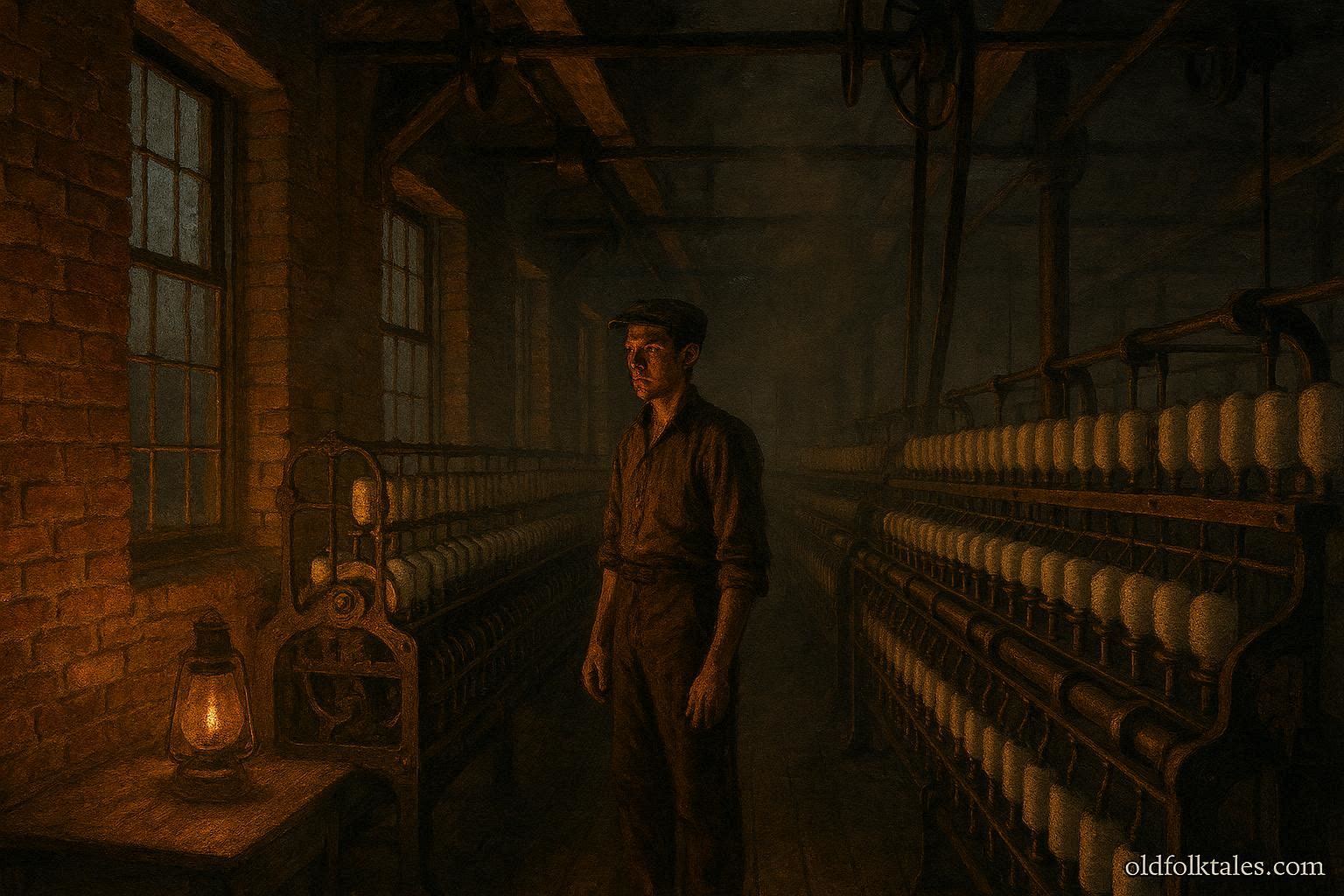
Eli Turner had always been attuned to the rhythms of the Ashbrook mill. The clang of the iron press, the whir of the spinning wheels, the hiss of steam could detect when something was off before anyone else. To the townspeople, the mill was a place of routine, yet to Eli, it was a living organism that demanded attention and respect. Every day, he moved through its floors with careful observation, listening to the whispers of the machinery that others ignored.
It was a crisp autumn afternoon when an ordinary workday took a perilous turn. Orders had piled up, and the mill floor hummed with the frantic energy of workers eager to meet quotas. The air was heavy with cotton dust, clinging to beams and machinery, silent and dangerous. Most workers were preoccupied, absorbed in their labor, unaware that the smallest mistake could ignite disaster. Eli noticed a slight shimmer of heat near a spinning belt, something that didn’t belong in the steady cadence of the machines. His instincts screamed that danger was imminent.
Without hesitation, Eli ran toward the source, not away. He saw the sparks jumping from a misaligned belt, landing on the cotton that had gathered in hidden corners. The fire had only just begun, but Eli knew its potential. He yanked open the valve for the mill’s emergency water system while signaling to nearby workers to grab buckets and hoses. Panic rippled across the floor, but Eli’s calm direction turned confusion into coordinated action.
Click to explore all American Ghost Stories — haunting legends of spirits, lost souls, and mysterious places across the U.S.
The flames began to spread quickly, climbing along the beams. Eli pressed a wet canvas over the first flare-ups, stomping to smother them, while urging others to close the fire shutters along the upper floors. Steam hissed as he twisted valves, redirecting pipes to flood the areas at greatest risk. The workers, inspired by his decisiveness, followed his lead, forming a human chain to carry water and beat back flames.
The fire roared and the mill trembled under its heat. Windows blackened with smoke, and the walls seemed to groan under the pressure. Yet Eli remained focused, refusing to be distracted by fear or chaos. He had trained his senses over years of observing the mill, and now those instincts became the town’s lifeline. Every action, from shutting the air vents to smothering sparks, slowed the fire’s advance just enough to prevent catastrophe.
By the time the overseers arrived, Eli had controlled the blaze, confining it to a small section. The mill survived, and no lives were lost, though the charred beams and scorched floor were stark reminders of how close Ashbrook had come to disaster. The townspeople would speak of Eli’s bravery for years. They described him as ordinary yet extraordinary, a man whose vigilance and responsibility had safeguarded everyone around him.
Eli Turner never sought recognition. He declined monetary rewards, promotions, and public accolades. Instead, he requested only that the mill reinforce safety measures, restore fire drills, and listen to the workers’ concerns. The owners agreed, understanding that real security was more valuable than a medal. Eli returned to his work quietly, continuing to observe the mill with the same careful attention as always.
The story of Eli Turner became a lesson passed down in Ashbrook. Children were taught that heroism did not always involve grand gestures or daring feats, but often required calm, quick thinking, and dedication. Eli’s actions reminded everyone that courage could be found in ordinary people who refused to ignore warning signs, who acted responsibly, and who valued the safety of others above personal glory.
As decades passed, the mill modernized, but the legend remained. Visitors heard whispers of the worker who tamed the flames, and new generations were inspired to respect the machinery, honor vigilance, and act with foresight. Eli’s legacy endured not in monuments or plaques, but in the collective memory of a community that learned the power of alertness, responsibility, and selfless action.
Discover celestial myths of the sun, moon, and stars — and the heroes who bridged earth and sky.
Moral Lesson
Heroism is not measured by titles or fame. Vigilance, responsibility, and decisive action in the service of others are the true marks of courage.
Knowledge Check
1 What early warning signs did Eli notice in the mill?
Answer: Unusual heat and sparks from a misaligned belt, and cotton dust accumulating in corners.
2 Why was cotton dust particularly dangerous in the mill?
Answer: It was highly flammable and could allow a small spark to spread quickly.
3 Why did Eli move toward the fire instead of running away?
Answer: He knew activating the fire suppression systems early could prevent disaster.
4 What key actions helped stop the fire?
Answer: Closing air vents, using emergency water valves, and smothering flames with wet canvas.
5 Why did Eli refuse rewards and recognition?
Answer: He believed implementing safety measures and protecting the mill mattered more than personal gain.
6 What lasting lesson did Ashbrook learn from Eli’s actions?
Answer: Vigilance, responsibility, and selfless action save lives more effectively than authority or status.
Source
Adapted from Smithsonian industrial labor folklore collections
Cultural Origin
Early American manufacturing towns