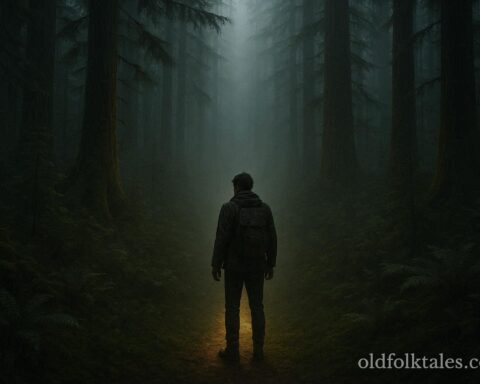
Long before the moon became a constant presence in the night sky, darkness was considered an uncertain time among the Eastern Woodlands peoples. When the sun disappeared beyond the trees, the land did not simply rest. It changed. Sounds carried farther, shadows moved without warning, and the boundary between the living and the dead softened. Night was not feared, but it was respected, because it was believed to be a time when spirits traveled most freely.
The people understood death as a passage rather than an ending. Those who died were thought to linger near their bodies for a time, adjusting to the change before moving fully into the spirit world. Burial grounds were therefore places of transition, not silence. They were watched carefully, tended gently, and approached with humility. Any disturbance during this period was believed to confuse the spirit and disrupt the balance of the community.
In those early days, humans alone were responsible for guarding the dead. Elders took turns sitting near burial sites through the night, keeping small fires burning and speaking softly to remind the spirits they were not forgotten. Songs were offered to calm wandering souls and to warn harmful forces to stay away. Even with this vigilance, disturbances occurred. Graves were sometimes found unsettled by morning, and villagers reported dreams filled with unease.
Encounter the strange and the unseen — from Bigfoot to regional monsters hiding in America’s forests.
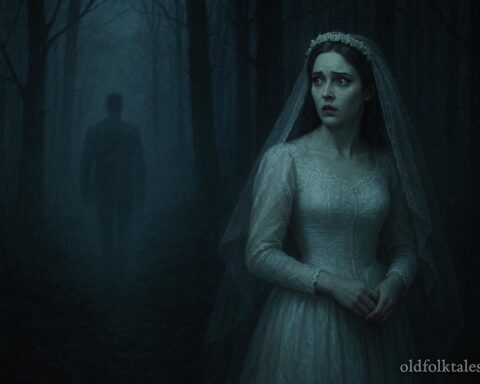
Children were especially sensitive to these disturbances. They spoke of whispers near the burial grounds and shadows that seemed to move against the wind. Parents listened carefully, knowing that children were believed to see what adults often could not. These signs were taken seriously, as they suggested the dead were not resting peacefully.
During one particularly harsh season, illness spread through a forest settlement near a wide river. Several deaths occurred in close succession, overwhelming the elders tasked with keeping watch. The burial ground expanded quickly, and the nights grew heavier. Fires burned lower as fatigue set in, and the songs that once filled the darkness became fewer.
Among the living was a woman named Awenasa, whose role in the community centered on funerary rites. She prepared the bodies of the dead, spoke the farewell words, and guided families through mourning. Awenasa believed deeply that the dead required witnesses during their passage, and she often remained near the burial ground until dawn, even when others slept.
As the deaths continued, Awenasa noticed changes in the night sky. Darkness seemed deeper, more complete, as though something essential was missing. The stars offered light, but they did not move with purpose. The sky felt distant, unconcerned with what unfolded below. She sensed that human effort alone was no longer enough.
One night, after preparing the body of a respected elder, Awenasa remained at the burial ground long after the fire had faded. She spoke aloud, not to the living, but to the unseen forces that governed transition. She asked for help, not for her village alone, but for all places where the dead rested.
Her words were carried upward, and something listened.
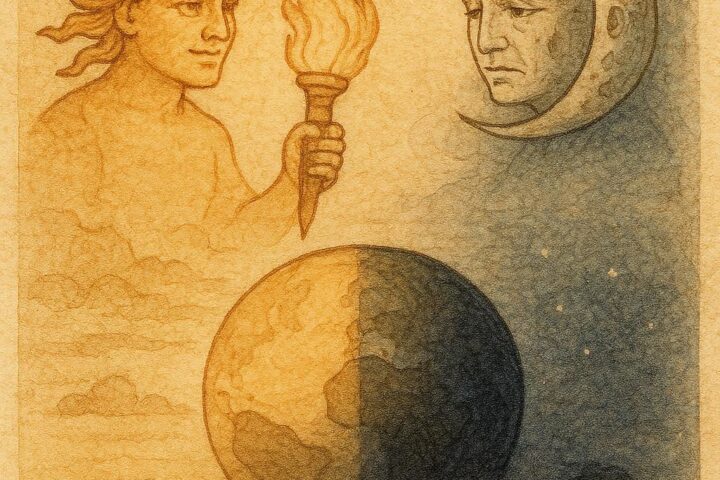
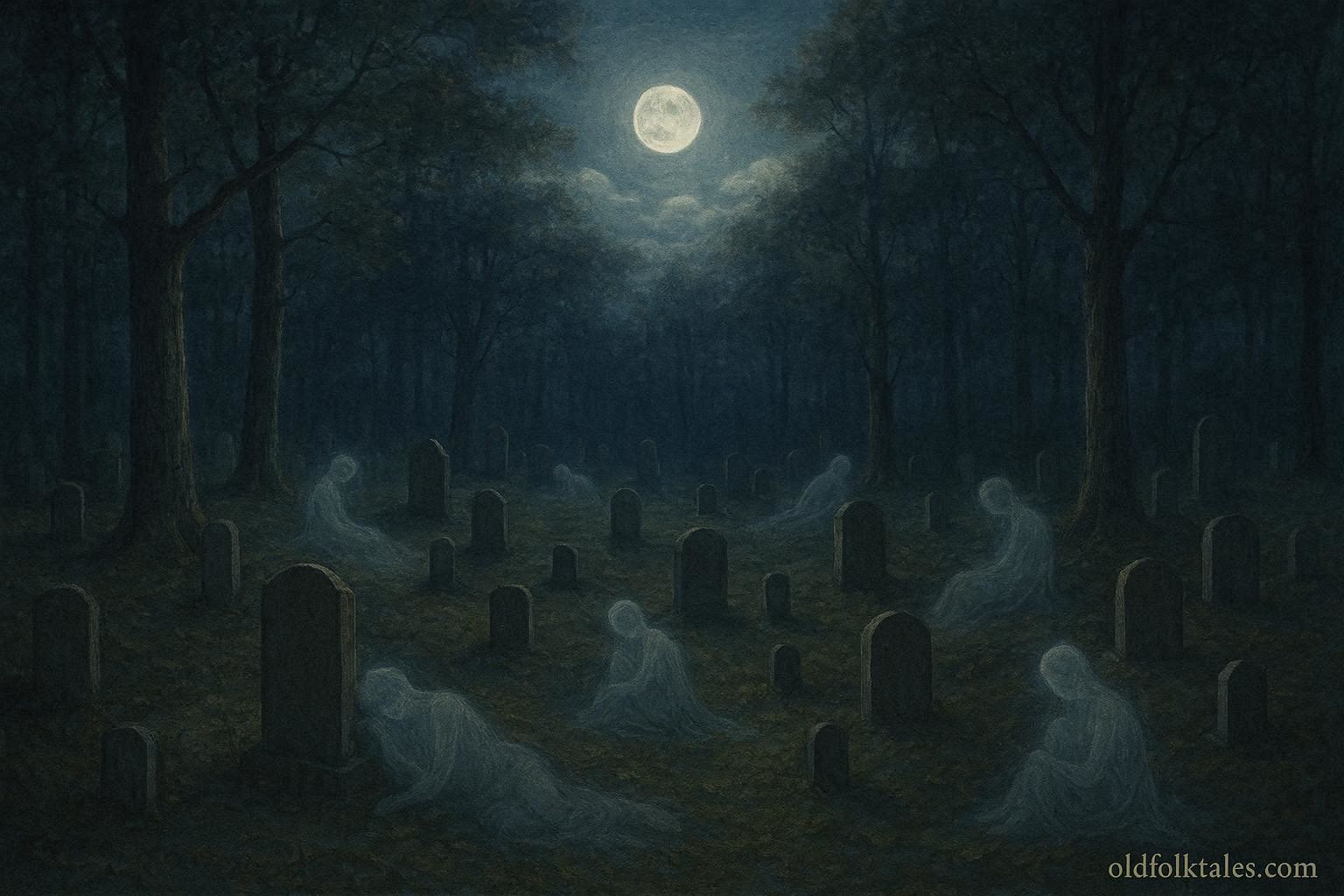
That same night, the sky changed. A pale glow emerged, not sharp like the sun, but steady and calm. It rose slowly above the trees, casting light across the burial ground. Shadows softened. The air grew still. Awenasa felt the presence of a watcher, something neither fully distant nor fully of the earth.
The spirits responded immediately. The whispers ceased. The restless feeling lifted. The burial ground felt contained, protected, as though held within a circle of light. Awenasa understood that the night itself had gained a guardian.
By morning, the pale light had faded, but the memory of its presence remained. The elders gathered to speak of what had occurred. They agreed that the sky had answered the request. From that night onward, the moon began to rise consistently, its light sweeping across the land and resting longest over places of burial.
Stories spread quickly. People noticed that graves were no longer disturbed. Dreams grew calmer. Children slept through the night without fear. The moon was said to watch, not with judgment, but with vigilance, ensuring that spirits completed their journey undisturbed.
Over time, teachings formed around this belief. It was said that the moon stood between worlds, reflecting light without claiming it, guiding spirits without holding them. Its changing shape reminded the living that transition was natural, that movement between states was part of existence.
Burial rituals changed to acknowledge the moon’s role. Bodies were laid to rest before nightfall whenever possible, allowing the moon to take its watch from the beginning. Offerings were left where moonlight touched the ground, thanking it for its protection.
The moon was not believed to punish those who disturbed graves, but to reveal them. Its light exposed imbalance, making wrongdoing visible. Because of this, people learned restraint, understanding that nothing done in darkness was truly hidden.
Elders taught that when the moon was full, its watch was strongest. Spirits were believed to move more freely during these nights, guided safely by its light. When the moon waned, it was said to be resting, having completed another cycle of vigilance.
Awenasa lived many seasons after that first night. When she passed, she was buried beneath open sky. As her body was laid to rest, the moon rose slowly, its light touching the earth around her grave. The people believed it recognized one who had helped call it into its role.
From that time onward, the moon was no longer seen as distant or decorative. It was known as a guardian, a presence that ensured the dead were not forgotten or disturbed. Its nightly journey became a reminder that vigilance did not end with death, and that protection extended beyond the living.
To this day, people say that when moonlight rests quietly over old burial grounds, it is not accidental. It is the continuation of an agreement made long ago, when humans asked for help and the sky responded.
Moral Lesson
The story teaches that honoring the dead requires ongoing care and respect, and that balance is maintained when responsibility is shared between the living and the unseen.
Knowledge Check
- Why were burial grounds considered sensitive spaces?
They were places of transition where spirits lingered before moving fully onward. - Who was responsible for guarding burial grounds before the moon’s role?
Elders and community members kept watch through the night. - What signaled the moon’s first appearance as a guardian?
A steady pale light rising and calming the burial ground. - Why was moonlight believed to be protective rather than controlling?
It guided spirits without holding or judging them. - How did burial practices change after the moon became a watcher?
Rituals acknowledged the moon’s presence and timing became important. - What does the moon’s cycle symbolize in the story?
The natural rhythm of vigilance, rest, and transition.
Source
Adapted from Smithsonian Indigenous mortuary belief documentation
Cultural Origin
Eastern Woodlands Indigenous communities