Along the high deserts and quiet lakes of Nevada, long before roads and towns marked the landscape, the Northern Paiute people wandered, hunted, and fished. They spoke often of the water, knowing that in such an arid land, lakes and ponds were both life-giving and dangerous. Among their most chilling tales were those of the Water Babies, spirits said to dwell near still waters, crying in the night. Children and travelers were taught to listen carefully to these cries, to respect the lakes, and to never approach the waters recklessly.
One summer evening, a young Paiute boy named Taya accompanied his father to a lake nestled between rocky hills. The sun had just dipped behind the ridges, casting long shadows over the calm surface. As Taya gathered reeds for weaving, he thought he heard a soft cry, a sound almost like a child calling from far away. At first, he thought it was his imagination, but the sound persisted. He turned to his father and asked if he had heard it. His father nodded solemnly and said that the Water Babies sometimes cried at dusk to remind people that the water was sacred.
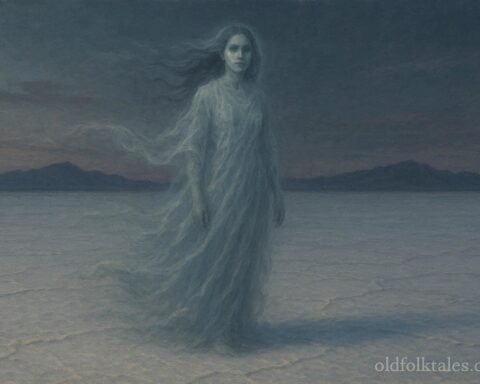
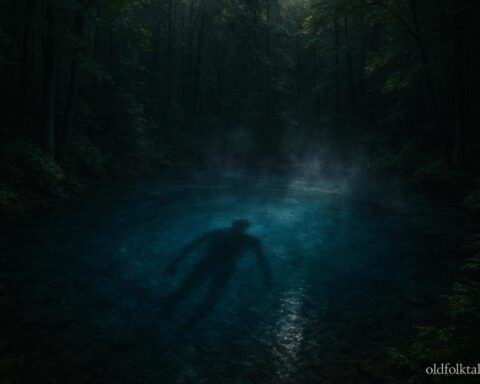
Curiosity overcame caution, and Taya crept closer to the lake’s edge. The water was smooth and dark, reflecting the fading light of the sun. Then he saw them. Small, pale figures hovered just above the surface. Their eyes glimmered like tiny stars. The crying grew louder, filled with sorrow and longing. Taya’s heart raced. He remembered the warnings of the elders that anyone drawn too close risked vanishing into the depths or being lost forever.
Discover chilling ghost tales and haunted places that echo through America’s towns and countryside.
Taya’s father called out, urging him to step back. Taya hesitated, mesmerized by the spectral figures. One of the Water Babies floated closer, reaching a tiny hand toward him. A cold chill ran through Taya’s body. He realized that the spirits were not merely lost children but guardians of the lake. Their cries were a warning, a reminder of the power held by water in the desert. With trembling hands, he took his father’s, and together they slowly retreated from the water’s edge. The cries followed them until they reached higher ground, then faded into the night.
The Paiute explain that the Water Babies serve as both protectors and teachers. Lakes in the Great Basin were vital for survival, yet they could be deadly. Fast currents, sudden drop-offs, and deep water could claim lives. By personifying these dangers in the form of crying spirits, the elders ensured that children and visitors approached lakes with respect, mindfulness, and caution. Over generations, these stories became a central part of community knowledge, blending supernatural elements with practical lessons about survival.
Another tale tells of a group of travelers who camped near a marshy lake during a harsh winter. Snow had fallen, and the wind carried a biting chill. They heard cries coming from the water, mournful and insistent. Thinking it might be a stranded child, they approached without caution. As they neared the lake, the ice beneath their feet groaned, and the cries intensified, almost pleading. One traveler stumbled and caught his footing just in time. The group quickly retreated to safety, shaken but unharmed. When they recounted the story to local Paiute elders, they were reminded that the cries of the Water Babies were meant to protect lives, not to harm, and that respect for nature was paramount.
Water Babies also appear in stories as guides. A man lost in the desert heat might hear a faint cry, follow it carefully, and find a hidden spring or lake that could save him. In this way, the spirits reward attentiveness, humility, and reverence for the land. Tales emphasize that the balance between life and danger is delicate. By framing these lessons as a supernatural story, the Paiute ensured that both children and adults remembered the sacredness of water, the need for careful observation, and the consequences of reckless curiosity.
Over time, these stories traveled beyond Paiute communities. Explorers, settlers, and anthropologists documented the legends, noting both the consistent descriptions of small, crying water spirits and the moral lessons embedded within them. Some suggested that the stories were metaphors for environmental caution, teaching generations how to survive in a harsh and unpredictable landscape. Others emphasized the spiritual importance, highlighting how the Water Babies connected humans to the natural world and reminded them of ancestral responsibilities.
Even today, visitors to the Great Basin sometimes report hearing soft cries near lakes at night. Some attribute it to wind, wildlife, or echoes across the water. Yet Northern Paiute storytellers maintain that these sounds are reminders of the Water Babies’ presence. Families continue to teach children the stories, and the spirits remain a living part of the landscape, blending environmental respect with wonder, mystery, and cultural continuity.
The legend of the Water Babies teaches multiple layers of wisdom. It reminds humans of the power and fragility of water, especially in a desert environment. It reinforces the importance of paying attention to natural signs and listening to the lessons of elders. It shows that spirits and humans are deeply interconnected, and that respect for the unseen can ensure safety, survival, and harmony. In these stories, caution is not fear but guidance, and the cries of the Water Babies are both haunting and protective.
By blending environmental understanding with spiritual belief, the Northern Paiute created a narrative that endures through time. The stories continue to inspire respect for the land, reinforce moral lessons about humility and attentiveness, and preserve cultural memory in an ever-changing world. Children listen wide-eyed to the cries in the stories, adults remember the sacredness of water, and the spirits of the lakes remain ever-present in the imagination and conscience of the community.
Click to read all American Folktales — timeless oral stories passed through generations across the United States.
Moral Lesson
The legend of the Nevada Water Babies teaches that natural resources are sacred and must be approached with respect. Attentiveness, humility, and awareness of danger ensure survival, and cultural wisdom preserves both life and harmony with the environment.
Knowledge Check
- Who are the Water Babies in Northern Paiute legend?
Spirits that dwell near lakes and cry to warn or guide humans? - What happens to those who approach the spirits recklessly?
They risk being drawn into the water or encountering danger? - How do the stories teach survival lessons?
By emphasizing respect for water and careful observation? - In what other way can Water Babies help humans?
They can guide lost travelers to water sources? - What broader cultural value do the legends convey?
The importance of respecting nature and ancestral knowledge? - How are the Water Babies described visually?
Small, ethereal figures with eyes that glimmer like water under moonlight?
Source
Adapted from University of Nevada Special Collections
Cultural Origin
Northern Paiute communities, Great Basin, Nevada