High in the mist-covered ridges of the Ozark Mountains, where winding rivers cut through thick forests and the air hums with cicadas, the people once trusted in more than just herbs and medicine. They believed in the power of the knot, a sacred act that bound sickness, fear, or bad luck, tying it away from the body and sending it into the wild beyond. This art, known among locals as the “Witch Doctor’s Knot,” was part of a living heritage of folk magic practiced by the mountain healers, midwives, and wise men who lived among the hills.
The Ozark people, descendants of Scots-Irish settlers, mixed with Native American and frontier influences, saw the world as woven with invisible threads of power. Every sickness had a cause, and every ailment could be “tied off” through faith, prayer, and a small ritual performed at the right time. To them, healing was not just medicine; it was a conversation between nature, spirit, and human will.
Click to read all American Cryptids & Monsters — creatures of mystery and fear said to inhabit America’s wild landscapes.
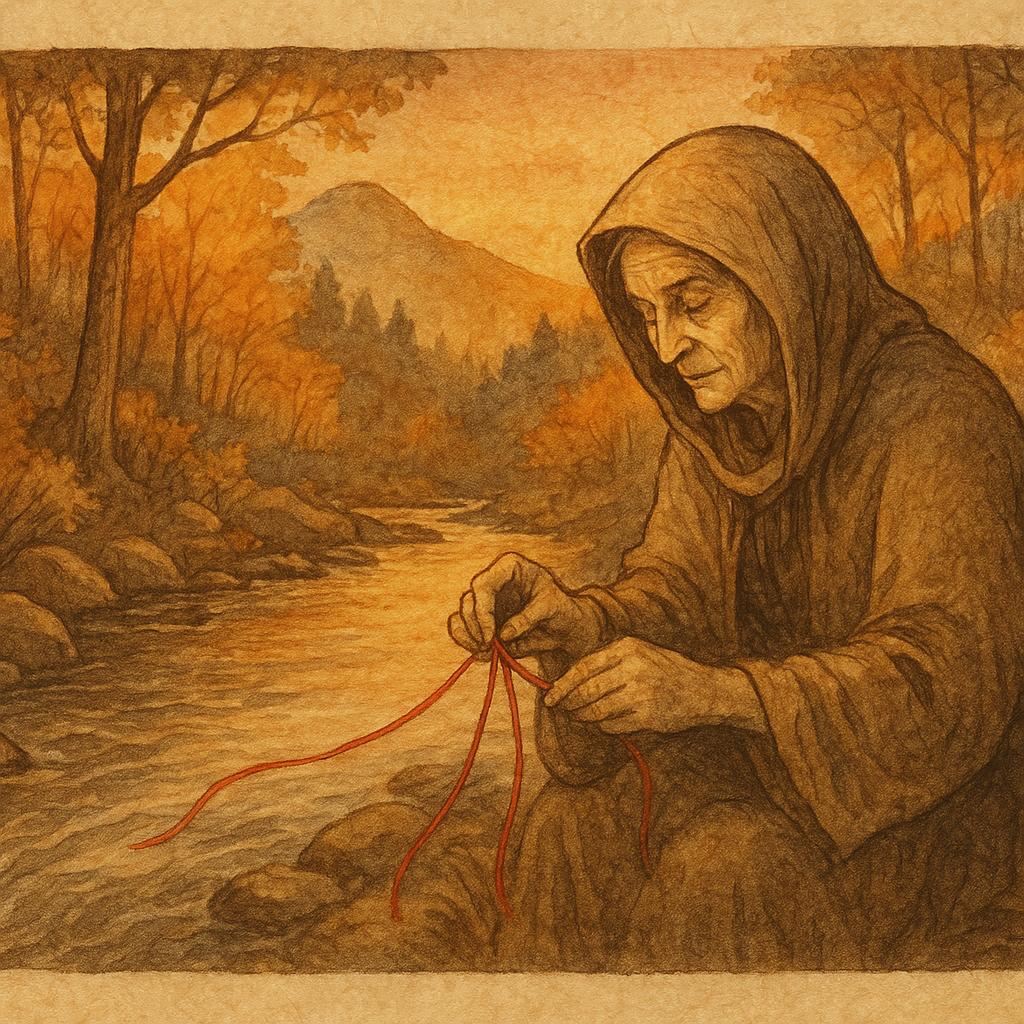
One of the most well-known rituals among these folk healers was the knot-tying charm to cure fever. The healer would take three red threads, their colour symbolising life and strength, and twist them together carefully. As the strands were braided, the healer would murmur a charm, half prayer, half command, into the mountain air:
“Fever, I tie you,
Fever, I bind you,
Fever, go to the river and drown.”
Each line was spoken softly but firmly, carrying both rhythm and intention. When the final knot was tied, the thread was thrown into running water, a creek, stream, or river, so that the illness, now trapped within the knot, would be carried away and drowned by the flow. The symbolism was simple and profound: as the water moved, so too did the fever depart from the sufferer’s body.
Not every healer used thread. Some preferred to work with willow branches or poplar bark strips, twisting them while invoking divine protection. The charm might be dedicated to Saint Peter, who held the keys to Heaven, or to the Holy Mother, seen as the ultimate guardian of mercy. Others used the sign of the cross while tying the knots, blending sacred Christianity with ancient European and Native traditions.
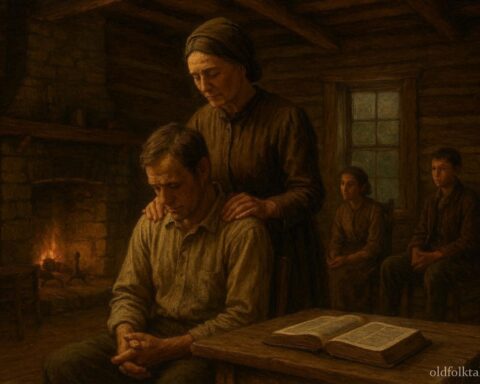
For the people of the Ozarks, faith was woven through every part of daily life. When a child fell ill, when crops failed, or when storms threatened, they turned to their granny women and witch doctors, folk healers who carried wisdom passed through generations. These healers were not witches in the fearful sense, but keepers of old knowledge, combining prayer with the earth’s own medicine.
Their practice reflected the deep cultural mix of the region: Celtic charmwork, Native reverence for nature, and Christian prayer. This fusion created a unique spiritual language, one where a red thread and a whispered charm could hold as much power as a doctor’s remedy.
The “Witch Doctor’s Knot” was also a protection spell. When tied and placed above a doorway, it was believed to repel evil spirits, ward off bad dreams, or keep away the “haint”, a restless ghost said to wander the hills. The knots might be hidden under beds or sewn into clothing for safekeeping during travel or childbirth.
Though such customs faded as modern medicine spread through the region, their spirit never truly vanished. Even today, echoes of these old ways remain in folk sayings and mountain hymns, where people still bless their homes with salt or hang herbs for protection. The memory of the knot endures, a quiet reminder that belief itself can be a form of healing.
In the heart of the Ozarks, faith and folklore walked hand in hand. The healer’s words were as sacred as scripture, and the flowing river was as holy as baptism. The Witch Doctor’s Knot stands as a testament to an age when people trusted both prayer and the elements to guard their lives and ease their pain.
Click to read all American Traditions & Beliefs — the living folklore of daily life, customs, and superstitions.
Moral Lesson
The story of the Ozark “Witch Doctor’s Knot” teaches that healing flows from both faith and intention. The power to recover lies not only in medicine but also in belief, compassion, and harmony with the natural world.
Knowledge Check
1. What was the main purpose of the Witch Doctor’s Knot?
To bind illness or bad luck and send it away through ritual and prayer.
2. Why were three red threads used in the ritual?
The colour red symbolised strength and life, while the number three reflected sacred completeness.
3. What role did running water play in the ceremony?
It symbolised purification, carrying away the tied illness or misfortune into nature’s flow.
4. Which Christian figures were often invoked in Ozark healing charms?
Saint Peter and the Holy Mother were commonly invoked for divine aid.
5. What cultural influences shaped Ozark folk healing?
A blend of Celtic, Native American, and frontier Christian beliefs.
6. What is the lasting message of this folktale?
That faith, nature, and tradition together can nurture both the body and the soul.
Source: Adapted from Ozark Magic and Folklore by Vance Randolph (University of Arkansas Press, 1947).
Cultural Origin: Ozark Mountains, USA (Missouri–Arkansas region).