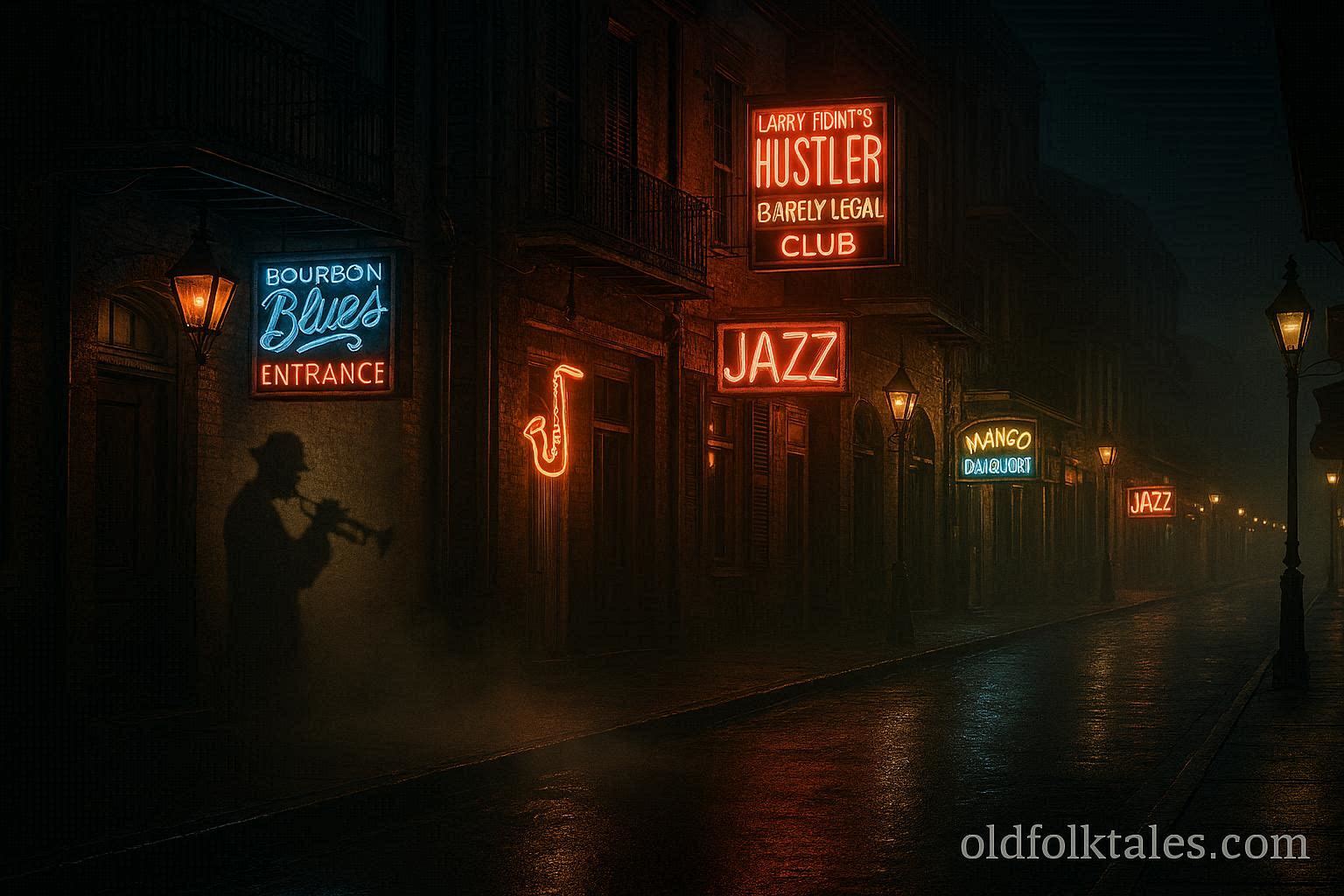
Bourbon Street, famous for its vibrant nightlife, jazz clubs, and rich Creole culture, has long been a place where music seems to seep from the very air. Among the lively crowds and neon lights, stories persist of a phantom musician whose trumpet melodies drift through the streets after midnight. These tales tell of a mysterious presence playing soulful tunes, often heard by both musicians and passersby, yet never seen. The legend has become intertwined with the city’s musical heritage, reflecting the enduring spirit of New Orleans jazz and its connection to folklore.
Musicians who have performed on Bourbon Street for decades often speak of hearing faint, haunting trumpet notes while tuning their instruments or walking home alone late at night. Some insist that the music carries a mournful, nostalgic quality, as if recalling the life of a player lost long ago. Others describe more lively, playful melodies that dance above the sounds of the bustling street. Witnesses are often left puzzled and awed, sensing that the music is both of the world and beyond it, existing between memory, spirit, and reality.
Accounts vary in detail, but many tell of evenings when jazz musicians, tired after a long night of performances, stepped outside their clubs only to hear a rich trumpet melody emanating from an empty alley or across the riverwalk. No source could be found, and attempts to locate the musician invariably failed. Even the most experienced performers felt a strange mixture of reverence and unease, as if the unseen musician demanded recognition while remaining untouchable.
Encounter the strange and the unseen — from Bigfoot to regional monsters hiding in America’s forests.
The origin of the phantom musician legend is closely tied to New Orleans’ history. During the early twentieth century, jazz blossomed in the French Quarter, with clubs, street performers, and social gatherings creating a vibrant musical ecosystem. Many musicians lived difficult lives marked by poverty, racial discrimination, and early death due to disease or violence. Folklorists suggest that the phantom musician represents the lingering presence of these performers, a tribute to those whose music shaped the city but whose lives were cut short.
One widely shared story tells of a trumpet player in the 1920s who played nightly at a small Bourbon Street club. Known for his improvisational brilliance, he vanished one evening after a particularly moving performance. Neighbors later reported hearing his music drifting across the Quarter, often accompanied by the scent of cigar smoke and the faint rustle of a musician’s coat. Over time, other performers began noting similar occurrences, reinforcing the belief that the musician’s spirit remained among the clubs, honoring the traditions he helped shape.
The phantom musician is also sometimes interpreted as a protective spirit. Some locals claim that when the trumpet plays, it signals good fortune for musicians who are struggling or inspiration for those preparing for a performance. Others believe that the music can warn of danger, such as impending storms or disturbances on Bourbon Street. Visitors often recount that the melodies evoke an inexplicable sense of calm or awe, connecting them to the city’s cultural past and the intangible spirit of jazz.
Paranormal researchers and folklorists have investigated the phenomenon for decades. Audio recordings occasionally capture faint trumpet sounds that cannot be traced to any performer, though skeptics argue that acoustics in the narrow streets and alleys may create unusual echoes. Despite the lack of conclusive evidence, the stories continue to circulate, appearing in guidebooks, historical accounts, and oral histories passed from one musician to the next.
In addition to auditory phenomena, some witnesses describe seeing fleeting shadows of a man in a fedora, standing near lampposts or leaning against club walls while playing an invisible trumpet. The figure is never fully visible, and the experience leaves observers with a mixture of curiosity and reverence. The legend emphasizes the enduring influence of those who contribute to cultural traditions, even when their lives are brief.
Tour guides now include the phantom musician in evening walks along Bourbon Street, blending history and legend for tourists eager to experience the magic of New Orleans. Musicians sometimes attempt to improvise alongside the unseen performer, claiming that the melodies inspire creativity and remind them of the city’s deep musical roots. The legend has become emblematic of New Orleans itself: a city where the past and present coexist, where music transcends life and death, and where the spirit of artistry endures in unexpected ways.
The Phantom Musician of Bourbon Street exemplifies how folklore preserves cultural memory. It highlights the power of music to connect communities across generations, reminding both residents and visitors that art is a living, breathing presence. Even as jazz evolves and new performers arrive, the legend ensures that the contributions of past musicians are remembered and celebrated.
Discover chilling ghost tales and haunted places that echo through America’s towns and countryside.
Moral Lesson
The legend teaches that art and music can transcend mortality, inspiring reverence for those who shaped cultural traditions and encouraging respect for the creativity and spirit of past generations.
Knowledge Check
- Where does the phantom musician legend take place?
On Bourbon Street in New Orleans, Louisiana. - What instrument is associated with the phantom musician?
A trumpet. - Who primarily reports hearing the ghostly music?
Musicians performing or walking along Bourbon Street late at night. - What historical context contributes to the legend?
The early development of jazz, poverty, discrimination, and the early death of many performers in New Orleans. - How do locals interpret the phantom music?
As a source of inspiration, protection, or a warning of impending events. - What does the legend symbolize in New Orleans culture?
The enduring spirit of jazz, cultural memory, and the influence of past musicians.
Source
Adapted from materials preserved in the Tulane University Louisiana Research Collection
Cultural Origin
New Orleans musical folklore