In the 19th century, photography emerged as a groundbreaking technological innovation. For many Americans, it offered the ability to preserve images of loved ones, landscapes, and daily life in ways that had never been possible. However, with this innovation came fear, suspicion, and superstition. Early American communities often believed that photographs could do more than capture light and shadow. They could capture a fragment of the human soul.
This belief was not entirely unique to America. Across many cultures worldwide, images of people were often thought to hold spiritual power. In some communities, a painted portrait or carved likeness could invite blessings, while in others, it could attract misfortune if the depicted person were unaware or unwilling. When photography arrived, it brought these older fears into a new, technological context. Many Americans regarded the process of capturing a likeness on film with a mix of awe and anxiety.
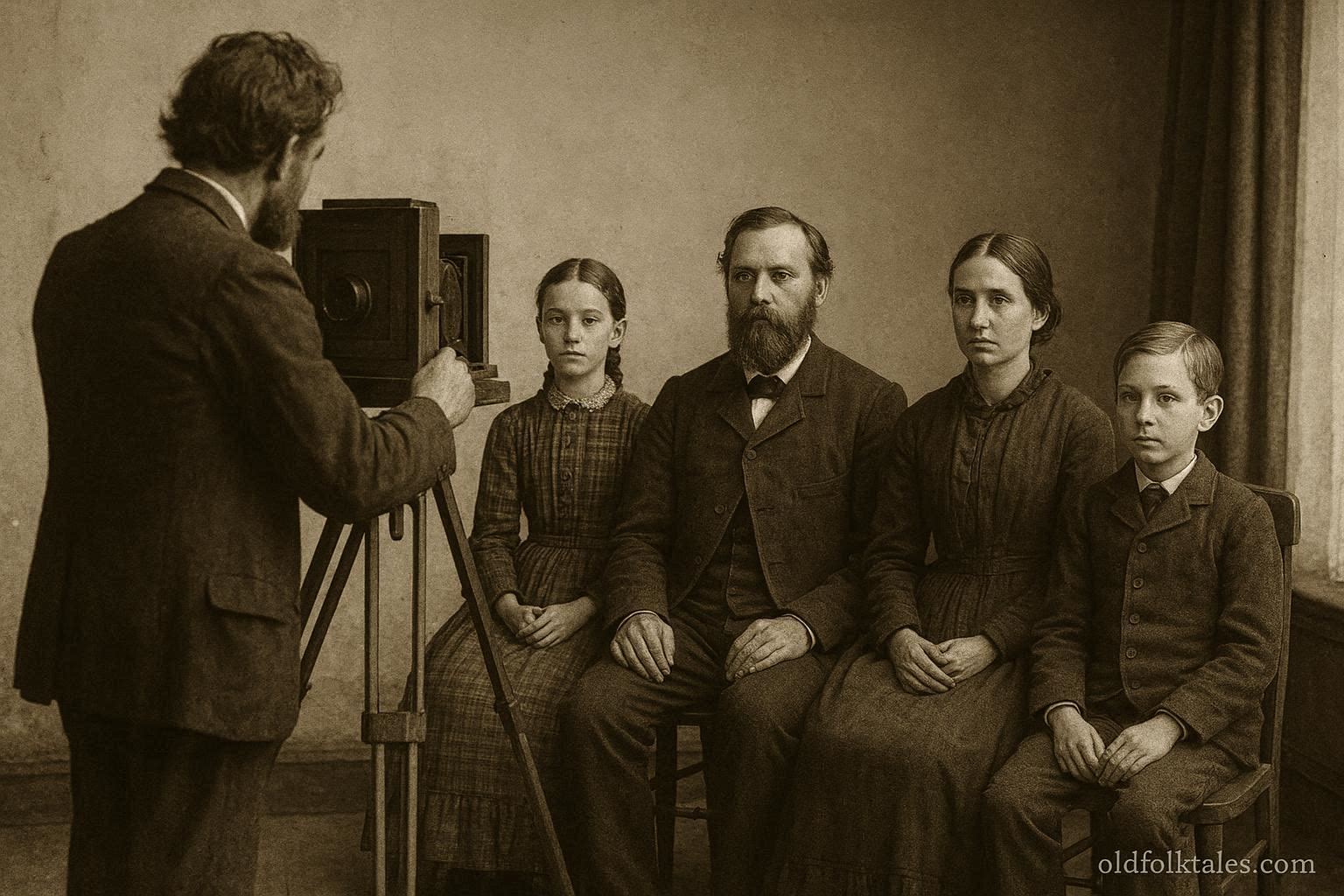
Photographs required long exposure times, often several seconds or minutes. Subjects were asked to remain perfectly still while the camera captured their image. To observers unfamiliar with the science behind the technology, this created an almost magical effect. The resulting image appeared frozen in time, eerily lifelike, and sometimes unsettling. Some feared that the photograph literally “trapped” the subject’s essence, leaving them weakened, ill, or spiritually vulnerable.
Step into shadowy legends of restless spirits and ghostly travelers in American Ghost Stories.
Stories circulated about individuals who refused to sit for a photograph, believing that having their image taken might invite misfortune. One tale tells of a farmer in rural Pennsylvania who consistently declined to have his portrait made. When his children attempted to capture him in a family photograph, the man became visibly uneasy, insisting that it could steal part of his spirit. Over time, neighbors claimed that his caution protected him from misfortune, reinforcing the superstition among the community.
The fear was not limited to adults. Children were often warned to avoid photographs, as it was believed that capturing the image of a young child could lead to illness or premature misfortune. Families treated the act of being photographed with caution, sometimes requiring blessings or protective rituals before allowing the camera to be used. In some cases, photographers themselves were regarded with suspicion, as wielders of mysterious powers capable of meddling with the spiritual realm.
At the same time, the superstition inspired rich folklore. Local newspapers from the late 1800s occasionally printed letters warning readers about the dangers of photography, suggesting that some images captured more than just the body—they captured energy, aura, or even the “life force.” Families who observed these warnings often performed protective measures, such as placing charms near the camera, reciting prayers, or ensuring the photograph was taken at particular times of day to avoid spiritual disturbance.
One story from Massachusetts describes a young woman whose photograph allegedly revealed something unusual. After posing for a portrait in her family home, the photograph showed a faint shadow hovering near her shoulder. The family believed that the camera had captured not only her likeness but also a protective spirit that had accompanied her. Others in the community interpreted such images differently, seeing them as warnings or omens. Whether viewed as protective or dangerous, photographs became objects of fascination and apprehension.
In many ways, the superstition surrounding photography reflected deeper societal anxieties. Americans were navigating the rapid expansion of technology, urbanization, and industrialization. New inventions challenged old beliefs, and photography became a focal point for questions about mortality, identity, and the nature of the soul. The fear that a photograph could capture something sacred or unseen illustrates how cultural values and spiritual beliefs adapt to emerging technology.
Even as the 20th century approached and photography became more common, echoes of the superstition persisted. Families in rural areas continued to regard early photographs with reverence, often displaying them carefully to honor ancestors. Some communities maintained the belief that certain types of portraits, especially those taken in dim light or of deceased relatives could serve as conduits for spiritual energy. Photographs were handled cautiously, stored respectfully, and sometimes accompanied by prayers or rituals to ensure safety for both the living and the dead.
The superstition also influenced how people behaved in front of the camera. Many were asked to maintain a solemn, composed expression, partly due to technical requirements, but also because it was believed that the soul could be unsettled by expressions of levity or mischief. Families treated the act of posing as a ritual event, preparing clothing, lighting, and seating arrangements with care. This attention reflected a blend of respect for both the technology and the spiritual concerns surrounding it.
Ultimately, the superstition of the photograph capturing the soul teaches us about the intersection of technology, belief, and cultural identity. It reminds us that human societies often interpret new inventions through the lens of existing beliefs, moral frameworks, and spiritual understanding. Photography became more than just a tool, it became a mirror reflecting deeper cultural anxieties, hopes, and reverence for life itself.
Even today, the superstition lives on in stories and cautionary tales, as well as in the fascination with ghostly images, double exposures, and mysterious shadows in photographs. Early American fears about photography capture the imagination because they connect human curiosity with universal questions: What is the soul? Can technology interact with the unseen world? And how do we honor life, memory, and the mysteries beyond our understanding?
Click to read all American Traditions & Beliefs — the living folklore of daily life, customs, and superstitions.
Moral Lesson
This superstition teaches the importance of respect for life, reflection on technological advances, and mindfulness about the unseen forces in the world. It also emphasizes how cultural beliefs help communities navigate change and preserve moral and spiritual values.
Knowledge Check
- What did early Americans fear about photographs?
They feared that photographs could capture part of the human soul or invite spiritual disturbance.
- Why were long exposure times in early photography unsettling?
They made subjects appear frozen in time, giving the impression that a part of the soul was trapped.
- How did communities protect against the supposed spiritual risks of photography?
By using charms, reciting prayers, or observing rituals before taking the photograph.
- Who was sometimes regarded with suspicion in relation to photography?
Photographers, as they were believed to wield mysterious powers capable of affecting the soul.
- How did superstition influence behavior in front of the camera?
People posed solemnly and carefully to avoid disturbing the soul or attracting misfortune.
- What broader cultural lesson does this superstition convey?
That respect, caution, and reflection help communities navigate new technology while preserving spiritual and moral values.
Source
Adapted from materials preserved in the Smithsonian Institution Archives
Cultural Origin
19th-century American cultural beliefs