Rivers are as unpredictable as the frontier itself. Currents shift without warning, sandbars rise like hidden traps, and storms can turn calm waters into deadly torrents in minutes. Among the communities along the Mississippi River, one name was whispered with reverence: Thomas “Tom” Redfeather, a river pilot whose skill kept countless vessels from disaster.
Tom did not rely solely on maps or instruments. He understood the water as others understood the land, reading its subtle cues the way waves lapped against a bluff, how driftwood gathered near a bend, the coloration of water signaling hidden shoals. His wisdom was inherited; his father had been a river pilot, and his grandfather before him, yet Tom’s instincts went beyond tradition. He combined observation, intuition, and years of experience to navigate the river’s deadly channels with uncanny precision.
During spring floods, when the river swelled and currents became erratic, many pilots hesitated, fearing the shifting channels and submerged debris. Tom, however, thrived in these conditions. He could anticipate a sandbar’s location or detect a submerged log that might tear through a vessel’s hull. The crew trusted him completely, often joking that the river itself obeyed his commands. He never boasted of his skill; for him, safety was the measure of success, and pride had no place on the water.
Encounter the strange and the unseen — from Bigfoot to regional monsters hiding in America’s forests.
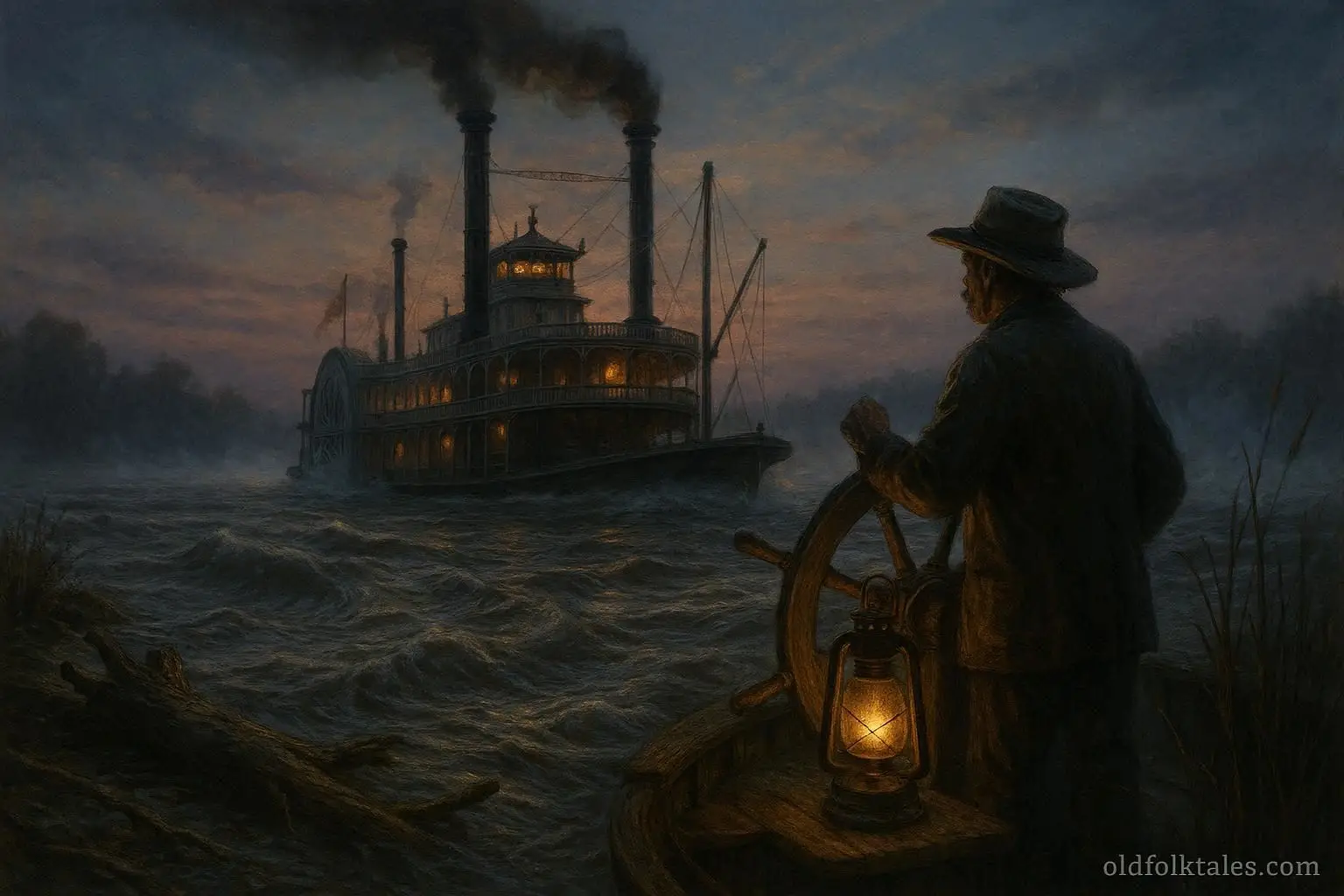
On one notorious spring night, a merchant steamboat loaded with supplies for a remote settlement faced a sudden storm. Rain pelted the deck, lightning illuminated jagged cliffs, and the river surged violently. Tom stood at the helm, his hands steady on the wheel, his eyes scanning the water. He murmured instructions to his crew, who executed them without hesitation. They avoided hidden shoals, passed under a fallen tree, and reached the settlement’s dock safely, hours ahead of the next nearest pilot. Stories of the night traveled quickly, and Tom’s name became synonymous with mastery over the river.
Tom’s knowledge extended beyond the physical river. He understood the moods of the Mississippi seasonal changes, the patterns of flooding, and even how wildlife indicated safe passages. When fish swarmed near a bend, he knew the water was deeper; when birds circled overhead, he assessed the current’s direction. His reputation was built on this holistic understanding of nature, emphasizing that true mastery came from respect and careful observation rather than arrogance.
Tom also taught younger pilots, insisting that no one should navigate the river blindly. He emphasized patience, attention to detail, and learning to listen to the river itself. “The river speaks,” he would say, “if you know how to hear it.” His students carried this lesson far beyond the Mississippi, spreading a culture of caution and respect for nature that saved countless lives.
His legacy was not limited to successful navigation. Tom exemplified the moral and ethical dimensions of heroism. He refused bribes and always prioritized human life over cargo or profit. Rivermen who witnessed his decisions came to understand that heroism involved courage, wisdom, and moral responsibility, not simply skill or daring.
Over the years, tales of Tom Redfeather grew into legend. Merchants, settlers, and river workers recounted stories of his daring rescues, calm judgment in storms, and uncanny ability to predict the river’s next move. Though time passed and steamboats gave way to modern engines, the lessons Tom imparted remained, cementing his place as a cultural hero. His life illustrated that knowledge, discipline, and moral courage could safeguard communities and transform ordinary labor into legend.
Explore ancient Native American creation myths and the symbolic tales that shaped America’s belief systems.
Moral Lesson
Mastery over one’s environment requires respect, observation, and responsibility. True heroism combines skill with ethical judgment and care for the well-being of others.
Knowledge Check
1 What abilities made Tom Redfeather an extraordinary river pilot?
Answer: Intuition, inherited knowledge, observation of water currents, and understanding seasonal patterns.
2 How did Tom save the merchant steamboat during a spring storm?
Answer: He skillfully navigated around shoals, fallen trees, and strong currents using his knowledge of the river.
3 Why did Tom emphasize teaching younger pilots?
Answer: To ensure safety, pass on knowledge, and instill respect for the river.
4 What ethical principle guided Tom’s decisions?
Answer: Prioritizing human life over cargo or personal gain.
5 How did Tom read the river’s signs in nature?
Answer: By observing fish, birds, driftwood, and water color to detect depth and current.
6 What lasting impact did Tom Redfeather have on river communities?
Answer: He instilled a culture of safety, respect, and moral responsibility among pilots and river workers.
Source
Adapted from American Folklife Center river labor folklore records
Cultural Origin
Mississippi River Valley communities